
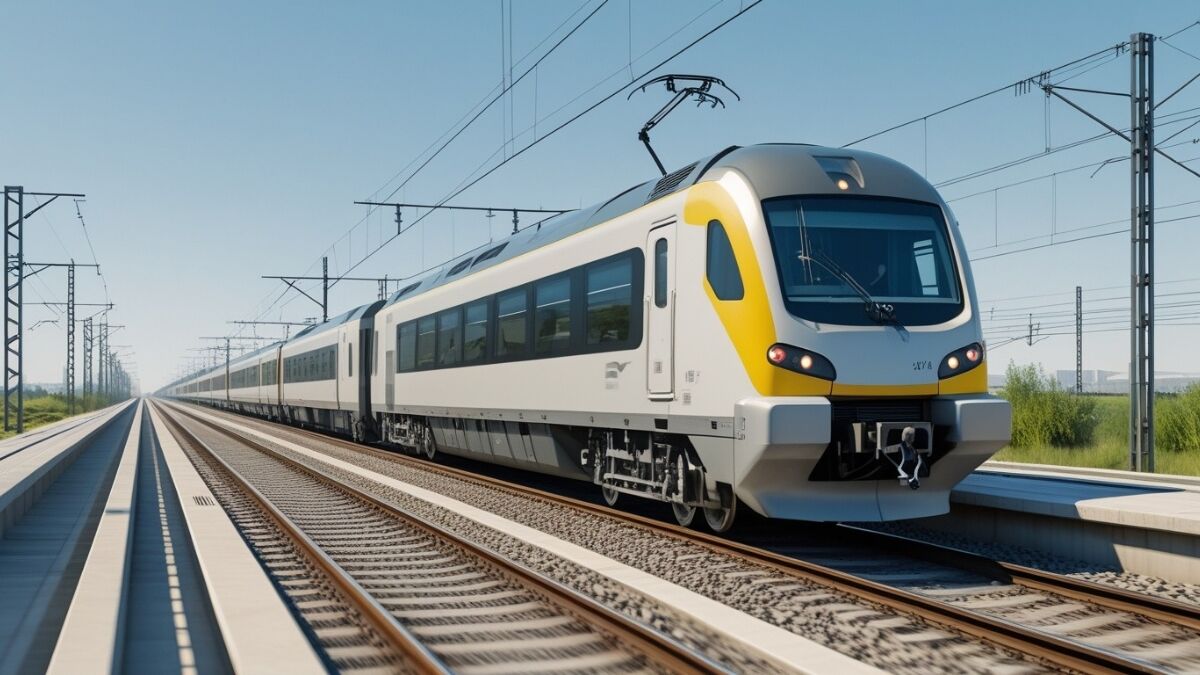
RailTel, RVNL, IRFC, and IRCON: For the past five sessions in a row, railway stocks have been soaring. Rail Vikas Nigam Limited (RVNL) shares have increased by more than 26.50% during the last five sessions, from about ₹306 per share to ₹387.25.
Railway stocks rally in recent sessions
In the last five sessions, IRFC shares have risen from ₹110.81 to ₹133.60 per share, providing its stockholders with a return of more than 20%. IRCON International‘s share price increased from ₹150 to ₹178.25 per share during the railway stocks’ surge, indicating a 19% increase. Purchases of Indian Railway Catering and Tourism Corporation (IRCTC) and RailTel Corporation of India shares also saw a notable increase.
What is causing railway stocks to soar?
“The sharp rise in railway stocks such as RVNL, IRFC, and IRCON is driven by a shift in market sentiment rather than any fresh improvement in fundamentals,” stated Ravi Singh, Chief Research Officer at Master Capital Services, when asked why railway stocks are surging despite any notable change in these companies’ fundamentals.
The industry is currently experiencing a resurgence in its storytelling performance after undergoing a significant correction over the previous year as a result of FII exits, valuation worries, and margin pressure. Investor confidence is being restored by expectations of pre-Budget activity, prospective capital expenditure support through market borrowing and gross budgetary support, and the potential for order acceleration. Prior to budget-related clarification, this has led to a tactical comeback that reflects the traditional sell the rumor, buy the fact phase.
An increase in passenger fares
“The immediate catalyst was the second passenger fee hike in FY26, effective December 26, 2025,” stated Seema Srivastava, Senior Equity Analyst at SMC Global Securities. Even though the increase is small—roughly 1-2 paise per km, depending on the travel class—it is predicted to produce almost ₹600 crore in additional revenue in the current fiscal year, enhancing Indian Railways’ revenue visibility and indicating a slow shift toward greater financial sustainability for the industry. The market has viewed this favorably since it helps rail-linked PSUs maintain long-term earnings stability.
Focus on the 2026 budget
“Beyond the fare hike, the rally is being amplified by pre-Budget positioning, with investors factoring in the likelihood of continued emphasis on railway-led infrastructure spending,” stated Seema Srivastava, highlighting the significance of pre-budget expectations that may continue to fuel railway stocks. Due to policy-driven growth visibility, railway PSUs have historically reacted favorably ahead of budgets, and expectations of maintained or greater capex allocations for network development, rolling stock, signalling, safety enhancements, and modernization have rekindled interest.
Seema Srivastava of SMC Global Securities, however, maintained that prudence is necessary from the standpoint of sensible investing. Rather from being backed by a significant short-term improvement in profitability, the current increase seems to be primarily driven by attitude and expectations. Due to their underperformance throughout the majority of 2025, several railway equities were technically oversold and susceptible to sudden, bargain-driven relief rallies. Long-term returns will depend on the actual level of budgetary assistance, the prompt completion of projects that have been granted, cash flow management, and ongoing advancements in fare rationalization. Therefore, rather than projecting short-term momentum, investors should concentrate on business-specific fundamentals and execution skill.
