
Investors who saw gold soar to all-time highs and silver trail closely behind may recognize today’s sentiment: Did we miss the move? Electrification and industrial restocking have contributed to the spike in copper, which only serves to confirm that perception.
Crude Oil Market Outlook for 2026
However, commodity cycles seldom come to a tranquil conclusion. They turn. Furthermore, as 2026 approaches, the data indicates that crude oil will undoubtedly be the next big thing.
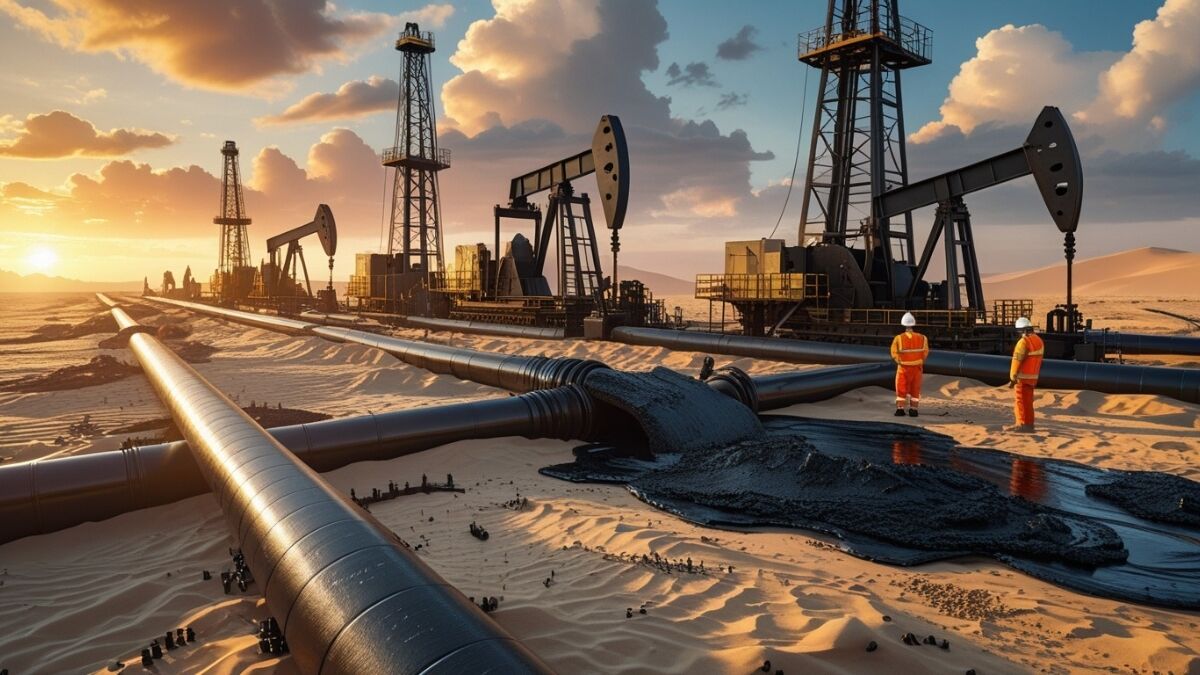
Oil prices have been stuck in a narrow, annoying compression zone for a long time. By the end of 2025, trade volumes in WTI futures had drastically decreased, investor interest had diminished, and volatility had vanished. Crude oil is now considered “boring” in the marketplace. History demonstrates that this is the exact moment when ignoring it becomes risky.
🛢 Crude Oil Price Outlook & Strategy
- Focus: crude oil price outlook 2026 for investors
- Opportunity: why crude oil could be the next big commodity
- Signal: gold to oil ratio signal crude oil rally
- Valuation: is crude oil undervalued compared to gold
- Investment Approach: crude oil investment strategy during low volatility
The most supply-constrained and geopolitically sensitive area of the whole commodity complex is still energy. Oil does not drift upward when it eventually breaks out of a protracted base; instead, it reprices. When expectations are consistently boring to bearish—exactly the attitude that permeates today’s market—that repricing usually occurs.
The US Energy Information Administration and other consensus projections indicate that there will be an excess in 2026. Crude’s optimistic story has been depleted by slowing global growth and a weakening US labor market. However, oil is a very cyclical asset, and cycles change when positioning and psychology are pushed to their limits rather than when the evidence seems favorable.
The Ratio of Gold to Oil
In the past, one ounce of gold was worth around fifteen barrels of oil. That ratio is now close to levels previously seen during the 2020 pandemic’s peak fear. Put simply, as compared to hard currency, oil is really inexpensive. Instead of gold dropping after each significant jump in this ratio (2009, 2016, and 2020), oil staged a strong multi-year comeback. In commodities, mean reversion is a practice rather than a theory.
OPEC’s Credibility Issue & Geopolitical Risks
Despite predictions of an impending oversupply, the cartel of oil-producing countries’ decision to maintain level output till early 2026 is revealing. Barrels often emerge when OPEC pledges increases. It often silently erodes cooperation when it pledges cutbacks. There is limited space for short-term suffering since member countries rely financially on oil earnings to finance domestic expenditure. In fact, oil prices now influence OPEC more than OPEC influences oil prices. As a result, the system is in a precarious balance where any unforeseen disturbance in supply might overwhelm it. This leads us to geopolitics, which oil traders continue to undervalue at their own risk.
Territorial claims, security assurances, and control over vital infrastructure continue to complicate peace negotiations. The absence of confidence on both sides points to protracted uncertainty, even if language sometimes appears helpful. Energy markets price risk premiums as soon as stability becomes unlikely rather than waiting for official breakdowns. The demand for crude oil is not elastic. When costs increase, neither consumers nor companies can just stop driving, flying, or shipping things. Because of this, oil rallies are often abrupt and chaotic. Rigid demand and supply shocks cause prices to sharply rise.
Investor Approach to Crude Oil
This is a call for investors to position carefully rather than to wager carelessly. Exposure might start off modest and varied. An additional component to corporate profitability is equity exposure via integrated players or oil explorers and producers.
Patience is better rewarded in commodity cycles than forecasting. The recent surge in copper, silver, and gold has already mentioned it. Crude oil has been quiet, but the biggest swings in markets sometimes come after protracted silences.
⚠️ Crude Oil Volatility & Safe Exposure
- Why low volatility matters: “Boring” market periods can precede big repricing
- Safe Exposure: Diversify via energy-focused funds or integrated oil corporations
- Positioning: Start modestly, avoid aggressive trading
- Investment Horizon: Commodity cycles reward patience over forecasting
- Risk Control: Balance equity exposure with commodity positions
Frequently asked questions
1. Given the spike in other commodities, why has not crude oil moved yet?
Due to poor investor positioning, predictions of oversupply, and pessimistic consensus projections, oil markets are now stuck in a low-volatility period. In the past, when supply concerns or attitude shifts occur, these “boring” times sometimes precede significant repricing events.
2. Is the ratio of gold to oil a trustworthy indicator?
The gold-to-oil ratio has a solid track record, despite the fact that no indication is flawless. Extreme readings have often indicated times when the price of oil was far lower than that of hard assets, followed by strong recoveries fueled by mean reversion.
3. What is OPEC’s actual current role?
As member countries deal with budgetary constraints and compliance issues, OPEC’s influence has diminished. OPEC may affect mood in the near term, but genuine supply limits and geopolitical shocks, rather than cartel pledges, are increasingly driving oil prices.
4. Could oil prices be capped by slowing global growth?
Although oil consumption is somewhat inelastic, slower growth may restrict demand increase. Despite poor macroeconomic circumstances, even small supply interruptions may overpower demand slack and cause abrupt price rises.
5. How can investors increase their exposure without taking on too much risk?
Instead of trading futures directly, investors should think about diversified exposure via energy-focused funds, integrated oil corporations, or energy-related stocks. Given that commodities cycles can take longer to develop, position sizing and patience are crucial.
In conclusion
Seldom do commodity markets move in accord over time. The position of leadership changes. Copper, silver, and gold have already sent their message. In contrast, crude oil is still very unpopular, underowned, and overpriced in comparison to earlier times. Extreme valuation signals, pessimistic consensus, and low volatility all point to vulnerability rather than stability.
Oil trends are not subtle. Rather of gradually increasing, prices typically reprice when the supply and psychology balance is upset. Crude oil may provide one of the most asymmetric possibilities going into 2026 for investors who are prepared to look beyond today’s pessimism—not because the forecast is promising, but rather because expectations have dropped too far.
Disclaimer
This is not financial advise; it is only informational. Investments in commodities are risky and may result in losses. Performance in the past does not ensure success in the future. Before making an investment, always conduct your own research or speak with a financial professional.
