
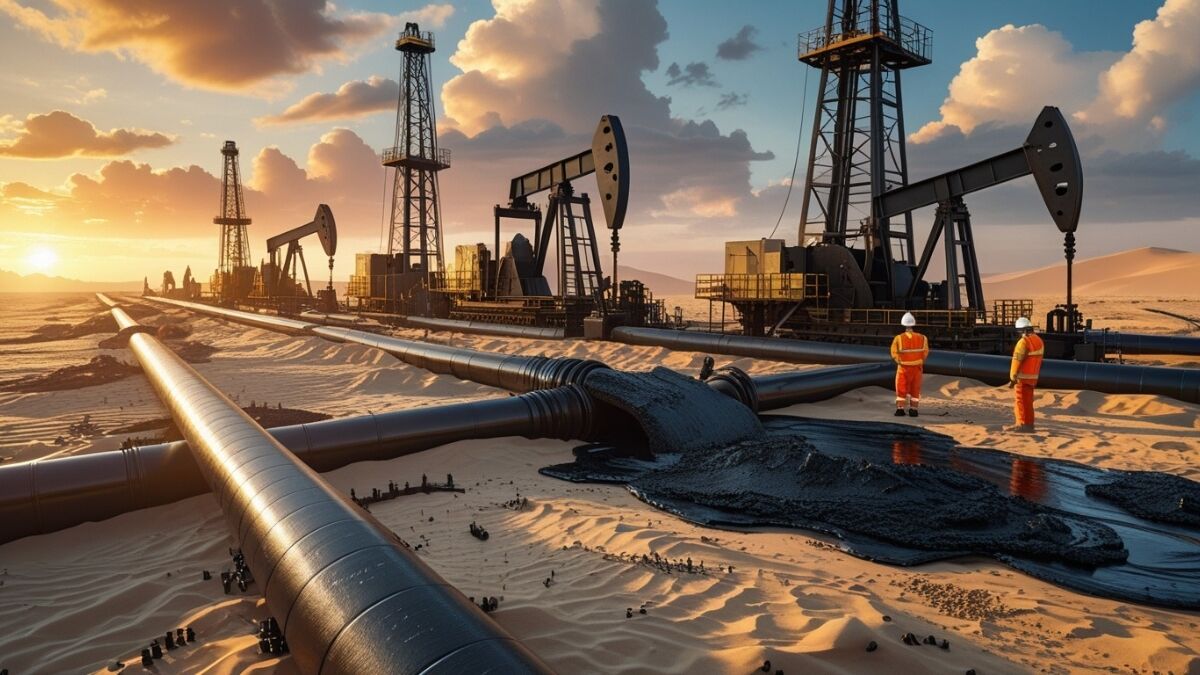
On Friday, January 9, U.S. President Donald Trump met with executives from U.S. oil companies at the White House and presented a proposal to win at least $100 billion in investment to restore Venezuela’s oil sector.
Trump’s Venezuela Oil Investment Proposal
Major American oil firms were encouraged to take part in the investment arrangement by Trump, who assured them of rapid and favorable returns. CEOs of the companies, however, mostly declined to sign the agreement.
“If we look at the legal and commercial constructs and frameworks in place today, in Venezuela today, it is uninvestible, and so significant changes have to be made to those commercial frameworks, the legal system,” stated Darren Woods, CEO of Exxon Mobil, his company would not be jumping headfirst into Venezuela because the current situation there poses an unacceptable risk. According to Ryan Lance, CEO of ConocoPhillips, the prior nationalization of Venezuelan assets cost his business $12 billion.
Oil Executives Raise Risk Concerns
Instead of talking about significantly expanding the company’s activities, a senior Chevron executive described the company’s present operations. According to local media, Chevron is the only American oil corporation now doing business in Venezuela in a joint venture with the country’s official oil company.
Trump called the conference in an attempt to reach a consensus on which American oil corporations may join Venezuela and reconstruct the nation’s energy infrastructure. According to U.S. Energy Secretary Chris Wright, the United States has seized control of Venezuela’s oil exports in order to force necessary reforms in the nation.
US Control Over Venezuelan Oil Exports
🛢️ US Push to Rebuild Venezuela’s Oil Sector
- Date: Friday, January 9
- Proposed Investment: $100 billion
- Participants: Major U.S. oil companies
- Objective: Restore Venezuela’s oil infrastructure
- US Role: Control of Venezuelan oil exports
- Challenge: High legal and political risk
Trump said on Truth Social earlier on Friday that the US “in collaboration with the Interim Authorities of Venezuela, confiscated an oil vessel which fled Venezuela without our consent.” “The oil will be sold via the GREAT Energy Deal, which we have developed for such deals,” Trump said. “This ship is already on its way back to Venezuela.”
Allegedly connected to Venezuela, it is the fifth oil ship that U.S. troops have apprehended. On January 3, Venezuelan President Nicolas Maduro and his spouse were captured by U.S. armed personnel.
Escalation Through Oil Seizures
⚠️ Venezuelan Oil Seizures & Strategic Control
- Oil Tankers Seized: Five vessels
- Authority: U.S. forces
- Policy Shift: Oil control framed as opportunity
- Oil Volume: 30–50 million barrels
- Sales Channel: GREAT Energy Deal
- Impact: Increased uncertainty for investors
Since then, the Trump administration has swiftly changed course to portray the action as a new economic opportunity, claiming that the Venezuelan government “will be turning over” between 30 million and 50 million barrels of sanctioned oil to the United States and that the United States will continue to control Venezuelan oil sales.
According to the U.S. Energy Information Administration, Venezuela possesses the world’s highest proven crude oil reserves, with over 303 billion barrels, or roughly 17% of the total.
Frequently asked questions
1. Why is Trump suddenly concentrating on the oil sector in Venezuela?
Venezuela is strategically significant for both U.S. energy policy and global energy supply since it has the greatest proven crude oil reserves in the world. Trump’s strategy is to use these reserves to help American businesses and perhaps reduce energy costs.
2. Did any oil companies consent to make an investment?
No, big businesses were hesitant, citing political, commercial, and legal threats. The gathering included no announcements of legally binding investment pledges.
3. In this context, what does “uninvestable” mean?
Executives like the CEO of Exxon claim that investment is now too risky since they are unable to evaluate returns or safeguard assets in the absence of changes to Venezuela’s legal and business structures.
4. Does the investment have US government funding?
Although the government may provide security or legal safeguards, Trump claims that the $100 billion would come from the oil corporations’ own capital rather than direct U.S. public spending.
5. Are the authorities in Venezuela working together?
Although the Venezuelan government has responded differently and there are still a number of outstanding legal and diplomatic difficulties, U.S. officials claim to be working with interim Venezuelan authorities on oil exports.
Conclusion
Top U.S. oil executives mostly declined to make quick financial commitments, therefore President Trump’s proposal to invest in Venezuela’s oil industry failed. Companies are very cautious despite the strategic scale of Venezuela’s oil deposits because of past nationalizations, political unpredictability, legal ambiguity, and the high cost and length of time needed to restore production.
Any investment choice is made more difficult by the U.S.’s increased efforts to intercept oil shipments connected to Venezuela and establish control over the nation’s oil exports.
Disclaimer:
This content is based on publicly available news reports as of January 2026. Developments may change, and the information should not be considered financial, legal, or investment advice.
