
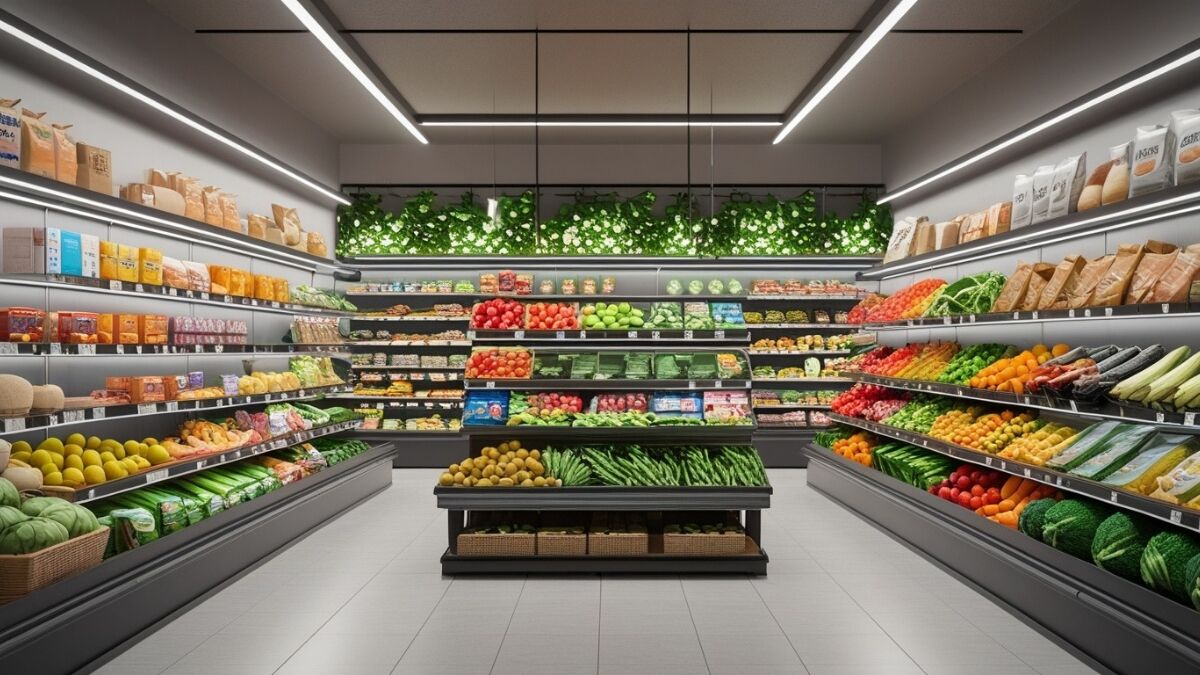
The FMCG sector is looking to the next Union Budget for policies that will continue to boost consumer growth and increase capital expenditures that support rural development.
FMCG Industry Eyes Budget 2026
A more stable and predictable business climate has resulted from the government’s planned initiatives in infrastructure development, local manufacturing, ease of doing business, and the GST 2.0 reform. Sustaining consumer growth would need ongoing attention to rural development, job creation, and inflation control, according to Saugata Gupta, MD & CEO, Marico Ltd.
As the Union Budget draws near, Gupta said, “targeted tax changes, continuing capital investment, and policies that encourage entrepreneurship, incentivise manufacturing to secure crucial supply chains, and stimulate innovation across important sectors provide a potential to accelerate momentum.”
Key Expectations from the Budget
The industry’s main expectations from the budget, according to Sudhir Sitapati, Managing Director & Chief Executive Officer of Godrej Consumer Products Ltd., are “efficient measures to boost consumption.” He added, “We also believe that higher allocations for infrastructure-linked to labor and water-intensive categories should be released in a timely manner.” However, the industry has already seen substantial stimulation over the last year, and sustained emphasis on consumption will support growth, he concluded.
Sitapati said that several significant, mass-consumption FMCG categories, particularly those in home care, are still subject to an 18% tax rate; in order to sustain demand, it would make sense to switch to a lower slab, like 5%.
📈 FMCG Rural Growth & Infrastructure
- Focus: Boost rural consumption and capital expenditure
- Support: Government infrastructure, agriculture & dairy investment
- Impact: Strengthening FMCG distribution and market reach
- Innovation: Adoption of modern technology across sectors
Consumption Trends and Economic Significance
The trajectory of private consumption is critical in determining overall economic performance, as household consumption continues to be a major engine of growth in a consumption-led economy like India, according to FICCI’s pre-budget memorandum. Private Final Consumption Expenditure consistently accounts for over 56% of the GDP.
For almost the last seven quarters, rural demand has exceeded urban consumption. “While urban demand is showing signs of recovery, rural consumption — albeit robust – needs continuous policy assistance, particularly in the face of monsoon risks and inflationary pressures,” said Akshali Shah, Executive Director of Parag Milk Foods. In the future, we anticipate that Budget 2026 will assist rural development, bolster agricultural and dairy infrastructure, and promote the use of contemporary technologies.
💡 Home Care Tax & Demand Insights
- Current Tax Rate: 18% on major home care categories
- Recommendation: Reduce to 5% to support demand
- Effect: Stimulate consumption growth and affordability
- Market Focus: Rural and urban mass-consumption products
The FMCG sector anticipates that the entire advantages will become apparent in the March quarter, even if there has been a little increase in demand since the introduction of GST 2.0.
Frequently Asked Questions
1. Why is rural consumption the focus of the FMCG industry?
For the previous several quarters, rural consumption has increased more quickly than urban demand. Policies that promote infrastructure, agriculture, and rural development directly increase FMCG sales.
2. How may tax changes affect the expansion of FMCG?
Long-term consumption growth may be sustained, affordability raised, and demand stimulated by lowering GST rates on mass-consumption categories or offering tailored tax benefits.
3. How does infrastructure contribute to the expansion of FMCG?
Better infrastructure lowers distribution costs, speeds up delivery, and facilitates the spread of FMCG items into distant locations, particularly in rural areas.
4. What impact does GST 2.0 have on the FMCG industry?
GST 2.0 has made compliance easier and the tax situation more predictable. The entire effect on sales and supply chain efficiency is anticipated in the next quarters, even if the early gains are already apparent.
5. What makes private spending so important to India’s economy?
Household spending is a major force behind economic development, particularly in a consumer-driven economy like India, where private final consumption expenditures account for more than 56% of GDP.
Conclusion
The FMCG sector anticipates that Budget 2026 will continue to promote investment, infrastructure development, and specific tax adjustments while bolstering consumer growth, particularly in rural regions. The industry hopes to maintain pace and make a major contribution to India’s economic growth with the help of smart interventions and governmental assistance.
Disclaimer
This post does not provide financial or investment advice; it is just meant to be informative. Before making any business or investing choices, readers are urged to speak with the relevant experts.
