
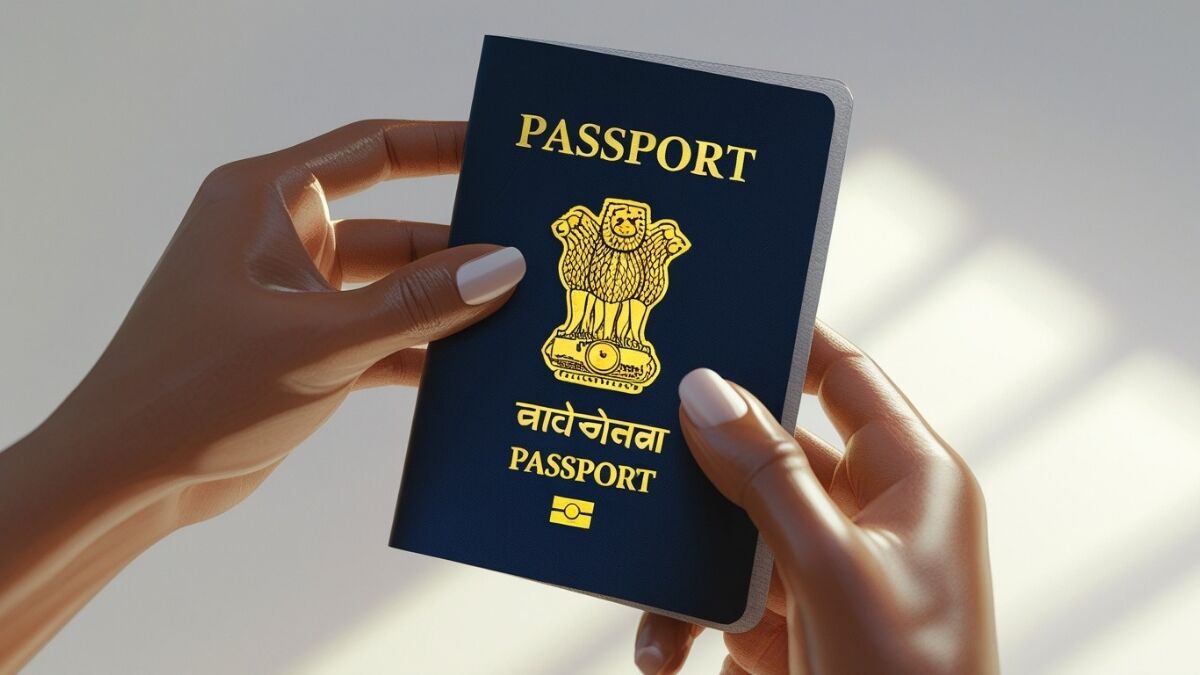
In the 2026 edition of the Henley Passport Index, which was published on January 17, India’s passport moved up five spots to 80th, continuing its gradual but steady ascent.
India’s Improved Global Passport Standing
Indian nationals may now visit 55 countries without obtaining a conventional visa in advance according to the updated ranking; they can do so entirely without a visa, upon arrival, or with an electronic travel authorization (ETA). Although the gain is small in absolute terms, it is noteworthy for a nation that has long trailed behind its Asian counterparts in terms of travel freedom.
New Visa-Free and Visa-on-Arrival Access
Numerous discreet bilateral agreements with small and mid-sized countries in Africa, the Pacific, and the Caribbean during the last year are responsible for the higher score. While Indonesia and Qatar switched to visa-on-arrival, nations like Angola, Barbados, and Fiji put Indian tourists into the visa-free category.
Reduced Paperwork for Travelers and Businesses
When combined, the enhancements save days of pre-trip paperwork for Indian tourists and business travelers, as well as expense and uncertainty for corporate mobility teams organizing short-term assignments.
🌍 Indian Passport 2026 Highlights
- Henley Rank: 80th globally
- Rank Change: Jumped 5 places
- Visa-Free Access: 55 destinations
- Access Types: Visa-free, Visa-on-arrival, ETA
- Key Regions: Africa, Pacific, Caribbean
- Major Benefit: Less paperwork and faster travel
Role of Digital Visa Support Platforms
VisaHQ provides a one-stop digital concierge for Indian nationals who are still managing complicated admission requirements for the remaining more than 170 locations. The software (https://www.visahq.com/india/) ensures that travelers spend more time booking flights and less time interpreting laws by maintaining real-time visa matrices, creating customized application kits, and filing papers directly with consulates globally.
🌍 Countries Accessible with Indian Passport (2026)
✅ Visa-Free Countries
🛂 Visa on Arrival
🖥️ Electronic Travel Authorisation (ETA Required)
Impact on Corporate Mobility and Aviation
The new rating modifies risk assessments for global corporations deploying employees on short notice. Mobility managers may now plan quick project visits with far less lead times and route Indian executives via more third-country hubs without transit visas. After two years of slow growth, airlines and travel agencies are already seeing a recovery in outward travel. As red tape hurdles are removed, they anticipate an increase in discretionary travel.
📊 Asia Passport Comparison
- Top Rank: Singapore (192 destinations)
- Regional Gap: India still trails Asian peers
- Malaysia: Visa-free but eNTRI/e-visa often required
- Industry View: Reciprocal visa easing needed
- Policy Demand: Expansion of India’s e-visa program
- Outlook: Gradual mobility progress, not a breakthrough
Remaining Gaps with Asian Counterparts
However, there is still a significant disparity with regional rivals. With access to 192 locations, Singapore is at the top of the ranking, while Malaysia now permits Indians to enter without a visa, albeit in many situations they still need to apply for an eNTRI or e-visa. Industry organizations are pleading with New Delhi to expand India’s own e-visa program in return, claiming that the only way to get further outward concessions is via looser inward regulations. Until then, it is better to see the most recent rating as a little step forward rather than a revolution in mobility.
Frequently asked questions
1. What does India’s Henley Passport Index ranking of 80th mean?
This implies that holders of Indian passports may now enter 55 countries without a conventional visa via electronic travel authorization (ETA), visa-free travel, or visa-on-arrival travel.
2. Which new nations have made it easier for Indian passport holders to enter?
Angola, Barbados, Fiji (visa-free), Indonesia, and Qatar (visa-on-arrival) are among the nations that have lately loosened regulations.
3. Does this rating represent a significant improvement for Indian tourists?
Even though the five-place leap is small, it has a big practical impact on short-term travel by cutting down on paperwork, expenses, and preparation time.
4. How does this shift impact corporate and business travel?
Yes, easier entrance enhances organizational mobility by enabling Indian experts to travel quickly and pass via more hubs without the need for additional visas.
5. Can Indian nationals now enter the US or Europe without a visa?
No. Indian passport holders still need a visa to enter the US, the UK, and Schengen nations. Smaller economies are mostly involved in this trend.
Conclusion
India’s ascent to the 80th spot on the Henley Passport Index 2026 is not a breakthrough, but rather the result of consistent diplomatic advancement. For travelers, professionals, and multinational employers, access to 55 locations without a standard visa lowers barriers and indicates increased international mobility for Indian nationals.
The difference with the best-ranked Asian passports is still rather large, however. Experts think India has to extend reciprocal agreements and further liberalize its own visa policy in order to expedite advances. As of right now, the update represents significant but gradual development rather than a game-changer—yet
Disclaimer:
This article is for informational purposes only. Visa policies and passport rankings may change without notice; travellers should verify entry requirements with official government sources or embassies before planning travel.
