
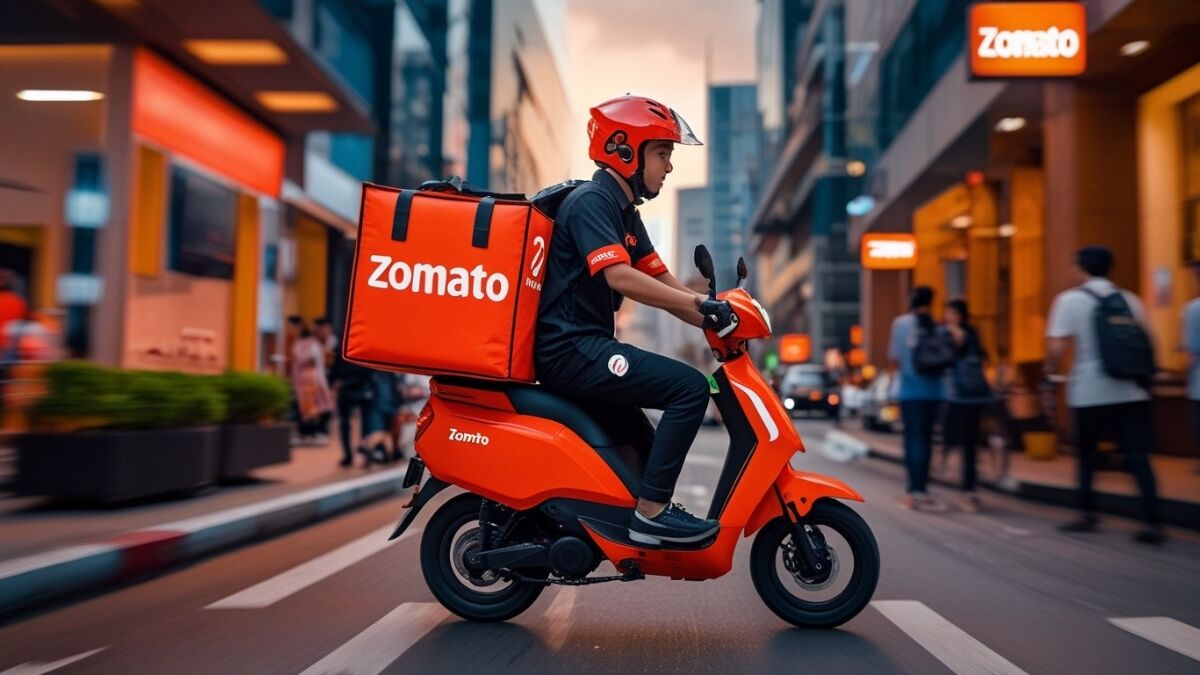
The Modi government’s latest involvement, which calls for quick-commerce platforms to abandon their “10-minute delivery” assurances, is a noteworthy step and the start of a new strategy for the State to interact with the gig economy, which is expanding quickly.
Government Intervention in Quick-Commerce Delivery
Up until recently, algorithm-driven marketing dominated the lives of millions of people in this industry. But worker wellbeing and dignity have not been given priority in this effort.
The two RSS-inspired organizations, Swadeshi Jagaran Manch (SJM) and Bharatiya Mazdoor Sangh (BMS), have welcomed this action. BMS is the biggest trade union in India, whereas SJM focuses on economic policy. For the past few years, BMS in particular has been at the vanguard of organizing gig workers and defending their rights. In June 2025, it declared that its primary goal will be to organize gig workers and address their concerns.
Growth of the Gig Economy in India
The number of gig and platform workers in India, including women, was 7.7 million in 2020–21 and is projected to increase to 23.5 million by 2029–30, according to an NITI Aayog research titled “India’s Booming Gig and Platform Economy” (June 2022).
It is important to consider the Modi government’s intention to force quick-commerce platforms to abandon the “10-minute delivery” pledge. This could be seen as a continuation of an all-encompassing strategy to guarantee the security and respect of gig workers, who are primarily members of the underprivileged and marginalized segments of society.
🚚 Zomato–Blinkit Record Deliveries
- Date: New Year’s Eve 2025
- Total Orders: 7.5 million (all-time high)
- Delivery Partners: 4.5 lakh+
- Platforms: Zomato & Blinkit
- Context: Deliveries continued despite statewide gig worker strike
- Support: Local authorities helped maintain operations
Labor Laws Supporting Gig Workers
BMS applauded the Modi government’s recent implementation of four new labor rules prior to the current action. Gig workers stand to gain the most from these new codes.
These four labor rules include the Code on Social Security, 2020, which gives precise definitions of “gig workers” and “platform workers.” Every employee is required under this Code to receive an appointment letter. It requires all businesses, whatever of size, to register. ESI is now available nationwide and covers all businesses with ten or more employees.
Employees’ State Insurance (ESI) & Worker Benefits
In addition to providing medical care for workers and their families, the Employees’ State Insurance (ESI) program offers socioeconomic protection against illness, pregnancy, disability, and death from work-related injuries. ESI is now applicable to hazardous jobs with a single employee under the new Code.
Employees are nonetheless eligible for benefits under the Code even if their employer does not enroll or register them or does not make contributions. Accidents that happen on the way to and from work now qualify for compensation. In addition to gig and platform workers, the Code provides social security benefits to workers in the unorganized sector, interstate migrants, home-based workers, domestic workers, and fixed-term employees.
⚠️ 10-Minute Delivery Controversy
- Criticism: Sanjiv Kapoor questioned need for 10-minute delivery
- Goyal’s Defense: Enabled by dense store networks, not speeding
- Delivery Logic: 2.5 min packing + ~2 km ride at ~15 kmph
- No Timer: Riders don’t see delivery countdowns
- Political Concern: MP Raghav Chadha warned against gig worker exploitation
- Core Debate: Speed vs safety, fairness & dignity of gig workers
Safety and Mental Health Concerns for Gig Workers
Concerns over the riders’ safety and mental strain as they worked to deliver things within “10 minutes” for delivery apps have grown. Delivery riders are constantly under time pressure, which raises issues about their mental and physical wellbeing, according to a 2025 study (A Study of 10-Minute Delivery Apps in the e-Business Ecosystem) published in the International Journal of Engineering and Management Research.
This report claims that “the ten-minute delivery game has a gloomy impact on the lives of many, and employees often labor under pressure to achieve deadlines, which leads in stress, injuries, physical tiredness, and mental strain.” Consequently, a significant proportion of workers quit their occupations early.
Impact on Companies and Customers
Dropping the “10-minute” delivery guarantee would not have a significant effect on the company from the standpoint of the customer. In a Forbes India survey, 58% of consumers stated that 10-minute deliveries were “nice to have, but not essential,” and 75% stated that they would not alter their order frequency if deliveries took 20 to 30 minutes rather than 10.
In fact, the question of quick-commerce platforms’ environmental sustainability is also brought up in a 2024 study published in the European Journal of Development Studies. The study, titled “Is Quick Delivery Related to Quick-Commerce Environmentally Sustainable?” “highlights the necessity of developing a more sustainable quick-commerce environment by utilizing solutions that increase energy security, minimize environmental pollutants, and decrease fuel imports.”
Conclusion
It is crucial that the government intervene to defend gig workers’ rights given the gig economy’s explosive growth. Through collaborative conversations, all stakeholders—the government, the commercial sector, and civil society—were able to implement a welfare step for millions of workers. The “trust” between the public, commercial, and civil society sectors is one of the unseen results of this change. This is encouraging for the Indian economy.
Frequently Asked Questions
1. For what reason did the government request that quick-commerce sites abandon their 10-minute delivery guarantees?
Growing worries about passenger safety, mental stress, traffic accidents, and gig workers’ dignity due to excessive delivery schedules prompted the government to step action.
2. What are the advantages for gig and platform workers of this decision?
Ending the 10-minute delivery pressure ensures safer and more compassionate working conditions by lowering stress, risky driving, health hazards, and work-related accidents.
3. Which groups backed this government action?
Swadeshi Jagaran Manch (SJM) and Bharatiya Mazdoor Sangh (BMS), two organizations that have been actively promoting the rights of gig workers, applauded the ruling.
4. Do India’s labor laws now protect gig workers?
Indeed. Gig and platform workers are officially recognized and qualified for social security benefits like ESI, accident compensation, and medical care under the Code on Social Security, 2020.
5. How will the elimination of 10-minute delivery impact customers or companies?
Not very much. According to surveys, the majority of customers are content with deliveries that take 20 to 30 minutes, and the shift is unlikely to result in a drop in business demand.
Disclaimer: This article is for informational purposes only and does not constitute legal, financial, or professional advice.
