
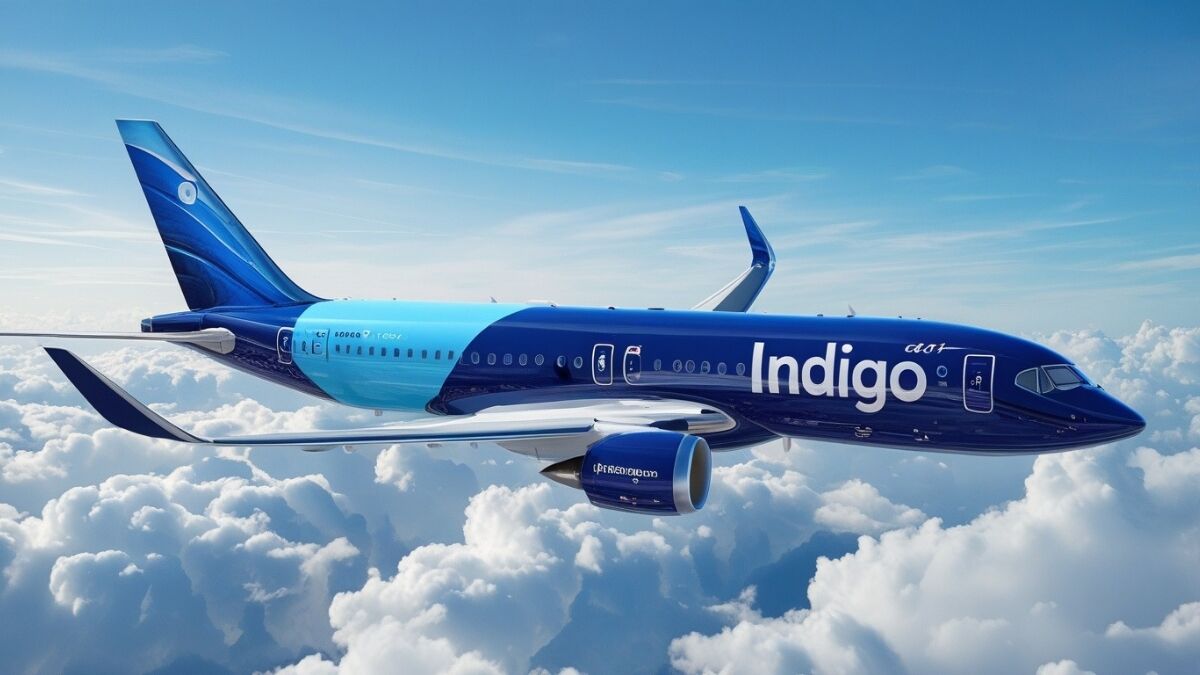
Following pressure on its October-December quarter profitability due to a mix of new labor rules, regulatory action, and major operational disruptions in December, IndiGo dramatically reduced its forecasts for near-term growth.
IndiGo Reports Worst Q3 Profit in Four Years
For the third quarter of fiscal year 2026 (FY26), India’s largest carrier reported a 78% year-over-year (y-o-y) decline in consolidated profit to ₹549 crore, its worst performance in four years, despite top management’s continued optimism about normalization of operations and obvious challenges.
The extraordinary expenses of ₹1,546.5 crore resulting from the new labor regulations’ implementation and passenger compensation during a week-long period of aircraft disruptions in December were the main causes of the Q3 decline.
Operational Disruptions and Regulatory Challenges
In the first week of December, the civil aviation regulator briefly halted IndiGo’s flight operations due to the disruptions, which resulted in a 10% decrease in daily domestic flight departures to roughly 2,000 per day.
The company has reduced its revenue growth objective for the current fiscal quarter as a result of this limitation. It now anticipates increase in available seat kilometers in “single digits,” which is less than the management’s forecast of “high teens” growth at the end of the second quarter.
Management Perspective on Recovery
During a post-earnings call on Thursday, Pieter Elbers, CEO of IndiGo, stated, “This (curtailment) will have an effect on the (March) quarter.” “October and November got off to a good start, but in December there were operational issues. There were 2,500 cancellations between December 3 and 5, which affected more than 300,000 individuals.
Since then, Elbers continued, operations have stabilized in January and should continue to do so in February. He declared, “We continue on our growth route.”
✈️ IndiGo Flight Disruption Overview
- Date: December 3-5, 2025
- Flight Cancellations: 2,500
- Passengers Affected: 300,000+
- Cause: New labor regulations and night flight restrictions
- Management Response: Stabilization of operations in January 2026
- Impact: Revenue and profit temporarily affected
In a post-earnings statement, chief financial officer Gaurav Negi stated, “Effects of the headwinds continue to build on us.” According to Negi, passenger revenue growth in the March quarter is anticipated to stay in the “mid to single digits” as the business recovers from a strong base that was fueled by more travelers during last year’s Kumbh Mela.
Despite the losses, Indigo’s operating revenue increased to ₹23,472 crore, up 6.2% from the same time last year and 26.5% sequentially. The airline’s revenue increased by 6% to ₹62,523.5 crore in the first nine months of the current fiscal year. In the year that concluded in March 2025, its revenue was ₹80,802.9 crore.
Analyst Insights
According to Gagan Dixit, an aviation expert with Elara Securities, “IndiGo’s figures are better than predicted for the December quarter.” One-time hits exist. In general, its operational indicators are unaffected in the long run. Ambit Capital’s chief analyst for hotels, real estate, aviation, and small and mid-cap companies, Karan Khanna, agreed.
“With a few exceptions, the results were mostly in line with street predictions,” he stated. “However, unusual events affected profitability for the (December) quarter, mainly because of FX losses, adjustments relating to the new labor code, and operational difficulties experienced in December.”
Future Outlook and Challenges
Khanna added that the corporation has not yet given any information about FY27 and has reduced its guidance for Q4. Looking ahead, the depreciation of the rupee is also anticipated to put impact on the fourth quarter. Therefore, compared to market expectations, Q4 earnings are unlikely to provide any positive substantial surprise,” he continued.
Even though the Sensex finished up 0.49% at 82,307.3 points on Thursday, shares of InterGlobe Aviation, the company that operates IndiGo, finished 1.15% higher on the BSE. After the markets closed, the airline released its earnings.
⚠️ IndiGo Labor Law & Night Flight Impact
- New Labor Laws: ₹970 crore spent on retirement benefits
- Flight Compensation: ₹577.2 crore for cancellations
- Cause: Night flight restrictions for pilots (Nov 1 onward)
- Fuel Costs: 17% sequential increase affected expenses
- Effect on Rivals: Air India also faces operational difficulties
- Overall Impact: Short-term profitability hit, long-term growth stable
Frequently Asked Questions
1. What caused IndiGo’s Q3 FY26 profit to decline?
Due to extraordinary expenses of ₹1,546.5 crore, IndiGo reported a 78% year-over-year decline in consolidated earnings to ₹549 crore. This covers the cost of putting new labor laws into effect as well as passenger reimbursement for flight cancellations in December.
2. What led to the operational disruptions in December?
Regulations under new labor laws that limited pilots’ nighttime flying hours resulted in flight cancellations. Over 300,000 people were impacted by the 2,500 flights that were canceled between December 3 and 5.
3. What impact did these problems have on IndiGo’s prospects for growth?
From the previous “high teens” prediction, the airline lowered its available seat km growth forecast for the March quarter to “single digits.” Growth in passenger revenue is predicted to stay in the middle to single digits.
4. Did IndiGo’s revenue increase in spite of the losses?
Yes, operating revenue increased to ₹23,472 crore, up 26.5% sequentially and 6.2% annually. Revenue increased by 6% to ₹62,523.5 crore for the first nine months of FY26.
5. What are the anticipated outcomes for Q4 and subsequent operations?
Management anticipates consistent performance in February after operations stabilized in January. However, the fall of the rupee may put pressure on Q4 profitability, and there is currently no projection for FY27.
Conclusion
IndiGo’s Q3 FY26 results show short-term operational and regulatory issues that negatively impacted profitability, such as the adoption of labor laws and flight cancellations. Revenue growth persists in spite of these obstacles, and management is nevertheless upbeat about operational stability.
Long-term operational measures seem unchanged, notwithstanding the reduction in near-term growth forecast. According to market analysts, the downturn will not have a long-term effect on the airline’s fundamental operations.
Disclaimer: This content is for informational purposes only and does not constitute financial or investment advice. Readers should conduct their own research or consult a professional before making any decisions.
