
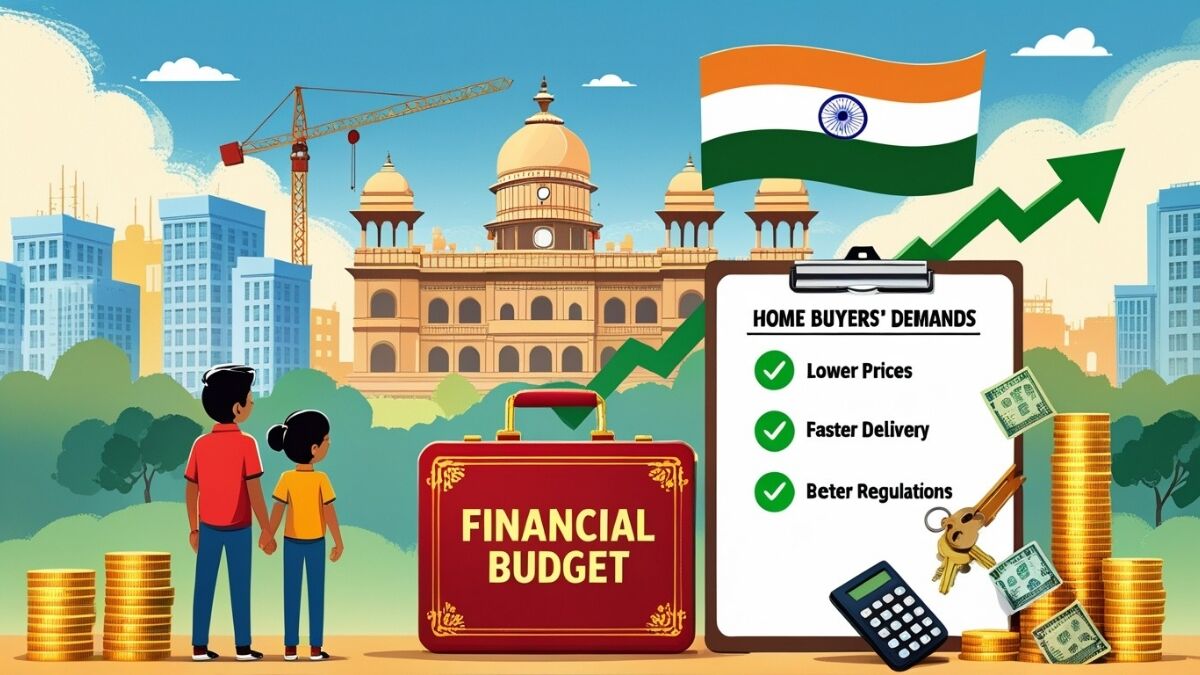
Throughout the past ten years, the government has made significant investments in capital expenditures in every budget, building on its Amrit Kaal strategy to improve both digital and physical infrastructure. We have seen this as the first stage in Amrit Kaal’s plan to make India a developed nation.
Phase-II Focus and FY27 Budget Expectations
Phase-II, which entails expanding economic production through widespread industrialization and boosting exports of manufactured products and services, has taken center stage while Phase-I is still in progress. Phase-II has focused on a number of areas, including labor upskilling, sunrise sector focus, entrepreneurship support, and the development of an innovation ecosystem.
We anticipate that the FY27 budget will maintain its emphasis on the two main goals of the previous budget: boosting industrial output and promoting consumption. There may be some respite in the form of a higher basic exemption level or small adjustments to the tax slab, but we do not anticipate major changes in personal taxes. Support for rural consumption in the form of food and fertilizer subsidies and employment guarantee programs is probably going to continue.
Performance-Linked Incentive Programs & Innovation Funding
It is anticipated that performance-linked incentive (PLI) programs will be maintained and extended to support electronics, including semiconductors, mobile phones, display units, and the production of clean-tech products like electric vehicles (EVs), battery storage systems, renewable energy sources (wind turbines, solar panels), and green hydrogen electrolysers.
More information about the National Manufacturing Mission, which was envisioned in the last budget, is also anticipated. A research, development, and innovation (RDI) fund, which was established in November of last year with a target corpus of Rs 1 lakh crore, may receive some more funding beyond the Rs 20,000 crore allotted in the previous budget to help the deep tech and sunrise industries.
🚀 Employment & Delivery Trends
- Date: New Year’s Eve 2025
- Total Orders: 7.5 million (all-time high)
- Delivery Partners: 4.5 lakh+
- Platforms: Zomato & Blinkit
- Context: Deliveries continued despite statewide gig worker strike
- Support: Local authorities helped maintain operations
Additionally, we anticipate certain measures for labor-intensive businesses and sectors affected by tariffs, such as toy manufacturing, textiles, and leather, as well as for vital rare-earth minerals, which have grown to be powerful levers in the current geopolitical trade-offs.
Infrastructure and Defense Capital Expenditures
Infrastructure and defense-related capital expenditures have continued to be the government’s top priorities. Over the past ten years, total capital expenditures have increased fourfold, from Rs 3.8 lakh crore to Rs 15.5 lakh crore.
Roads, railroads, and defense have continued to be the main priorities, accounting for roughly two-thirds of all capital expenditures during the previous five years. We anticipate that the government will continue to allot more than Rs 7 lakh crore under these three headings, even if we might not see any more increases. We anticipate substantial increases in funding for areas like housing and urban affairs, power, and renewable energy.
⚠️ Delivery Speed & Labor Debate
- Criticism: Sanjiv Kapoor questioned need for 10-minute delivery
- Defense: Enabled by dense store networks, not speeding
- Delivery Logic: 2.5 min packing + ~2 km ride at ~15 kmph
- No Timer: Riders don’t see delivery countdowns
- Political Concern: MP Raghav Chadha warned against gig worker exploitation
- Core Debate: Speed vs safety, fairness & dignity of gig workers
Revenue Expenditure and Fiscal Discipline
In keeping with the cautious approach demonstrated over the past many years, we anticipate that revenue expenditures will continue to be restrained. Except for interest payments, revenue expenditures decreased last year and increased only at a 0.6% CAGR during the previous five years (FY21–FY26 BE). This is significantly less than the growth in tax/non-tax collections, which increased at a 15.9% CAGR, and the growth in capital expenditures, which increased at an 18.7% CAGR during the same period.
We anticipate that the government will set a fiscal deficit target of 4.2% of GDP for FY27, but with all the fiscal stimulus it is providing for the economy, it is still likely to exceed or surpass the target of 4.4% of GDP.
Frequently Asked Questions
1. What is the anticipated FY27 fiscal deficit target?
In order to maintain fiscal restraint while promoting growth, the government is probably going to set the fiscal deficit objective at 4.2% of GDP, which is marginally less than the FY26 target of 4.4%.
2. How is the government going to encourage consumption?
It is anticipated that employment guarantee programs and food/fertilizer subsidies would continue to support rural consumption. There will not be any significant adjustments to personal income taxes, while there might be a slight adjustment to the tax slabs or basic exemption level to offer some comfort.
3. What policies are anticipated to increase industrial production?
The budget is anticipated to carry out Phase-II of the Amrit Kaal program, emphasizing exports and industrialization. Among the initiatives are:
- expansion of PLI programs for clean-tech manufacturing, renewable energy, electronics, and electric vehicles.
- RDI fund support for deep tech and emerging industries.
- targeted programs for industries like toys, leather goods, and textiles that are labor-intensive and affected by tariffs.
4. What will be the distribution of capital expenditures?
Capital spending will continue to be a major priority, especially for housing and urban affairs, defense, power, renewable energy, highways, and railroads. The administration wants to keep funding for highways, railroads, and defense at more than Rs 7 lakh crore.
5. Will spending on revenue go up?
It is anticipated that revenue expenditures would continue to be controlled. It has expanded at a mere 0.6% CAGR between FY21 and FY26, which is significantly less than the growth in tax receipts (15.9% CAGR) and capital expenditures (18.7% CAGR). This conservative approach is probably going to continue.
Conclusion
The budget for FY27 is probably going to strike a balance between growth-oriented projects and fiscal restraint. The government wants to expedite Phase-II of the Amrit Kaal program by maintaining high capital spending, boosting industrial output, encouraging rural and urban consumption, and aiming for a 4.2% fiscal deficit.
By focusing on infrastructure, innovation, industrialization, and exports, this strategy positions India for long-term economic growth while maintaining a stable fiscal framework.
Disclaimer: The information provided in this article is for informational purposes only and does not constitute financial, investment, or professional advice. Readers should consult a qualified expert before making any decisions.
