
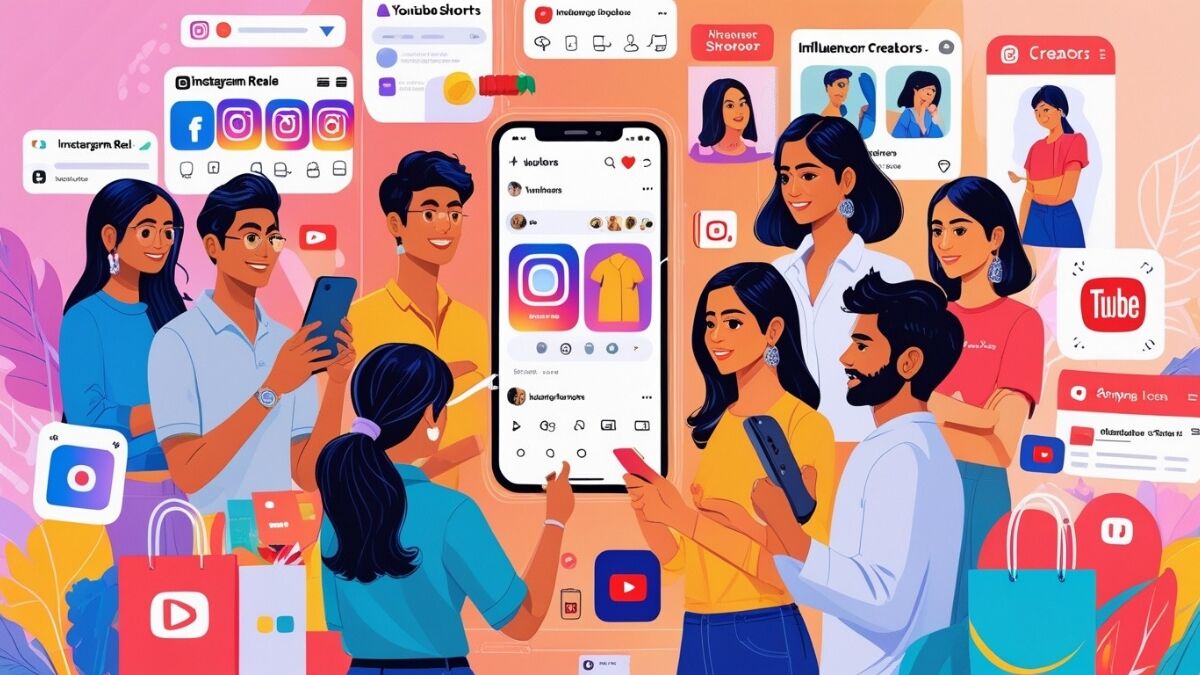
Customers may explore, find, and buy things directly within apps like Facebook, Instagram, and TikTok thanks to social commerce, which is the integration of e-commerce features into social media platforms.
Understanding Social Commerce
Social commerce thrives on discovery, inspiration, and impulse, in contrast to traditional e-commerce, where customers enter with the intention of making a purchase. Through livestream shopping, algorithm-driven feeds, and creator content, users come across products and finish transactions without visiting a retailer’s website.
Both brands and consumers gain from the model. From discovery to checkout, customers enjoy a seamless experience. Within a closed ecosystem, marketers may directly link ad exposure to sales by gaining access to highly engaged audiences and more transparent attribution.
Brand Investment in Social Commerce is Increasing
Changing the way people discover things
According to Salsify, 73% of Gen Zers in the US claim that social media is their primary source of information about new items. Ignoring social media channels puts brands at risk of becoming less visible during the crucial discovery stage.
Growth of the creator economy
EMARKETER predicts that social media creator revenue will rise 16.2% to $20.6 billion this year.
Effectiveness of Influencers
According to the National Advertising Division of BBB National Programs, 58% of customers over the age of 18 have bought products as a result of an influencer recommendation.
Investment in platforms
In order to improve the ease of in-app commerce, major platforms keep adding shopping features, livestreaming capabilities, and creator monetization tools.
Social Commerce Platforms and Market Trends
According to EMARKETER, TikTok Shop is expanding at the quickest rate and will overtake big retailers in e-commerce sales by 2026, but Facebook still has the most social shoppers in the US overall.
According to EMARKETER, TikTok Shop’s US e-commerce sales would reach $23.41 billion in 2026, a 48% increase from the previous year. As a result, TikTok Shop would have a bigger US e-commerce company than Kroger, Target, Costco, or Best Buy. TikTok is an extremely powerful product recommendation and discovery engine because to its algorithm.
Through Facebook Marketplace and Facebook Shops, which allow companies to establish online storefronts with in-app checkout, Facebook maintains the largest social buyer base. Brands may tag products in posts, stories, and reels using Instagram Shopping. According to EMARKETER Industry KPIs, reel video views for luxury brands increased by 234% in Q2 2025 as some brands moved their content distribution away from TikTok.
🚀 TikTok & Instagram Social Commerce Boom
- TikTok Shop 2026: $23.41 billion US e-commerce sales
- Facebook Shoppers: Largest social buyer base in US
- Instagram Shopping: Product tagging in posts, stories & reels
- Luxury Brand Reach: Reels views +234% in Q2 2025
- Trend: Algorithm-driven discovery & impulse purchases
Generational Influence on Social Commerce
Although the gap with older generations is closing, younger consumers are driving the development of social commerce. According to a September 2025 Bizrate Insights poll for EMARKETER, one-third of persons between the ages of 18 and 34 had made a purchase on social media, compared to 23% of those between the ages of 35 and 54 and 13% of those between the ages of 55 and 65.
Gen Z is unique in that they use social media as their main method of product discovery. According to Salsify, 73% of Gen Zers in the US claim that social media is their primary source of information about new items. In contrast, 61% of Gen Xers find products while perusing actual retail establishments.
Popular Categories and TikTok Shop Growth
Because “get ready with me” videos and shopping haul material continue to be popular among younger viewers, beauty, cosmetics, and clothing do especially well on social commerce platforms.
Despite having fewer social buyers overall than Facebook, TikTok Shop, which formally opened in September 2023, is the fastest-growing social commerce site in the United States. Its algorithm-driven feed is excellent for finding products and making impulsive purchases, especially for inexpensive, trend-driven products that producers are promoting.
🎉 TikTok Shop BFCM 2025 Success
- Sales: $500+ million in 4 days
- Customer Growth: ~50% YoY increase in purchases
- Livestream Views: 1.6 billion from 760,000+ sessions
- US Ownership: ByteDance 19.9%, Oracle/Silver Lake/MGX 50%
- Impact: More consistency for advertisers
Consumer Trust Challenges
One major obstacle to the adoption of social commerce is still consumer trust.
Skepticism of influencers:
According to the National Advertising Division, 26% of consumers do not trust influencer marketing, which is more than twice as many as the 11% who do not believe advertising in general.
Disclosure issues:
64% of consumers do not trust influencers who do not reveal their affiliation with brands.
Preferences for platforms:
Instead of using in-app checkout capabilities, many younger consumers still choose to complete purchases through reputable businesses that manage transactions, shipping, and delivery. Brands that place a high value on openness, genuine creative connections, and frictionless fulfillment experiences can benefit from these trust gaps.
Influencer Marketing as a Performance Channel
Influencer marketing increases quantifiable sales, but its efficacy relies on sincerity and openness.
According to the National Advertising Division, 58% of customers over the age of 18 have bought products as a result of an influencer’s recommendation. With platforms like Later handling $2.4 billion in annualized gross merchandise value through creator-led commerce, influencer marketing has developed from an awareness strategy to a full-funnel performance channel.
The most successful collaborations have several characteristics in common:
Openness
Customers have faith in influencers who openly reveal their brand affiliations.
Genuineness
Chasing follower counts is not as effective as collaborating with creators who actually use and promote items.
Measuring
Real-time campaign optimization is made possible by the ability of contemporary creative platforms to link each post to revenues at the SKU level.
However, according to data by Viral Nation and EMARKETER, more than half of marketers only spend 30 minutes or fewer screening a single influencer. Inadequate screening puts brands’ reputations at danger.
Key Social Commerce Recommendations
Instead of viewing social commerce as a continuation of traditional e-commerce or social media advertising, marketers should view it as a separate channel that demands committed commitment.
Start where your target market already makes purchases. Instagram and TikTok Shop should be given top importance when addressing Gen Z or millennials.
As a performance channel, make investments in creative collaborations. Select systems that link creator content to sales attribution at the SKU level.
Incorporate measurement into each brief. Brands run the danger of squandering money if they are unable to link creative posts to revenue. Ask platform partners to provide attribution features.
Selectively test streamed commerce. During BFCM 2025, participating brands saw an 84% year-over-year increase in sales because to TikTok livestreams; nonetheless, the format necessitates a substantial investment in creator skill and production.
Frequently Asked Questions
1. Describe social commerce.
By integrating e-commerce straight into social media platforms, social commerce enables users to find, peruse, and purchase goods without ever leaving apps like Facebook, Instagram, or TikTok.
2. What impact do artists have on social commerce?
Discovery, inspiration, and impulsive purchases are fueled by creators. Because real influencer content, livestream shopping, and algorithmic feeds link audiences to products, creator collaborations play a crucial role in driving sales.
3. In 2026, which platforms will dominate social commerce?
The fastest-growing social commerce platform in the US, TikTok Shop, is predicted to overtake several traditional stores in terms of online sales. Instagram Shopping is the best at product tagging in posts, stories, and reels, while Facebook continues to have the most total social shoppers.
4. Who is most likely to make a purchase using social media?
73% of Gen Z consumers use social media as their main method of product discovery, making them the adoption leaders. While older generations are progressively increasing their engagement in social commerce, millennials also take part.
5. What are the primary obstacles to the adoption of social commerce?
Consumer trust is still a barrier: development may be constrained by doubts about the legitimacy of influencers, unreported brand partnerships, and a preference for well-known businesses for transactions and deliveries. Overcoming these obstacles requires openness, genuine creator partnerships, and consistent gratification.
Conclusion
In 2026, social commerce will be a complete retail channel driven by platforms and artists rather than only a marketing fad. While brands profit from quantifiable sales and audience engagement, consumers gain from easy discovery and checkout.
With an emphasis on openness and trust, the most effective social commerce tactics include real influencer collaborations, platform-specific investments, and thorough measurement.
In the changing social commerce ecosystem, brands may maximize sales and brand loyalty by efficiently leveraging creators and meeting customers where they shop, especially on TikTok Shop and Instagram.
Disclaimer:
This content is for informational purposes only and does not constitute financial or business advice. Always consult professionals before making business or investment decisions.