
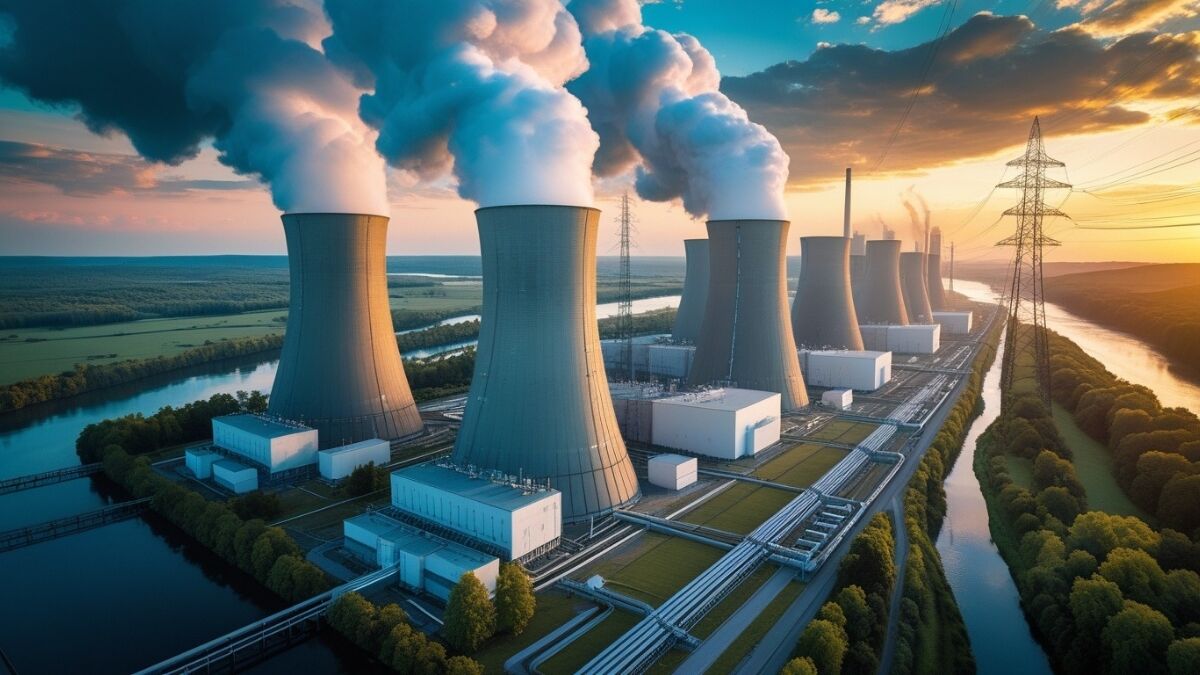
At the India Energy Week (IEW), Rosatom exhibited its integrated proposal for large nuclear power units and small modular reactors (SMRs), featuring a unique Russian technology for countries with vast coasts and developed island territories—a floating power unit.
Rosatom’s Strategy and Research Initiatives
The massive nuclear power company offered a thorough strategy for resolving issues in the field of nuclear energy and demonstrated a willingness to carry out cooperative research initiatives.
Multi-loop Research Reactor (MBIR) Collaboration
The potential for scientific and technical collaboration based on the multi-loop research reactor (MBIR), which will become the most potent research reactor in the world after commissioning in 2028, received particular emphasis.
Additionally, India has been requested to take part in global research initiatives and join an international consortium centered around the reactor. Russia is actively pursuing collaboration with any nations that are interested. The implementation of significant multinational projects continues. According to the company, Rosatom and its divisions are actively working on this project.
India as a Key Partner
“India is a critical partner with whom we have been working for many years to develop nuclear and related industries. According to Egor Kvyatkovsky, CEO of Rosatom International Network, joint nuclear initiatives provide a strong technological and human base that will last for decades.
He continued, “The experience of implementing Rosatom’s flagship project, Kudankulam Nuclear Power Plant, demonstrates that the firm does not just work on individual tasks for the facility, but works with the project throughout its life cycle, helping to the industrial development of India.”
Opportunities in SMRs and Non-Energy Fields
“We see enormous potential for strengthening cooperation in both big power units and small modular reactors (SMRs) building projects, as well as in non-energy fields such as nuclear medicine, isotope supplies, cooperative research initiatives, additive technologies and digital solutions,” Kvyatkovsky stressed.
One of Rosatom’s potential sectors is small nuclear power plants (SNPP). These are perfect for isolated areas with inadequate power grid infrastructure where it is not feasible to construct more potent NPPs.
🚢 Rosatom Floating Nuclear Power Units
- Technology: Floating nuclear power unit
- Location: Akademik Lomonosov, Pevek, Russia
- Reactors: 2 × KLT-40
- Purpose: Power isolated coastal and island regions
- Significance: Only floating co-generation nuclear power plant in the world
On the fringes of the IEW, Royal India Corporation (India) and the Engineering and Technology Center GET JSC (part of the Rosatom circuit, involved in simulator construction and mathematical modeling for Russian and foreign nuclear power plants) signed a memorandum of understanding that called for the creation of a joint company with the goal of fostering collaboration in the areas of education and training human resources, research activities, and the introduction of cutting-edge technologies and best practices.
Rosatom Global Presence and Expertise
Currently, Rosatom runs the Akademik Lomonosov, a floating power unit with two KLT-40 reactors, which is the only floating co-generation nuclear power plant (FNPP) in the world. The city of Pevek in Russia’s Far East’s Chukotka Autonomous District (CAD) is home to the factory.
About 20% of Russia’s power generation comes from Rosatom, a multi-industry holding firm with assets in power engineering, machine building, and construction. With 41 units at various phases of implementation spread across 11 countries, it leads the world in the size of the order portfolio for the construction of nuclear power plants (NPPs). It has more than 550 businesses that employ close to 420,000 people.
From uranium mining to the tail end of nuclear facility life cycles, Rosatom is the only corporation in the world with all the technology involved in the nuclear fuel cycle.
🤝 India-Rosatom Cooperation MoU
- Partners: Royal India Corporation & GET JSC
- Focus: Education, human resource training, research activities
- Technology: Introduction of cutting-edge nuclear tech
- Objective: Strengthen international cooperation and knowledge transfer
Frequently Asked Questions
1. At India Energy Week (IEW), what did Rosatom present?
Rosatom demonstrated its integrated solutions for small modular reactors (SMRs), large nuclear power units, and a special floating nuclear power unit intended for nations with extensive coasts and island territories.
2. What makes Rosatom’s floating nuclear power plant technology unique?
It is a little floating nuclear power plant intended to provide electricity to isolated island and coastal areas. Based on the Akademik Lomonosov unit, Rosatom presently runs the only floating co-generation nuclear power plant in the world.
3. What is the MBIR reactor that Rosatom mentioned?
When MBIR, a multi-loop research reactor, is put into service in 2028, it will likely be the most potent research reactor in the world, enabling cutting-edge worldwide nuclear research initiatives.
4. How is India involved in Rosatom’s nuclear plans?
Rosatom emphasized continued engagement through projects like the Kudankulam Nuclear Power Plant and prospective SMR and large-unit partnerships, while also inviting India to join a worldwide MBIR research consortium.
5. During IEW, what contracts were signed?
GET JSC (part of Rosatom) and Royal India Corporation inked an MoU to form a cooperative venture focused on education, human resource training, research activities, and novel nuclear technologies.
Conclusion
In addition to strengthening long-term cooperation with India, Rosatom’s presentation at India Energy Week underscores its drive into cutting-edge nuclear technology, such as SMRs and floating nuclear power plants.
Rosatom is establishing itself as a major international partner in the development of next-generation nuclear energy through projects including massive reactors, research collaborations, and training programs.
Disclaimer: The information provided in this article is for informational purposes only and does not constitute financial, legal, or professional advice. Readers should conduct their own research before making decisions based on this content.
