
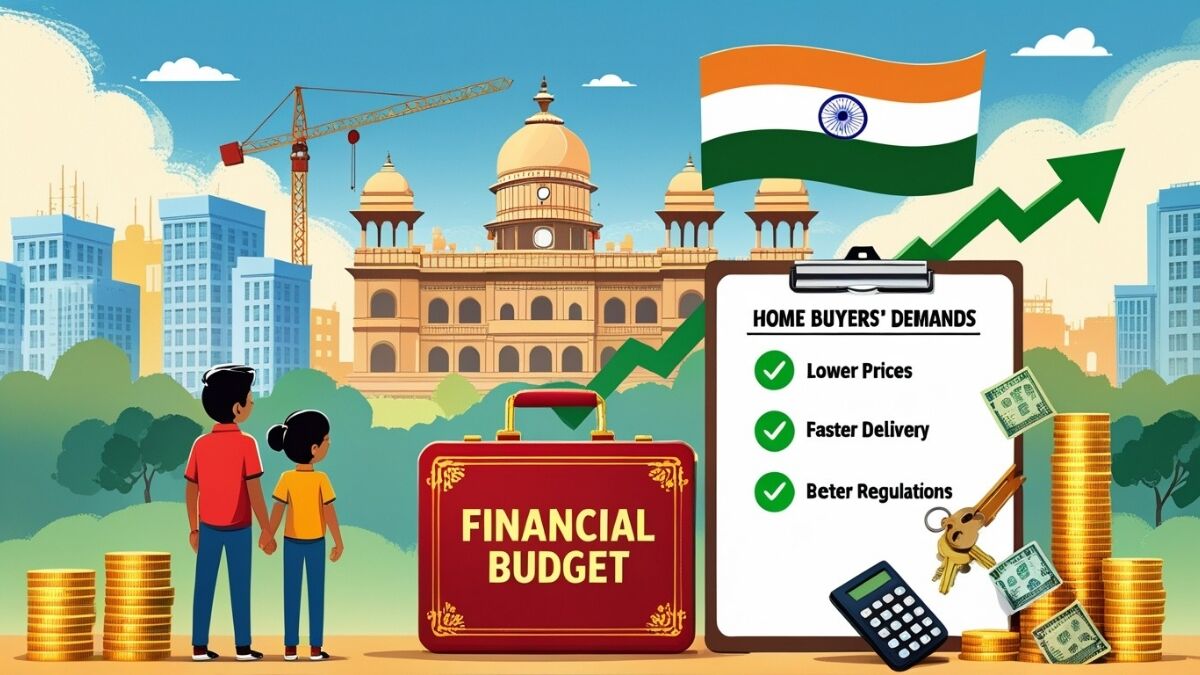
In order to maintain the rate of infrastructure development and economic progress, the government has proposed an outlay of Rs 12.2 lakh crore for 2026–2027, which would result in a major increase in public capital spending in the next fiscal year.
India Budget 2026 Capital Expenditure Overview
From Rs 2 lakh crore in 2014–15 to an allocation of Rs 11.2 lakh crore in BE 25–26, public capital spending has grown significantly. Finance Minister Nirmala Sitharaman said during the presentation of the Union Budget 2026 that the budget for the next fiscal year 2026–2027 seeks to raise it to Rs 12.2 lakh crore in order to maintain the pace.
Large-scale infrastructure development, such as the construction of new freight routes and the operationalization of 20 more inland waterways, starting with one in Odisha, is anticipated to be supported by the increased capital expenditure allocation. In an effort to attract private participation in large-scale projects, the government also intends to establish an infrastructure risk guarantee fund that would provide credit guarantees to lenders.
Monetizing Assets & REITs
The Budget suggests creating specialized real estate investment trusts (REITs) to recycle assets of core public sector businesses in order to monetize existing assets.
Support for MSMEs and Small Companies
The government has prioritized the development of small companies in addition to infrastructure. The finance minister unveiled a three-pronged plan that includes equity assistance via the MSME development fund: “Rs 10,000 crore SME growth fund to generate champions among MSMEs.” She said that an extra Rs 2,000 crore would go to the self-sufficient India fund.
🏗️ Rs 12.2 Lakh Crore Capital Expenditure
- FY 2026–2027 Allocation: Rs 12.2 lakh crore
- Goal: Boost infrastructure & economic development
- Key Projects: Freight routes, inland waterways, industrial clusters
- Private Participation: Infrastructure Risk Guarantee Fund
- Asset Monetization: Specialized REITs for public sector assets
Revival of Industrial & Manufacturing Clusters
With efforts to revitalize 200 legacy industrial clusters, manufacturing and industrial clusters will also get a boost. The finance minister highlighted the wider manufacturing goal by stating that “India has the potential to develop as a worldwide powerhouse for sports products.”
Textile, Handloom & Khadi Initiatives
The Budget included provisions to establish mega textile parks in challenge mode, a national handloom and handicrafts program, and a textile labor incentive scheme. Along with the introduction of the Mahatma Gandhi Gram Swaraj Initiative, a specific plan to support khadi and handcraft textiles has also been put out.
💼 SME & Industrial Cluster Growth
- SME Growth Fund: Rs 10,000 crore for MSME champions
- Self-Reliant India Fund: Extra Rs 2,000 crore allocation
- Industrial Clusters: Revitalization of 200 legacy clusters
- Manufacturing Goal: India as a global sports products hub
- Textile & Handloom Support: Mega parks, incentive schemes, khadi promotion
Frequently Asked Questions
1. What capital expenditures is the India Budget 2026 proposing?
For FY 2026–2027, the government has allocated Rs 12.2 lakh crore to promote economic development and infrastructure.
2. To what extent has public capital spending grown since 2014–15?
It increased from Rs 2 lakh crore in 2014–15 to Rs 11.2 lakh crore in BE 2025–26, and its current goal is Rs 12.2 lakh crore in 2026–2027.
3. Which industries stand to gain from the higher capital expenditures?
There will be significant investments in infrastructure projects such as textiles, MSMEs, inland waterways, freight routes, and industrial clusters.
4. What does the budget’s SME development fund entail?
The goal of the Rs 10,000 crore SME growth fund is to assist MSMEs and develop champions among them. The Self-Reliant India Fund will get an extra Rs 2,000 crore.
5. How will the government monetize its current assets?
In order to recycle assets of key public sector businesses and make money, the budget suggests establishing specialized REITs (Real Estate Investment Trusts).
Conclusion
Sustained economic growth, extensive infrastructure development, and assistance for MSMEs and industrial clusters are the main objectives of the India Budget 2026.
The government intends to boost India’s industrial and economic capacities while luring private investments with a record capital expenditure of Rs 12.2 lakh crore. Initiatives in khadi, textiles, and handlooms further highlight sector-wide job creation and balanced development.
Disclaimer: This article is for informational purposes only. The data and statements are based on the India Budget 2026 announcements and official sources