
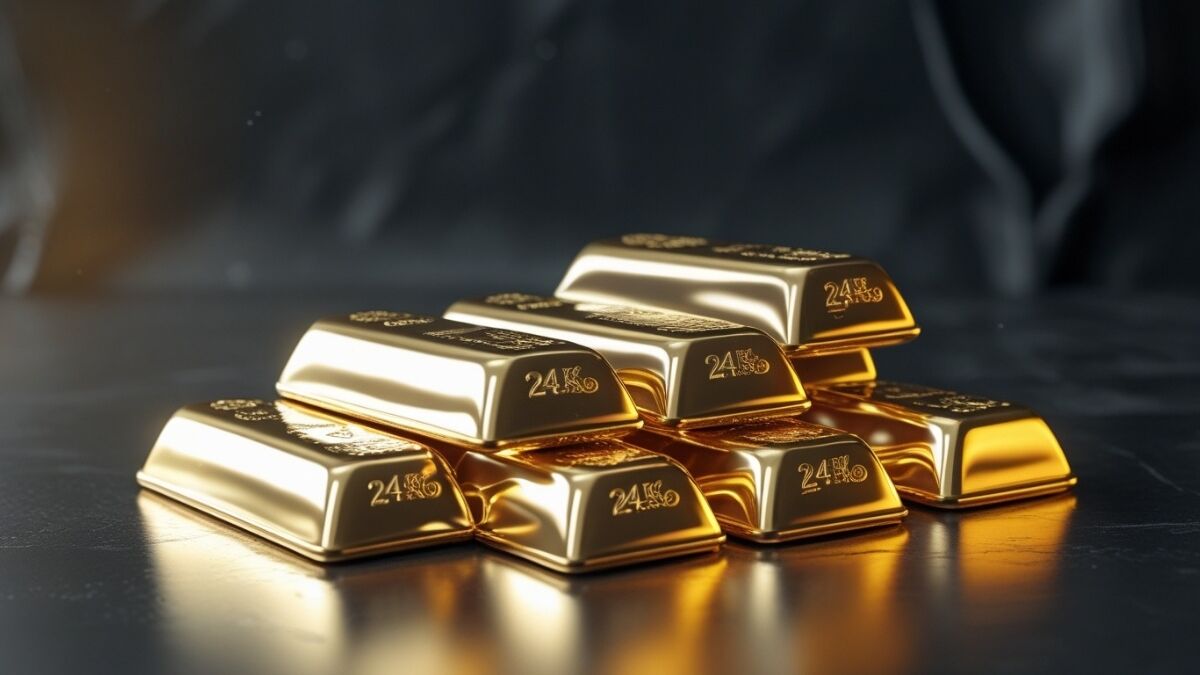
Following its biggest decline in over 10 years, gold fell more than 3% to below $4,800 on Monday, extending losses from the previous session.
Why Did Gold Prices Suddenly Fall?
Reports that US President Donald Trump intends to choose Kevin Warsh, who is seen to be a more hawkish candidate, to head the Federal Reserve were the catalyst for Friday’s crushing defeat.
Following an unrelenting surge that had sent gold to new highs, profit-taking also surfaced.
Drivers Behind Gold’s Earlier Rally
Strong central bank demand and the so-called “debasement trade,” in which investors switched from currencies and bonds to tangible assets due to worries about rising government debt, drove that increase.
Concerns about the Fed’s independence and increased economic and geopolitical unpredictability strengthened the attraction of gold as a safe haven.
Speculative Activity and Market Momentum
Gains were further boosted by momentum buying, and a flood of purchases from Chinese speculators exacerbated the fall by adding froth to the rise.
🟡 Gold Market Shock Snapshot
- Price Drop: Over 3% in a single session
- Trigger: Hawkish Fed leadership expectations
- Market Action: Heavy profit booking
- Investor Behavior: Long-position liquidation
- Currency Impact: Strong US dollar pressure
- Trend: Correction after multi-year highs
Why did the price of gold drop so quickly?
A number of reasons contributed to the abrupt decline in precious metal prices. One reason was that prices had increased too much, and some profit booking was anticipated. According to several experts, the significant liquidation of long positions was the cause of the price drop. Gold was also under pressure due to a dollar record.
When equities decline, what happens to gold?
Gold often does well during a recession because of its image as a safe-haven asset. For instance, investor demand for gold increased when the stock market crashed in 2007, and between 2007 and 2011, the value of gold doubled.
📉 Gold During Economic Stress
- Recession Role: Traditional safe-haven asset
- 2007–2011: Gold prices doubled
- Stock Market Falls: Gold demand usually rises
- Liquidity Risk: Short-term sell-offs possible
- Investor Strategy: Wealth preservation tool
- Reality: Safe, but not volatility-free
Will Gold Prices Keep Falling?
Gold prices may fluctuate significantly in the short term. Strong US dollar gains, increasing rates, and changes in investor positioning that led to profit booking and forced liquidations have all contributed to recent steep declines in global markets. For instance, even after reaching record highs, gold has lately seen significant intraday fluctuations and declines.
However, rather than being entirely pessimistic, experts’ medium-term view is still split. Due to geopolitical tension, central bank purchases, and persistent macro uncertainty, many organizations predict that prices may remain high or possibly rise in 2026; nevertheless, returns are probably going to decline after the current big gain.
A stronger US currency, rising interest rates, and less demand for safe havens are the main factors that might limit further losses. Conversely, lower real rates and ongoing geopolitical risk might boost prices. Overall, the gold market may experience periods of correction within a very volatile range as opposed to a straightforward ongoing drop.
In a recession, is gold safe?
During economic downturns, gold is often seen as a safe-haven investment. Historically, investors have shifted their cash into gold as a hedge against uncertainty and currency weakness when recession risks increase—due to slowed GDP, market stress, or financial instability. This pattern is indicative of gold’s position as a store of wealth, especially during periods of weakness in stocks or riskier assets.
“Safe” does not, however, imply immunity to fluctuations in price. Sharp drawdowns in gold may still occur during times of financial strain, particularly when investors sell assets to obtain money and liquidity dries up. According to recent market research, gold’s function as a hedge may be complicated since, while it often beats stocks during downturns, it can nevertheless decline in the face of forced liquidations and significant volatility.
Although gold may cushion portfolios during recessions and generally maintains buying value over time, it should be considered a diversification tool rather than a surefire defensive asset.
What Would Happen If I Put $1,000 Into Gold Ten Years Ago?
By early 2026, your $1,000 gold investment from ten years ago would probably have increased tremendously. Gold prices have increased significantly over the last ten years, according to historical pricing statistics. For instance, the price of gold per 10 grams in India rose from around ₹28,600 in 2016 to well over ₹1,50,000 by 2026, suggesting a significant cumulative growth throughout this time.
Gold produced a total return of around 450% between 2016 and 2026, according to market return estimates. This corresponds to a compound annualized growth rate (CAGR) of about 18–19% annually over a ten-year period.
This implies that, before taxes and expenses, your initial $1,000 investment may be worth at least $4,400 today. This demonstrates the long-term tendency of gold appreciation, particularly in times of economic instability, inflation, and currency weakness. Gold has traditionally rewarded long-term holders, but keep in mind that previous success does not guarantee future returns.
Frequently asked questions
1. In spite of its reputation as a safe haven, why does gold decline?
The safe-haven status of gold is mostly applicable in the medium to long term. Prices may drop precipitously in the near future as a result of profit-taking, margin calls, or liquidation by cash-strapped investors. Even in the face of uncertainty, investors may sell gold to offset losses elsewhere at times of abrupt market stress, resulting in brief drops.
2. What effect does the US dollar have on the price of gold?
A higher dollar usually puts pressure on gold prices since gold is valued in US dollars worldwide. Demand for gold declines as the dollar appreciates because it becomes more costly for buyers outside of the US. On the other hand, a declining dollar often encourages greater gold prices.
3. Does the performance of gold depend on interest rates?
Yes, Since gold does not provide interest or dividends, higher interest rates raise the opportunity cost of owning gold. While declining rates often promote gold prices, rising returns on bonds and savings vehicles might lessen the attraction of gold.
4. Does the price of gold depend on central bank purchases?
A major factor in long-term gold patterns is central bank demand. By lowering market supply and enhancing gold’s function as a reserve asset during times of currency and debt problems, large purchases by central banks enhance prices.
5. Is gold a long-term or short-term investment?
Generally speaking, gold works better as a long-term investment and portfolio diversifier than as a short-term trading asset. Gold has traditionally helped maintain value over extended periods, particularly during inflationary or uncertain economic cycles, despite the fact that short-term volatility may be rather severe.
Conclusion
Despite having solid long-term fundamentals, gold’s recent steep drop underlines the metal’s short-term volatility. After protracted rises, factors including profit-taking, a stronger US currency, increasing interest rates, and changes in market attitude may cause abrupt falls.
Gold is still a valuable hedge against inflation, currency depreciation, and unstable economic conditions, nevertheless. History demonstrates that gold tends to hold its value over time and perform well during times of financial crisis, even if it is not impervious to price fluctuations.
It is ideal for investors to think of gold as a long-term, strategic investment in a diversified portfolio rather than as a safety net against immediate losses.
Disclaimer:
The information provided is for general informational purposes only and should not be considered financial or investment advice. Gold prices are subject to market risks and volatility. Past performance is not indicative of future results. Always consult a qualified financial advisor before making any investment decisions.
