
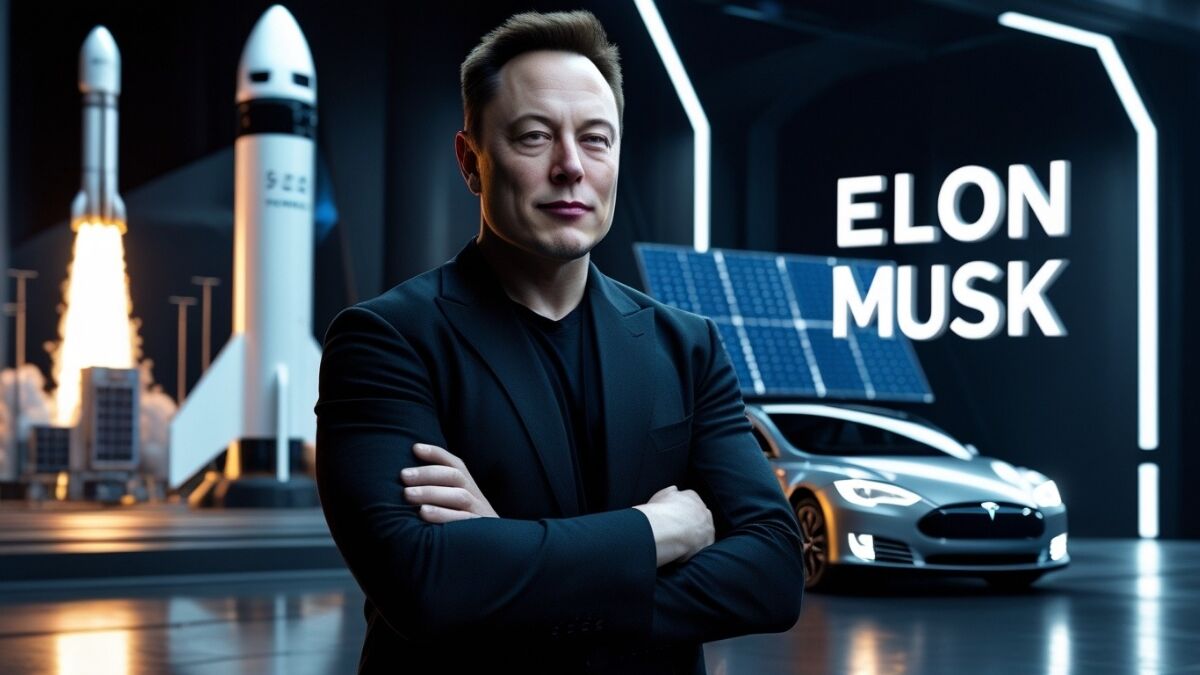
The acquisition of xAI by Elon Musk’s SpaceX reflects the billionaire’s more expensive aspirations to control artificial intelligence and space exploration.
Elon Musk’s Vision Behind the SpaceX–xAI Merger
Musk signed a statement on SpaceX’s website announcing the deal and confirming a previous report from Bloomberg News.
According to those familiar with the situation, the deal values xAI at $250 billion and SpaceX at $1 trillion. The combined company’s valuation of $1.25 trillion was communicated to staff in a memo on Monday, some of the people said previously.
Record-Breaking Valuation and Strategic Integration
🚀 SpaceX–xAI Merger Snapshot
- Deal Type: All-stock acquisition
- xAI Valuation: $250 billion
- SpaceX Valuation: $1 trillion
- Combined Valuation: $1.25 trillion
- Core Goal: Vertically integrated AI and space innovation
- Key Assets: AI, rockets, satellites, Starlink, real-time data
According to the announcement, SpaceX purchased xAI in order to “create the most ambitious, vertically-integrated innovation engine on (and off) Earth, with AI, rockets, space-based internet, direct-to-mobile device communications and the world’s best real-time information and free expression platform.”
Some of the insiders, who asked not to be named because the information is confidential, predicted that the merged company’s shares would be worth $526.59 each. According to one of the people, the sale is entirely stock.
IPO Plans and Share Structure Details
The acquisition brings together two of the largest closely held corporations in the world. According to Bloomberg, SpaceX planned to proceed with a share offering in December at a valuation of over $800 billion, while XAI raised cash in January at a $230 billion valuation.
The statement on SpaceX’s website omitted information on the terms of the offering, such as price and valuation.
Future IPO Expectations
According to one of the persons, the company still plans to hold an IPO later this year. According to earlier reports from Bloomberg News, SpaceX had been preparing an IPO that might garner up to $50 billion.
According to Musk’s announcement outlining the deal’s justification, the least expensive method of performing AI calculations in two to three years will be in space.
AI Computing in Space: Musk’s Cost-Efficiency Argument
He added, “This cost-efficiency alone will enable enterprising enterprises to advance in training their AI models and processing data at unprecedented speeds and scales, accelerating discoveries in our understanding of physics and invention of solutions to benefit humanity.”
According to a document on Friday, SpaceX is asking for authorization to launch up to a million satellites into Earth’s orbit for the project.
Operational Complexity and Capital Intensity
🛰️ Starlink’s Role in Funding xAI
- Satellites: 9,000+ in orbit
- Revenue: Exceeds rocket launch sales
- xAI Burn Rate: ~$1 billion per month
- Strategic Benefit: Cash flow for AI infrastructure
- Synergy: Compute power, data access, financing
The offering significantly complicates Musk’s numerous business endeavors. In late 2022, the billionaire paid $33 billion to acquire the social media website Twitter, rename it X, and combine it with his artificial intelligence startup xAI.
XAI, which also maintains chatbot Grok, is a pricey enterprise, burning approximately $1 billion a month in support of its declared ambition to achieve “a deeper comprehension of our universe.” A merger with SpaceX combines finance, people, access to computer power — and blurs corporate boundaries.
SpaceX’s Strategic Strength and Government Role
SpaceX is perhaps Musk’s most successful and reliable enterprise, in contrast to some of his other endeavors. The corporation is a major supplier of rocket launches for NASA and the US Department of Defense, which the White House has attempted to rename the Department of War. It is the only American company capable of regularly sending personnel to and from the International Space Station.
The increased revenue it’s collecting from the Starlink network of more than 9,000 satellites is even more significant, now surpassing launch sales and creating a possible source of finance for xAI’s capital-intensive industry.
Frequently asked Questions
1. How much is the merged SpaceX–xAI corporation worth?
According to those familiar with the transaction, the merged company is worth $1.25 trillion, with SpaceX valued at $1 trillion and xAI at $250 billion.
2. What form of deal is this—cash or stock?
It is an all-stock acquisition. No cash changed hands, and the combined company’s shares are projected to be worth $526.59 per share, albeit this information is not yet public.
3. What motivated SpaceX to purchase xAI?
According to Elon Musk, the objective is to build a vertically integrated innovation engine that combines real-time information platforms, satellite internet, AI, rockets, and direct-to-device communications. A important motivator is Musk’s assumption that AI processing would become inexpensive in space within 2–3 years.
4. After this combination, would SpaceX still go public?
Yes. According to earlier reports, SpaceX is still anticipated to pursue an IPO later this year, potentially raising up to $50 billion, notwithstanding the merger.
5. How would Starlink assist with xAI?
With more than 9,000 satellites, SpaceX’s satellite internet company Starlink now makes more money than rocket launches. This cash flow might help fund xAI’s capital-intensive activities, which reportedly burn approximately $1 billion every month.
Conclusion
One of the most ambitious corporate integrations to date, the merging of SpaceX and xAI unites global communications, artificial intelligence, and space exploration under one roof.
With a combined valuation of $1.25 trillion, the transaction strengthens Elon Musk’s interwoven business empire and puts SpaceX as a vital financial and technological backbone for xAI’s AI ambitions.
Although the plan calls for previously unheard-of levels of innovation, it also raises concerns about regulation, governance, and the increasing concentration of power among Musk’s businesses.
Disclaimer:
This article is for informational purposes only and does not constitute financial, investment, or legal advice. All valuations and details are based on publicly available reports and sources at the time of writing and may change.