
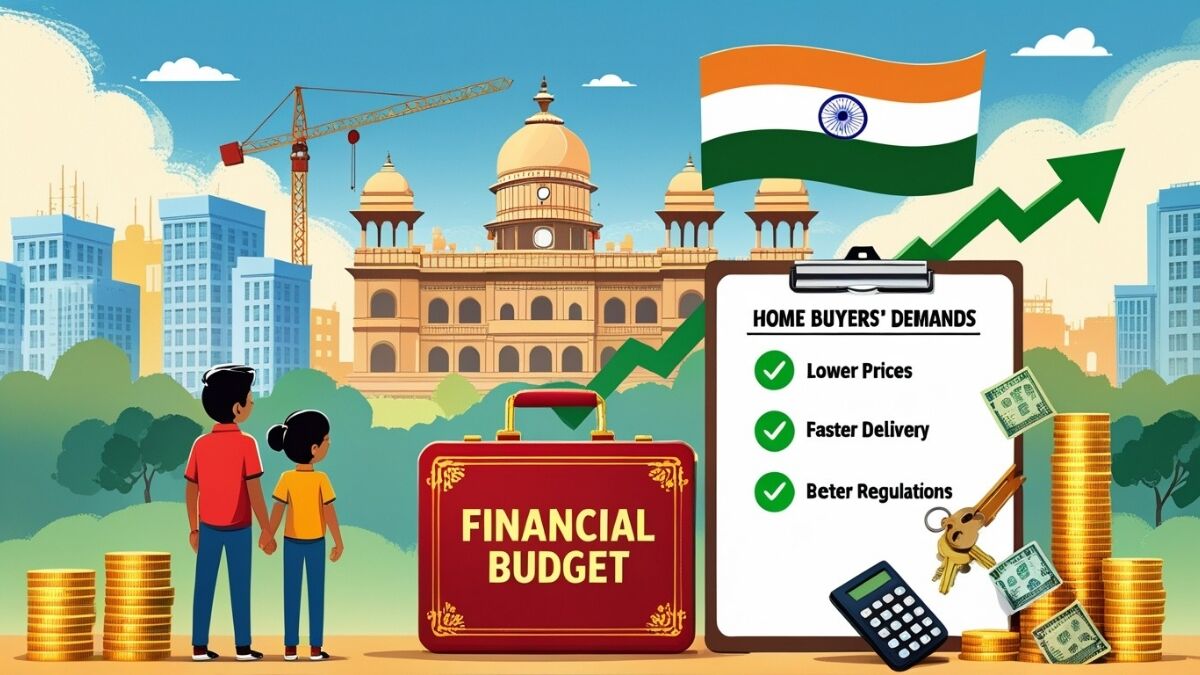
India’s Budget 2026–2027 signals a decisive pivot toward a services-led growth model, positioning high-skill employment, exports, and digital innovation at the heart of the country’s long-term economic vision.
This article explains how services—from IT and healthcare to tourism and the creative economy—are being structured as India’s primary growth engine on the road to 2047.
With a goal of a 10% global share by 2047, India’s Budget 2026–2027 has firmly positioned the services industry at the center of its economic growth strategy.
India’s Services-Led Growth Vision in Budget 2026–2027
Significant initiatives in the fields of IT services, tourism, healthcare, and the digital creative economy are outlined in the budget, indicating a strategic move away from the traditional manufacturing concentration in favor of high-skilled jobs and exports.
Budget 2026–2027 marks a significant turning point, establishing India’s thriving services industry as the main driver of the country’s economic growth. In addition to maintaining a focus on infrastructure and manufacturing, this strategic realignment shifts the focus away from a binary manufacturing-versus-services argument and toward a comprehensive strategy driven by both marketable and non-tradable services.
Targeting a 10% Global Share in Services by 2047
By 2047, the government hopes to have a 10% global share of services. A powerful ‘Education for Employment and Enterprise’ Standing Committee will be formed in order to accomplish this. This group will evaluate the effects of technology on jobs and skills in addition to identifying priority service areas for growth, employment, and exports.
Additionally, the budget simplifies compliance and raises the barrier from ₹300 crore to ₹2,000 crore by consolidating IT and IT-enabled services into a single ‘IT Services’ category with a 15.5% safe-harbour margin. In an effort to encourage investment in digital infrastructure and increase cross-border service exports, tax breaks are also extended to international businesses offering cloud services through data centers located in India till 2047.
IT Services, Digital Infrastructure, and Global Exports
💻 IT & Digital Services Expansion
- Unified Category: IT and IT-enabled services merged
- Safe Harbour Limit: Raised from ₹300 crore to ₹2,000 crore
- Margin: 15.5% simplified compliance
- Cloud Incentives: Tax breaks for global cloud firms using India-based data centers
- Export Focus: Boost cross-border digital service exports till 2047
The budget supports labor-intensive services like tourism in addition to high-skilled industries. Initiatives are in place to combine healthcare, diagnostics, and post-care services through five Medical Value Tourism centers, given that India now accounts for less than 2% of the global tourism market.
Tourism, Healthcare, and Medical Value Services
🏥 Tourism & Healthcare Service Push
- Medical Value Tourism: 5 integrated centers planned
- Tourism Share: India below 2% of global tourism market
- Employment: High potential for labor-intensive services
- Foreign Exchange: Healthcare + tourism export earnings
- Service Integration: Healthcare, diagnostics, and post-care combined
There will also be growth in heritage and temple tourism. The establishment of a National Institute of Hospitality and a pilot program to upskill 10,000 guides at 20 historic locations would support the hospitality industry. In order to meet domestic demands and get ready for demand abroad, the healthcare industry would gain from the training of 1.5 lakh multiskilled caregivers and improvements to Allied Health Professionals (AHPs) institutions.
Hospitality, Heritage Tourism, and Healthcare Workforce
The planned installation of content-creator laboratories in 500 institutions and 15,000 secondary schools demonstrates investment in the ‘orange economy,’ or the creative digital economy of the future. The goal of these labs is to develop talent in visual effects, gaming, and animation. Five University Townships in education are designed to create service ecosystems close to industrial corridors.
Creative Digital Economy and Education Ecosystems
One noteworthy statement is the establishment of hostels for ladies in every district’s higher education STEM institutions, with the goal of strengthening local service economies. A high-level group will also thoroughly examine financial services to make sure they are in line with inclusiveness, stability, and growth.
Financial Services and Inclusive Growth
The fundamental understanding is that the workforce naturally shifts toward service-oriented positions as educational attainment rises. The budget implicitly recognizes that services will play a major role in India’s economic trajectory over the next ten years, while production costs continue to be a burden for manufacturing.
Frequently Asked Questions
1. Why is India’s Budget 2026–2027 strategy centered around the services sector?
India’s primary development engine is the services sector, which creates high-skilled jobs, stimulates exports, and keeps pace with the country’s expanding educational attainment. The official recognition of services as the primary driver of long-term economic growth dates back to Budget 2026–2027.
2. What is India’s goal for international services in the 2026–2027 budget?
With the help of reforms in education, taxation, digital infrastructure, and talent development, the government has set an ambitious target to capture 10% of the global services industry by 2047.
3. How are digital and IT services supported by Budget 2026–2027?
By combining IT and IT-enabled services into a single category, increasing the safe-harbor threshold to ₹2,000 crore, and extending tax holidays for cloud service providers using data centers in India, the budget streamlines compliance.
4. How do healthcare and tourism contribute to the push for services?
To increase employment and foreign exchange revenues, Medical Value Tourism hubs, heritage tourism initiatives, hospitality skilling programs, and the expansion of the healthcare workforce are integrating tourism, healthcare, diagnostics, and post-care services.
5. How does the budget address jobs and skills in the service industry going forward?
A Standing Committee on Education for Employment and Enterprise, University Townships close to industrial corridors, caregiver training, upgrades for Allied Health Professionals, and content-creator laboratories in schools and colleges are among the initiatives.
Conclusion
By putting the services sector at the center of national growth planning, Budget 2026–2027 represents a significant change in India’s economic policy. The budget adopts a balanced yet service-led paradigm that takes into account workforce realities, global demand, and technology innovation, moving beyond the conventional manufacturing versus services argument.
The government recognizes that services will determine India’s economic trajectory over the next ten years, which is why it has set a goal of 10% of the global market by 2047, simplified IT rules, and made investments in tourism, healthcare, digital creativity, education ecosystems, and financial services reform. With this strategy change, India is better positioned to take use of its human capital advantage, increase exports, and maintain long-term, inclusive growth.
Disclaimer: This article is for informational purposes only and reflects policy announcements as presented in Budget 2026–2027. It does not constitute financial, legal, or investment advice.
