
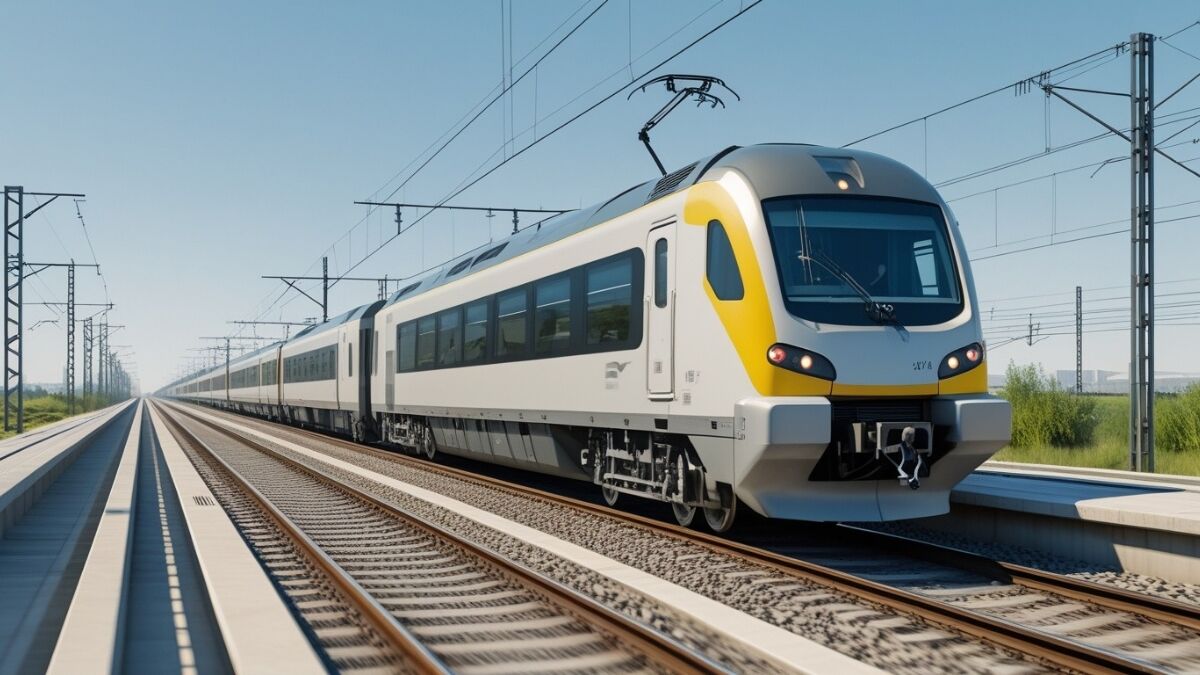
India high-speed rail lines are entering a decisive phase as the Railway Ministry accelerates construction plans for multiple bullet train corridors. The initiative aims to dramatically reduce travel time, strengthen infrastructure, and boost economic growth across regions.
Regarding the seven new high-speed rail lines included in the budget, Indian Railways has made a significant decision to speed up construction and facilitate travel.
Fast-Tracking India High-Speed Rail Lines
To speed up the completion of the corridors, the Railway Board has received stern instructions from the Railway Ministry. These seven corridors include Delhi-Varanasi, Varanasi-Siliguri, Hyderabad-Bengaluru, Hyderabad-Chennai, Chennai-Bengaluru, and Mumbai-Pune.
🚄 India High-Speed Rail Lines: Key Corridors
- Total Corridors: 7 high-speed rail lines
- Major Routes: Delhi–Varanasi, Mumbai–Pune, Chennai–Bengaluru
- Northeast Link: Varanasi–Siliguri
- Target: Faster construction & early operations
- Executing Agency: NHSRCL
Massive Reduction in Travel Time
By drastically cutting travel times, these lines will revolutionize train travel as it exists now. It will only take 48 minutes to go from Mumbai to Pune, 3 hours and 50 minutes to get from Delhi to Varanasi, and 1 hour and 13 minutes to travel from Chennai to Bengaluru.
Investment and Advanced Technology
The estimated 4,000 kilometers of these corridors will cost about ₹16 lakh crore to build. In addition to fortifying infrastructure, this investment will make use of state-of-the-art technology that has been borrowed from Japan and other nations.
⚡ India High-Speed Rail Lines: Project Snapshot
- Total Length: Approx. 4,000 km
- Estimated Cost: ₹16 lakh crore
- Technology Source: Japan & other global partners
- Implementing Body: National High Speed Rail Corporation Limited
- Focus: Safety, speed, and global standards
Role of NHSRCL and DPR Update
The National High Speed Rail Corporation Limited (NHSRCL) has been given the task of building them by the Railway Board. The Board has called for an immediate update to the previously prepared Detailed Project Report (DPR) to account for inflation, current prices, and other expenses.
Operational Standards and Land Acquisition
Additionally, the nation will create consistent operational guidelines, safety procedures, and technological standards for high-speed rail. The Ministry will decide which teams to form. Preparations and land acquisition will start as soon as possible.
Staffing, Training, and Long-Term Impact
The speedy preparation of contract documents will guarantee that construction can start within the allotted period. Additionally, the Board has mandated that each corridor have the engineers, specialists, and technical staff it needs, including seasoned Indian Railways employees.
We will keep an eye on their hiring, training, and development. These initiatives will turn out to be a significant step in building the nation’s modern, safe, and quick rail system. This will promote economic growth, increase trade, and stimulate tourism. Access to areas in the northeast, such as Siliguri, will promote growth in particular.
Frequently Asked Questions on India High-Speed Rail Lines
1. How many India high-speed rail lines are planned?
Seven India high-speed rail lines have been included in the budget for fast-tracked construction.
2. What is the travel time between Mumbai and Pune on high-speed rail?
The Mumbai–Pune journey is expected to take just 48 minutes.
3. Which agency is building India high-speed rail lines?
The National High Speed Rail Corporation Limited (NHSRCL) is responsible for execution.
4. What is the total estimated cost of India high-speed rail lines?
The project is estimated to cost around ₹16 lakh crore.
5. How will India high-speed rail lines impact economic growth?
They will promote trade, tourism, faster connectivity, and regional development.
Disclaimer: This article is based on official statements and publicly available information. Project timelines and costs may change as development progresses.
