
As concerns grow that the war with Iran is expanding and could do more long-term harm to the international economy than anticipated, a global sell-off of stocks is crashing onto Wall Street on Tuesday, and oil prices are surging even higher.
Early trading saw a 1.8% decline in the S&P 500. As of 9:35 a.m., the Dow Jones Industrial Average had dropped 907 points, or 1.9%. The Nasdaq composite was down 2.1% Eastern time.
A day ago, U.S. stocks began the day with significant losses, but they all recovered and ended the day with modest gains. However, there was a catch: the price of oil did not soar to over $100 per barrel.
Oil prices approached that level on Tuesday, raising additional concerns. The international standard, Brent crude, saw an additional 8.2% increase in price to $84.14 per barrel. Less than a week ago, it was resting close to $70. Meanwhile, benchmark U.S. crude increased by 8% to $76.92 per barrel.
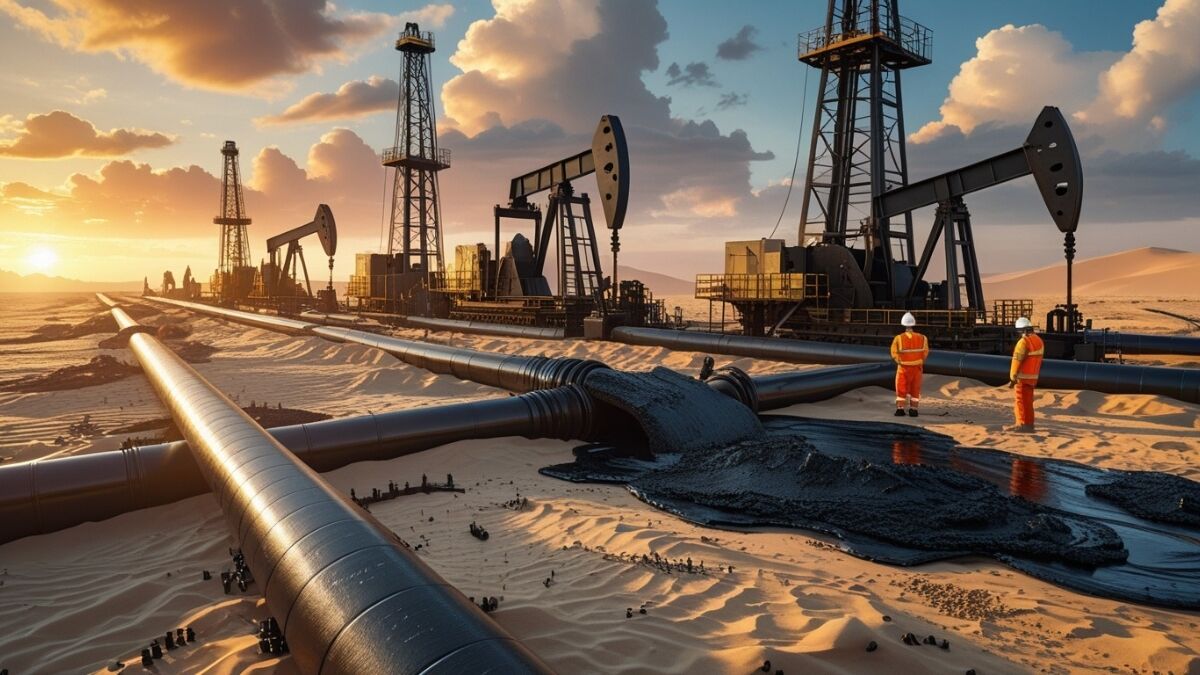
As part of a broadening of targets that also includes regions vital to the global production of natural gas and oil, Iran attacked the U.S. Embassy in Saudi Arabia, causing oil prices to spike. A fifth of the world’s oil goes through the Strait of Hormuz, a tiny conduit off the coast of Iran, and concerns are especially high about what will happen to it.
Growing concerns about how long this battle might last are causing uncertainty for markets. Iranian Supreme Leader Ayatollah Ali Khamenei has already died as a result of American and Israeli strikes, but President Donald Trump has hinted that fighting might go on for weeks.
On his social media platform late Monday night, Trump declared, “Wars may be fought ‘forever,’ and very successfully,’ with the supply of weapons that the United States possesses.”
By increasing the cost of gasoline and shipping goods, the increase in oil prices would exacerbate inflation, which is already too high for almost everyone, and put more strain on American consumers and businesses. According to figures from motor club AAA, the average price of a gallon of gasoline in the United States increased by 11 cents over night to roughly $3.11.
As a result, businesses and nations that rely heavily on oil, natural gas, and other fuels derived from petroleum have been the target of stock market harm thus far.
As markets reopened on Monday following a holiday, the Kospi stock index in South Korea, a major energy importer, fell 7.2% for its worst day since two summers ago. Recently, it had been breaking records. Even though analysts claim Japan has a substantial energy reserve lasting more than 200 days, the Nikkei 225 fell 3.1%.
Airlines on Wall Street kept plummeting due of concerns about growing fuel prices. Flight cancellations and passenger stranding have also resulted from the fighting. American Airlines plummeted 4%, Delta Air Lines fell 3%, and United Airlines slid 4.1%.
Treasury yields increased in the bond market as concerns about a deterioration of inflation grew. The yield on the 10-year Treasury increased from just 3.97% on Friday to 4.10% from 4.05% late on Monday.
For American individuals and businesses, higher rates may result in more costly loans for anything from bond issuances to mortgages.
