
Rising geopolitical tensions in the Middle East after recent military actions have raised concerns about global energy supply, trade routes, and economic stability. For India, which maintains strong economic and energy ties with the Gulf region, the crisis could have important macroeconomic implications.
Following the US-Israel military assaults on Iran, geopolitical tensions have significantly increased. Iran has retaliated by attacking residential neighborhoods and military installations in the Gulf. Due to its reliance on crude oil, remittances, exports, and other factors, India has strong ties to the Gulf area.
Middle East Conflict Raises Economic Concerns for India
A protracted crisis can have a detrimental effect on India and put its resilience to the test, yet a brief armed war might not have any significant effects on the Indian macro. The problem is that nobody can forecast how long the crisis will last.
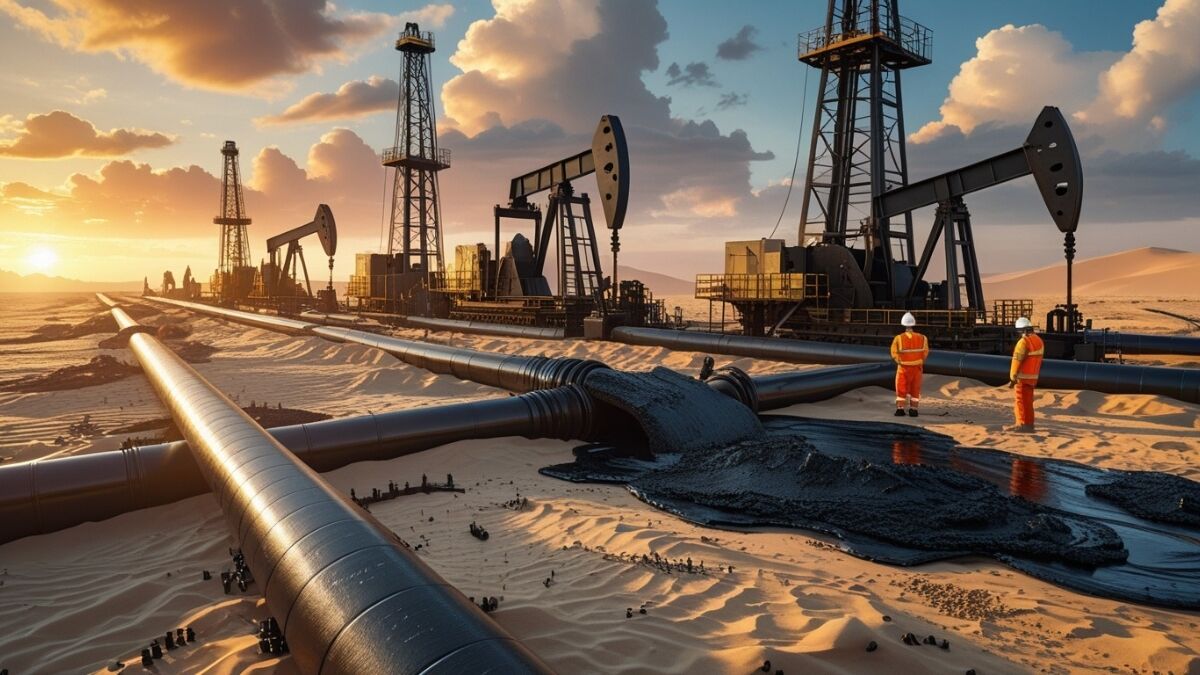
The disruption of energy flows caused by the Iran situation is a crucial issue for India. Oil prices might rise to $100 per barrel if the Strait of Hormuz stays closed or if there is an assault on key facilities. As of right now, India has a one-month grace period for importing oil from Russia, which essentially permits all loaded ships to arrive on Indian soil after March 5.
India’s Heavy Dependence on Imported Oil
About 88% of India’s oil needs are met by imports, the majority of which pass through Hormuz. 85% of its LNG supply and nearly half of its purchases of crude oil pass through the Strait of Hormuz. Importing oil has resulted in higher freight and insurance expenses due to the Strait closure. Before the escalation began, the price of India’s oil basket was about $70 per barrel; it is currently $85 per barrel. According to our estimations, a $10 increase in the price of crude oil results in a $14–15 billion increase in the current account side (CAD).
🛢️ India’s Oil Dependence – Key Facts
- Oil Import Dependence: About 88%
- LNG Supply via Hormuz: Around 85%
- Crude Oil via Hormuz: Nearly 50%
- Oil Basket Price Before Crisis: Around $70 per barrel
- Current Oil Basket Price: Around $85 per barrel
- Impact: $10 crude increase may raise CAD by $14–15 billion
Remittances From Gulf Workers and Export Risks
Remittances from Indian workers in the Gulf, mostly in the retail, construction, hospitality, and oil services industries, have another effect on the CAD. Nearly 38% of India’s $135–140 billion in total remittances come from the Indian diaspora in the Gulf. Remittances may rise immediately as Gulf workers return home. However, if the battle persists, the industries that employ Indian workers are usually susceptible to a war situation, and these individuals might not be able to return to their occupations.
Additionally, shipments to the UAE accounted for about 8.75% of India’s total exports from April to December 2025 and would encounter some issues. In the medium run, the CAD/GDP ratio may rise to 1.8–2.0% when all of the aforementioned factors are taken into account.
Impact on Foreign Investment and Currency
Additionally, the crisis may affect international flows. Lower FPI flows into EMEs are the result of any global risk aversion. Furthermore, the UAE accounted for 5.1% of gross foreign direct investment (FDI) into India, according to data from the Department of Promotion of Industry and Internal Trade (DPIT); this could be at danger.
We believe that the INR will continue to be under pressure to depreciate in the near to medium term since the USD/INR exchange rate was not particularly smooth in the recent past and because of the risk factor of Iran and its macro implications for the external balances. Depending on how long the battle lasts, we now anticipate end-March 2026 at 92.25–92.50 and a 2.5–3.0% devaluation for FY27.
⚠️ Economic Risks for India
- Currency Pressure: INR may weaken toward 92.25–92.50
- CAD Risk: Could rise to 1.8–2.0% of GDP
- Foreign Investments: Possible slowdown in FPI and FDI
- Exports: UAE accounts for about 8.75% of Indian exports
- Remittances: 38% of total inflows come from Gulf region
- Risk Factor: Prolonged conflict could intensify macro pressure
Inflation and Government Fiscal Impact
There is probably an effect on retail inflation as well. The percentage of gasoline, diesel, and LPG in the current series is 6.8%, up from 3.6% in the prior series. However, the price increase of crude oil and other petroleum products does not directly affect Headline CPI because the government controls the pump-head pricing of gasoline and diesel.
Nevertheless, in addition to the devaluation of the currency, manufacturers which use oil derivatives as inputs will see a rise in input costs. This could raise the Headline CPI by about 10–15 basis points and result in some pass-through in the form of higher manufactured goods prices for end customers.
If the conflict continues for a long time, there may also be some financial consequences. The cost of government subsidies for fertilizer and oil may increase. We believe that the government would be reluctant to transfer the cost of increased gasoline and diesel to consumers. It might also be necessary for the government to lower the oil excise tax and bear the financial burden.
Frequently Asked Questions
1. Why is India concerned about the escalating tensions in the Middle East?
India is concerned about the escalating tensions in the Middle East due to its reliance on the region for trade, remittances from Indian laborers, and crude oil imports. Any conflict has the potential to affect India’s economy, disrupt energy supplies, and raise oil prices.
2. What impact does the Strait of Hormuz have on India’s oil supply?
One of the most significant oil transportation routes in the world is the Strait of Hormuz. This route accounts for around 85% of LNG supply and about 50% of crude oil imports into India. India’s electricity bills could rise dramatically as a result of any disruption.
3. How would rising oil costs affect India’s economy?
Increased import costs and a larger current account deficit (CAD) might result from rising oil prices. India’s CAD might grow by about $14–15 billion for every $10 increase in crude oil prices, according to projections.
4. What impact might the violence have on remittances to India?
A significant amount of remittances from Indian workers in Gulf nations are sent back to India. Many Indian workers may lose their jobs if the violence impacts sectors like construction, hospitality, and oil services, which might lower remittance inflows.
5. Will India’s inflation rise as a result of increased crude oil prices?
Even though the government frequently regulates the price of gasoline and diesel, rising crude oil prices can nevertheless raise industrial and transportation costs. Retail inflation may rise as a result of this.
Conclusion
India faces a number of economic risks as a result of growing geopolitical tensions in the Middle East, especially given its strong financial ties to Gulf countries and heavy reliance on imported energy.
A protracted crisis could have an influence on oil prices, remittances, trade, and foreign investments, whereas a short-term conflict might have no effect. In order to preserve economic stability in the upcoming months, policymakers will need to handle these issues carefully.
Disclaimer: This article is for informational and news reporting purposes only. Economic projections and geopolitical developments may change depending on global events and policy decisions.
