
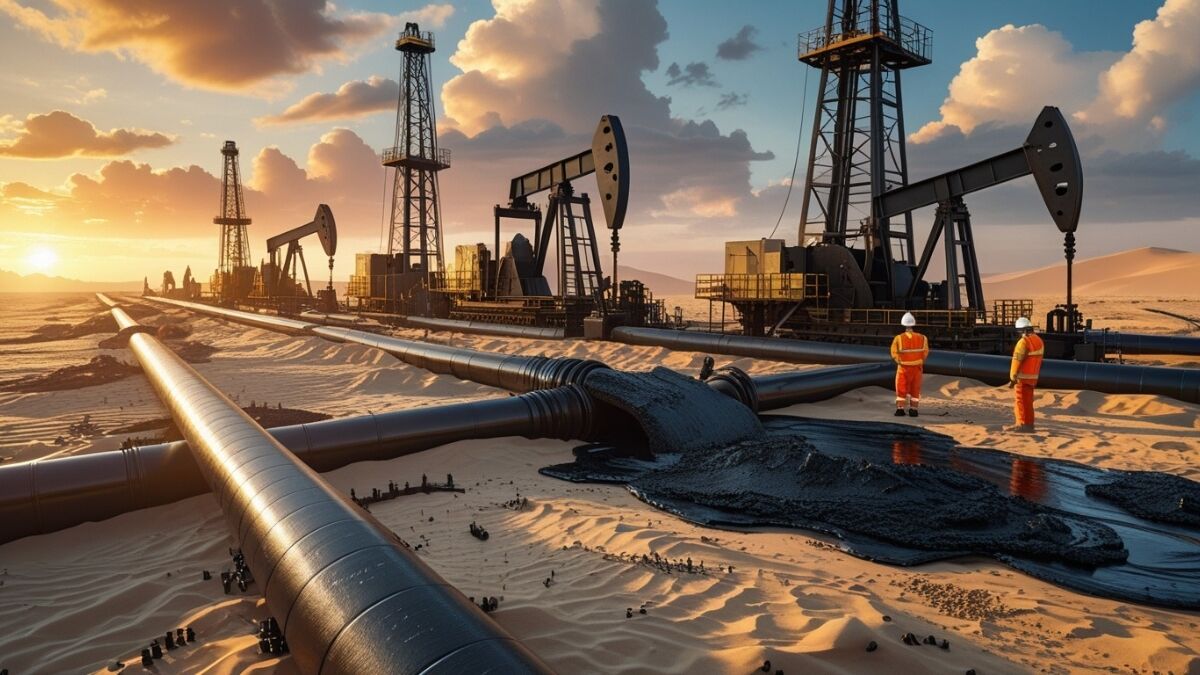
Global energy markets were shaken after reports emerged of an emergency discussion among the G7 finance ministers. Rising geopolitical tensions and disruptions in critical oil shipping routes have pushed crude prices sharply higher, sparking urgent talks about releasing emergency reserves to stabilize markets.
Early this morning, news of an emergency meeting of the G7 finance ministers surfaced as the price of oil skyrocketed to $115 (£86) a barrel.
Emergency G7 Meeting Amid Surging Oil Prices
According to reports, the International Energy Agency may coordinate the delivery of 300 million barrels of emergency stockpiles.
Although the price increase was somewhat restrained by the speculation alone, prices are still significantly higher than they were at Friday’s closing and significantly higher than they were prior to the incident.
🌍 Global Oil Reserve Intervention Plan
- Emergency Meeting: G7 finance ministers discussed urgent action
- Proposed Release: 300 million barrels of emergency reserves
- Coordinating Agency: International Energy Agency (IEA)
- Current Price: Oil surged to about $115 per barrel
- Goal: Stabilize global energy markets
- Challenge: Ongoing supply disruptions in the Gulf region
Oil Supply Disruptions in the Gulf Region
Naturally, this is not surprising given that millions of barrels of crude oil are blocked from entering the Gulf, and the majority of Gulf nations are currently reporting production slowdowns at best and, at worst, force majeure shutdowns—a provision exempting them from liability for failure to supply due to circumstances beyond their control.
Three hundred million barrels is a huge quantity. Following Russia’s invasion of Ukraine in April 2022, a record-breaking intervention would be more than doubled. There have only been five uses of these reserves. If accepted, this would amount to 25% of inventories.
How Significant Is the 300 Million Barrel Release?
But this could also be the largest oil shock in recorded history. Three hundred million barrels is essentially less than three days’ worth of oil usage worldwide (104 million barrels per day), or roughly two weeks’ worth of typical Straits of Hormuz traffic.
The potential disagreement among the G7 finance ministers is another issue.
Security Concerns in the Strait of Hormuz
Will every minister desire a naval escort over the Hormuz Strait? Does a new insurance scheme address the issues when missiles and drones fly over the tankers and occasionally target them?
By using waivers against sanctions for Putin’s assault against Ukraine, the US has been promoting the idea of Russia as a partial solution.
⚠️ Global Energy Supply Concerns
- Supply Blockage: Oil shipments disrupted in Gulf shipping routes
- Major Consumers: China, India, and South Korea depend heavily on Gulf oil
- Shipping Shift: US LNG tankers rerouting from Europe to Asia
- Security Risk: Tankers facing missile and drone threats
- Economic Impact: Energy prices rising globally
- Key Debate: Can emergency reserves stabilize markets?
Global Demand and Market Pressures
300 million barrels of oil will not solve every problem. China, India, and South Korea continue to be the leading consumers of Gulf oil and gas, notwithstanding the might of the G7. Because of this, US gas tankers that were originally headed for Europe are now making U-turns across the Atlantic to deliver to Asia via the Panama Canal.
What about fertilizer precursors and jet fuels that are also blocked from entering the Gulf? This release will not resolve that issue either.
Possible Impact on Future Oil Prices
There is a significant intervention under discussion. Additionally, it may slow the increase to $150 per barrel, but few traders are prepared to wager on drops in energy costs under these conditions.
Frequently Asked Questions
1) What are the G7 finance ministers proposing?
The International Energy Agency (IEA) is coordinating the release of roughly 300 million barrels of emergency oil reserves in an effort to slow the rise in oil prices worldwide.
2) What is causing the rapid increase in oil prices?
Geopolitical tensions and disruptions in the **Strait of Hormuz and the **Persian Gulf region’s oil supply have decreased production and transportation, driving up prices to almost $115 per barrel.
3) What does a 300 million barrel release mean?
This massive intervention would more than treble the previous record release following the **Russian invasion of Ukraine in 2022 and is equivalent to about three days’ worth of worldwide oil consumption.
4) Will the release of emergency reserves result in reduced oil prices?
Because the underlying supply interruptions are still unsolved, analysts think it might not considerably lower costs, but it might moderate the price increase.
5) What obstacles might make the idea unsuccessful?
The efficiency of the reserve release may be limited by ongoing geopolitical tensions, disagreements among **Group of Seven (G7) members, and security concerns for tankers.
Conclusion
Although it is unlikely to completely offset supply interruptions in the Gulf, the planned release of 300 million barrels of emergency oil reserves could briefly calm prices. Despite involvement by the international Energy Agency and the Group of Seven countries, energy prices may continue to be high due to geopolitical tensio
ns, maritime concerns, and robust global demand.
Disclaimer: This article is for informational and educational purposes only. Energy market developments can change rapidly due to geopolitical events and global economic conditions.
