
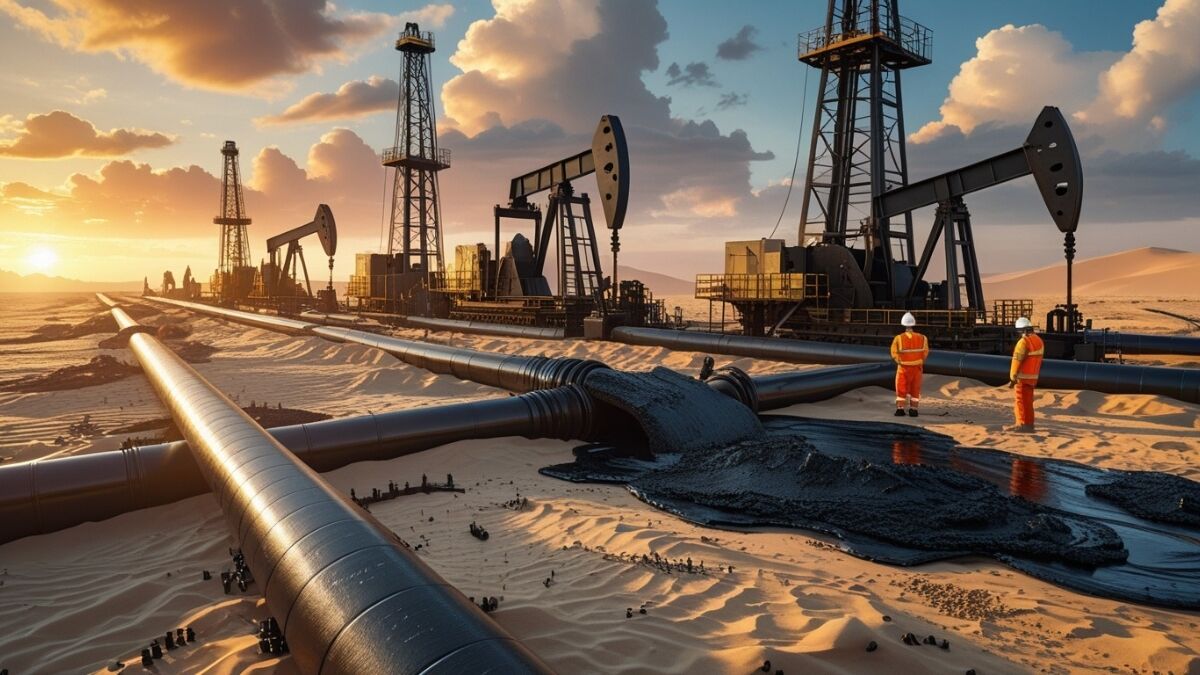
Rising geopolitical tensions in the Middle East and concerns over vital global shipping routes are prompting countries to reassess their energy security strategies. Japan, one of the world’s largest energy importers, may be preparing to release crude oil from its strategic reserves to stabilize supply and protect its economy.
As tensions in the Middle East threaten global energy supply and create concerns about important shipping routes utilized by Asian countries, Japan may be getting ready to release crude oil from its national reserves.
Japan May Release Oil From Strategic Reserves
After the US and China, the nation actually possesses the third-largest strategic petroleum reserve in the world. According to Reuters, a senior Japanese lawmaker stated that the government has directed at least one national oil storage facility to get ready for a potential release.
Officials at the Shibushi national oil storage base were instructed to prepare for a possible release, according to Akira Nagatsuma of the opposition Centrist Reform Alliance.
🇯🇵 Japan Strategic Oil Reserve Snapshot
- Country Rank: Third-largest oil reserves globally
- Total Reserve: About 440 million barrels
- Import Coverage: Around 204 days of energy supply
- Main Suppliers: Saudi Arabia, Kuwait, UAE
- Key Shipping Route: Strait of Hormuz
- Purpose: Protect economy from global supply shocks
Government Preparations and Reserve Management
According to a representative of the Japan Organization for Metals and Energy Security (JOGMEC), the Agency for Natural Resources and Energy issued the directive. The scope and timing of any release, however, are still unknown. This brings up an important question: Why does Japan require one of the world’s biggest oil reserves?
Despite having one of the biggest economies in the world, Japan does not generate much oil on its own. The nation is largely dependent on imported energy to power its cities, transportation networks, and manufacturing. According to experts, Japan imports between 90 and 95 percent of its energy.
Japan’s Heavy Dependence on Imported Energy
There might be immediate repercussions if those imports were abruptly interrupted. Transportation networks might be disrupted, factories might reduce or stop operations, and the supply of electricity would be strained. Energy shortages could swiftly extend across several industries in a nation where trade and industry are the main drivers of economic activity.
Japan has long viewed energy imports as a national security concern rather than just a business one due to this vulnerability. The Middle East provides the majority of Japan’s crude oil. Its primary suppliers include nations like Kuwait, Saudi Arabia, and the United Arab Emirates.
Importance of the Strait of Hormuz for Japan
The problem is not just where the oil originates, but also how it gets to Japan. One of the most significant energy shipping routes in the world, the Strait of Hormuz, is traversed by a large portion of the oil that is transported from the Middle East. Japan’s supply lines are immediately at risk from any conflict or disturbance in that small waterway.
Tokyo’s long-term strategy of maintaining substantial oil reserves as a safety net has been molded by this reliance on a single area and a vital maritime route. Japan keeps one of the biggest emergency oil reserves in the world to protect against supply disruptions.
⚠️ Why Energy Security Matters for Japan
- Energy Import Dependency: 90–95% imported energy
- Strategic Risk: Heavy reliance on Middle East oil
- Shipping Vulnerability: Strait of Hormuz disruptions
- Industrial Demand: Oil needed for manufacturing and transport
- Emergency Strategy: Maintain large national reserves
- Goal: Stabilize economy during global crises
How Japan Manages Its Emergency Oil Stockpiles
The mechanism used to manage these reserves incorporates joint reserves kept with oil-producing nations, government-controlled stockpiles, and private oil corporations’ inventories. Japan will have fuel for months even in the event of a serious crisis because to the framework.
Japan has roughly 440 million barrels of oil in its reserves, which is sufficient to cover about 204 days’ worth of imports, the majority of which are from the Middle East, according to government figures. These reserves serve as a safety net in the event of shipping delays, geopolitical unrest, or abrupt increases in the price of energy worldwide.
Industries in Japan That Depend on Oil
Many industries in Japan’s highly industrialized economy remain significantly depend on oil. Crude oil is used in petrochemical facilities to make plastics and other products. While shipping and transportation still rely on petroleum goods, aviation needs a lot of jet fuel. Additionally, a number of heavy industries and backup power generation use oil.
Large refineries and petrochemical complexes are located in major industrial zones like Yokohama, Osaka, and other coastal manufacturing centers. For these facilities to function properly, a consistent and dependable supply of crude oil is necessary.
Lessons From Past Energy Crises
Oil is still a major part of Japan’s energy mix, despite significant investments in renewable energy and energy efficiency. Previous crises influenced Japan’s cautious approach to energy security.
The 1973 oil shock demonstrated the vulnerability of import-dependent economies to abrupt restrictions on world supplies. Fuel prices skyrocketed, making it difficult for many nations to obtain enough of it.
Impact of the Fukushima Nuclear Disaster
A significant incident that occurred decades later changed Japan’s energy policy. Numerous nuclear reactors nationwide had to shut down as a result of the Fukushima nuclear accident in 2011. Prior to the catastrophe, almost 30% of Japan’s electricity came from nuclear power.
Japan has to import more fossil fuels, such as coal, oil, and liquefied natural gas, to make up for the shutdown of nuclear units. These incidents reaffirmed a crucial lesson for Tokyo’s policymakers: energy security is a critical issue.
Why Japan Maintains Massive Strategic Oil Reserves
These days, Japan’s enormous oil reserves serve as a kind of national insurance. Relying only on daily imports is unaffordable for a nation with limited indigenous energy supplies, high industrial demand, and supply lines that cross politically sensitive areas.
Japan makes sure it has enough time to respond to international crises, stabilize its energy supply, and continue economic growth even in the face of interruptions by keeping sizable strategic reserves.
To put it simply, Japan’s oil reserves serve as the country’s strategic pantry, keeping it afloat in the event that the world’s energy markets become unstable.
Frequently Asked Questions
1. Why does Japan maintain one of the biggest oil reserves in the world?
Japan imports 90–95% of its energy and produces very little oil domestically. In addition to ensuring that transportation, industry, and power continue to function, large reserves help shield the nation against supply disruptions.
2. What is the size of Japan’s strategic oil reserve?
Japan has the third-largest oil reserve in the world, behind China and the US, with over 440 million barrels, or enough to cover nearly 204 days’ worth of imports.
3. Who oversees the oil reserves in Japan?
The government, private oil firms, and groups like the Japan Organization for Metals and Energy Security (JOGMEC) work together to manage the reserves.
4. What makes the Middle East crucial to Japan’s oil supply?
Saudi Arabia, the United Arab Emirates, and Kuwait supply the majority of Japan’s crude oil imports, which cross the crucial Strait of Hormuz, a major international oil shipping route.
5. What historical occurrences shaped Japan’s approach to energy security?
The Fukushima nuclear accident in 2011 and the oil crisis in 1973 demonstrated Japan’s susceptibility to energy interruptions and reinforced its resolve to have substantial reserves.
Conclusion
To safeguard its economy from supply disruptions, Japan keeps one of the biggest strategic oil reserves in the world. These reserves serve as a national safety buffer, guaranteeing stability for industry, transportation, and power generation during global energy crises, given the country’s substantial reliance on imported energy and vital shipping routes like the Strait of Hormuz.
Disclaimer: This article is intended for informational purposes only. Energy markets and geopolitical situations can change rapidly and may impact global oil supply and prices.
