
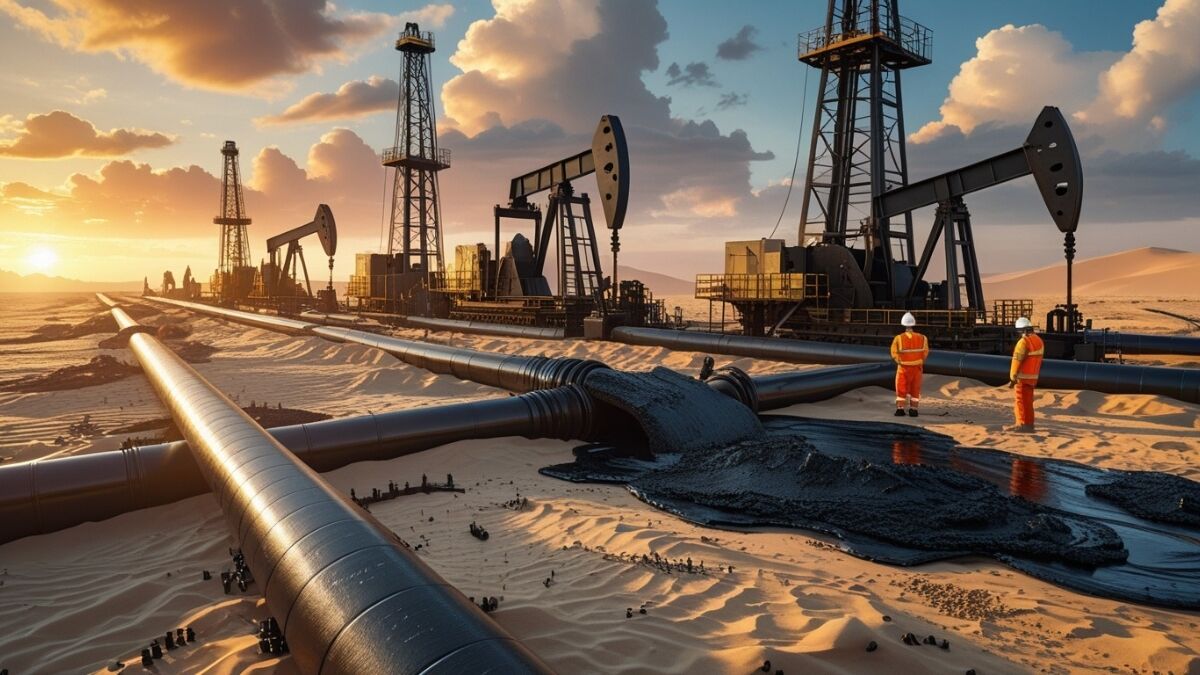
Rising geopolitical tensions in the Middle East have sparked global concerns about the security of one of the world’s most critical energy routes—the Strait of Hormuz.
As oil prices fluctuate and fears of supply disruptions grow, many countries are closely monitoring the situation. India, however, currently appears prepared to handle temporary disruptions thanks to its reserves and diversified energy strategy.
Fears over the possible closure of the Strait of Hormuz, one of the world’s most vital energy corridors, have spread throughout the world due to the intensifying tension between the United States, Israel, and Iran.
Rising Global Concerns Over Strait of Hormuz
A major amount of the world’s oil supply passes through this small river, thus any disruption might have a ripple effect on international markets.
However, India is not now experiencing an urgent crisis, despite the escalating tensions and dramatic fluctuations in oil prices. Sources with knowledge of the issue claim that New Delhi has sufficient reserves and backup plans in place to handle temporary disruptions.
🌍 Strait of Hormuz Energy Snapshot
- Global Oil Flow: Around 20% of the world’s oil passes through
- Daily Volume: About 15 million barrels of crude oil
- Key Producers: Saudi Arabia, Iraq, Kuwait, UAE, Qatar
- Main Concern: Military tensions in the Middle East
- Market Impact: Oil prices surged near $120 per barrel
- Risk: Disruption to global energy supply chains
India Monitoring the Situation Closely
Although officials are keeping a close eye on the changing scenario in West Asia, sources informed CNN-News18 that India does not currently have any significant concerns.
According to government officials, it is doubtful that retail fuel station prices for gasoline and diesel would rise in the near future. They stated that the oil marketing firms had sufficient reserves to cover growing expenses. Global energy markets have already been rocked by the conflict in West Asia.
Oil Price Volatility in Global Markets
Earlier in the day, oil prices increased to nearly $120 per barrel before declining. The global standard, Brent crude, increased to almost $119.50 per barrel before falling to approximately $107.80. Growing worries that military escalation would interfere with oil production and shipping routes throughout the Persian Gulf are reflected in the volatility.
Now in its second week, the fighting has spread to sectors crucial to the transportation and production of natural gas and oil. Anxiety in the world’s financial markets has increased due to attacks on energy infrastructure and worries of more strikes.
Importance of the Strait of Hormuz in Global Energy Trade
Following allegations that certain G7 nations were thinking about releasing strategic oil stockpiles to stabilize markets, prices somewhat decreased. Most people agree that the Strait of Hormuz is the most significant oil chokepoint in the world.
Approximately 15 million barrels of crude oil per day, or 20% of the world’s oil supply, typically flow via this slender channel that connects the Persian Gulf to the Arabian Sea, according to research firm Rystad Energy.
Growing Threats to Tanker Traffic
Iran borders the strait on one side, and major producers including Saudi Arabia, Kuwait, Iraq, Qatar, Bahrain, and the United Arab Emirates use it as their main export route.
Tanker traffic in the region has drastically decreased due to growing Iranian missile and drone threats. Due to decreased export capacity, some oil-producing nations, such as Iraq, Kuwait, and the United Arab Emirates, have allegedly lowered output as storage tanks start to fill up.
⚠️ India’s Energy Security Strategy
- Crude Oil Reserves: Over 100 million barrels
- Consumption Buffer: Around 25 days of supply
- Main Import Route: Strait of Hormuz
- Alternative Sources: Russia, US, West Africa, Latin America
- Energy Dependency: 88% crude oil imported
- Government Position: Situation currently under control
Energy Infrastructure Under Attack
The region’s energy infrastructure is now a target. Since the start of the conflict, attacks on oil and gas installations have been carried out by Iran, Israel, and the US, increasing concerns about additional disruptions.
Global economies are starting to feel the effects of the spike in oil and gas prices. Increased energy costs usually result in higher gasoline prices, which can raise household bills, production costs, and transportation costs. This puts pressure on inflation and may lower consumer spending, which is a key factor in economic expansion.
Impact on Global and Asian Economies
Following Russia’s invasion of Ukraine in 2022, which caused a worldwide energy crisis, oil prices last hit comparable levels. Due to the region’s heavy reliance on Middle Eastern oil imports, Asian economies are especially susceptible.
India is one of the nations whose energy sources depend heavily on the Strait of Hormuz. Approximately 50 to 60 percent of the nation’s 88 percent crude oil imports pass through the Strait of Hormuz and come from major suppliers like Iraq, Saudi Arabia, the United Arab Emirates, and Kuwait.
India’s Dependence on Gulf Energy Supplies
India’s reliance on natural gas and cooking fuel is equally substantial. Approximately 80–85% of LPG shipments and 50–60% of India’s LNG supply travel along the same route.
Natural gas has far smaller structural buffers than crude oil, where nations can accumulate sizable stockpiles, potentially rendering shocks more vulnerable.
Economic Impact of Rising Oil Prices
India’s yearly import cost increases by about $2 billion for every $1 increase in crude oil prices. According to analysts, India’s GDP might drop by roughly 0.5 percent for every $10 increase in oil prices.
Indian officials claim that the situation is now managed despite these dangers. India now has over 100 million barrels of crude oil in its reserves, comprising both commercial and strategic inventories, according to sources cited by CNN-News18.
India’s Strategic Energy Reserves
It is estimated that these reserves will be enough to support consumption for roughly 25 days. Additionally, sources noted that the potential for G7 nations to release strategic stockpiles might lessen pressure on world prices. If the Strait of Hormuz becomes unavailable, India may also choose to diversify its sources of supply.
As a backup supply possibility, millions of barrels of Russian crude are currently accessible in the Indian Ocean. Additionally, New Delhi is looking into the prospect of boosting imports from Latin America, West Africa, and the United States.
Alternative Energy Supply Routes
According to some sources, Iran would let oil exports from nations that oppose Israel or the United States, which might give Indian tankers a workaround. Additionally, officials claim that India’s domestic gasoline sources are safe at the moment.
Refined energy product supplies might endure for roughly 25 days, according to sources who spoke with CNN-News18. This would act as a buffer against brief supply outages. Since we are exporters and have a enough supply, there is no need to worry about aviation fuel. Additionally, it is doubtful that gas prices will rise, sources told CNN-News18.
Potential Risks to Trade and Infrastructure
India can manufacture large amounts of aviation fuel and other petroleum products domestically thanks to its robust refining capacity. Long-term disruption in the Gulf region might still have wider economic repercussions, even though energy supply might be manageable in the near future.
A prolonged crisis could result in a shock to the fertilizer supply because the Persian Gulf is a significant source of fertilizer inputs like urea and ammonia. Indian exports may encounter difficulties as well.
Impact on Exports and Digital Infrastructure
Gulf nations receive almost 41% of India’s tea exports, and the region is also crucial to the diamond trade. Export costs for certain industries may rise due to logistical problems and rising shipping insurance rates.
Concerns exist over digital infrastructure as well. The area is close to several important underwater internet cables, such as SMW4 and FALCON. Important maintenance tasks have reportedly been postponed due to security concerns in the region, which could have an impact on India’s internet connectivity if delays persist.
India’s Preparedness for Temporary Disruptions
As of right now, India seems reasonably equipped to manage temporary interruptions brought on by tensions in the Strait of Hormuz. According to officials, sufficient reserves, a variety of import choices, and robust refining capability provide as a buffer against sudden shocks.
But things are still up in the air. The economic and energy ramifications could become more severe not only for India but also for the world economy if the conflict worsens if shipping via the strait is halted for a long time.
Frequently Asked Questions
1. What is prompting anxiety around the world over the Strait of Hormuz crisis?
One of the most significant oil shipping lanes in the world, the Strait of Hormuz transports over 20% of the world’s oil supply, or 15 million barrels every day. Global energy markets might be greatly impacted by any interruption brought on by tensions between Iran, Israel, and the United States.
2. Despite the situation, why is India not in a panic?
With over 100 million barrels of strategic and commercial oil reserves, India can cover its consumption for about 25 days, providing the government time to react to temporary disruptions.
3. How much of India’s energy comes from the Strait of Hormuz?
Approximately 88% of India’s crude oil comes from sources like Iraq, Saudi Arabia, the United Arab Emirates, and Kuwait; 50–60% of these imports cross the Strait of Hormuz.
4. In the event that the strait is obstructed, what other options does India have?
In addition to relying on increased Russian crude supplies found in the Indian Ocean, India can diversify its purchases from areas including the US, West Africa, and Latin America.
5. If the crisis persists, what economic concerns might emerge?
In addition to affecting industries like fertilizers, shipping, exports, and inflation, rising oil prices might raise India’s import bill—every $1 increase in crude adds almost $2 billion yearly.
Conclusion
India now has enough reserves, a variety of supply choices, and enough refining capacity to handle short-term interruptions, despite the fact that tensions surrounding the Strait of Hormuz have increased oil prices and heightened fears about global energy. Nonetheless, India and the world economy may still face serious economic and energy difficulties if the Gulf War continues.
Disclaimer: This article is for informational purposes only. Energy markets and geopolitical developments can change rapidly and may impact global oil supply, trade, and economic conditions.
