
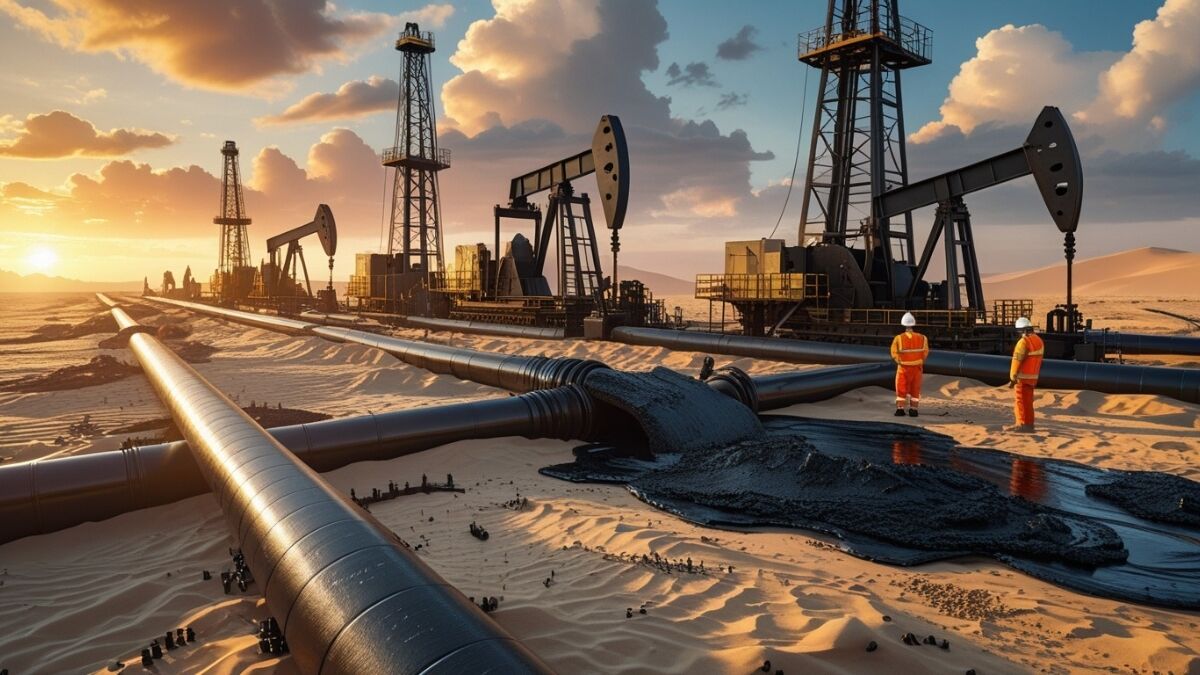
Global oil markets are experiencing significant uncertainty as geopolitical tensions in the Middle East continue to escalate. While crude prices have surged due to disruptions in critical energy supply routes, major economies are cautiously evaluating their next steps before releasing emergency reserves.
The remarks coincide with the ongoing tension in the world’s oil markets due to the rising war between Iran, Israel, and the United States, which has caused disruptions to energy supply channels throughout the Gulf area.
G7 Monitoring Oil Markets Amid Rising Gulf Tensions
Despite the steep increase in petroleum prices brought on by the Gulf crisis, French Finance Minister Roland Lescure stated that the Group of Seven (G7) countries are not yet prepared to release emergency oil stockpiles, according to Bloomberg News.
Following talks among the main nations, Lescure stated that while the bloc is prepared to take measures if necessary to stabilize markets, coordinated action is not yet required. In reference to a possible joint release of strategic petroleum reserves, Lescure stated, “We are not there yet.”
🌍 Global Oil Market Situation
- Main Concern: Escalating Iran–Israel–US tensions
- Oil Price Level: Crude prices above $100 per barrel
- Critical Route: Strait of Hormuz oil shipments
- Global Supply Risk: Possible disruption to energy transport
- Market Response: Increased volatility in oil prices
- Government Action: Monitoring markets closely
Impact of Middle East Conflict on Oil Supply
The remarks coincide with the ongoing tension in the world’s oil markets due to the rising war between Iran, Israel, and the United States, which has caused disruptions to energy supply channels throughout the Gulf area.
Due to the conflict’s impact on shipping via the Strait of Hormuz, one of the world’s most vital oil transit routes that transports about 20% of the world’s oil supply, oil prices have risen above $100 per barrel.
Strategic Oil Reserves and Market Stabilization
Lescure stated that the G7 is keeping a close eye on developments in the energy market and is ready to act if things get worse, notwithstanding the steep increase in crude prices. Major economies retain emergency oil reserves, sometimes referred to as strategic petroleum reserves, to help stabilize markets in the event of supply disruptions.
When there are significant worldwide energy emergencies, a coordinated release of these reserves is typically employed as an extreme measure. As oil prices skyrocketed after the Iran conflict, G7 finance ministers have been debating whether to release oil from these stockpiles.
⚠️ Strategic Petroleum Reserve Overview
- Purpose: Emergency oil supply during global crises
- Maintained By: Major economies including G7 nations
- Typical Use: Severe energy supply disruptions
- Coordinating Body: International Energy Agency (IEA)
- Market Role: Stabilizing oil prices during shocks
- Current Status: Release not yet approved
Role of the International Energy Agency
The International Energy Agency (IEA), which is in charge of member nations’ emergency oil stockpiles, usually organizes such coordinated activities.
Lescure’s comments, however, imply that policymakers think markets have not yet reached the point where emergency reserves need to be used, even though governments are creating backup plans.
Global Financial Market Reactions
Since the Gulf War became more intense, oil prices have increased dramatically, causing volatility in the world’s financial markets. Attacks on energy infrastructure and shipping route disruptions have sparked concerns about a wider supply shock that would drive up petroleum prices globally.
Governments seem to be keeping a tight eye on the situation for the time being while preparing to take emergency action should the violence worsen.
Frequently Asked Questions
1) Who stated that there were emergency oil reserves?
The Group of Seven (G7) nations are not yet prepared to unleash emergency oil reserves, according to French Finance Minister Roland Lescure.
2) What is causing the increase in oil prices?
The intensifying crisis between Iran, Israel, and the United States has caused disruptions to the Gulf region’s energy infrastructure and shipping routes, leading to a spike in prices.
3) How significant is the Strait of Hormuz?
About 20% of the world’s oil supply passes via the Strait of Hormuz, making it a vital global oil transit route that is crucial to the world’s energy markets.
4) Strategic petroleum reserves: what are they?
Major economies keep emergency oil stocks known as strategic petroleum reserves in order to stabilize markets during supply outages or significant energy crises.
5) What body typically arranges for the release of these reserves?
Usually, the International Energy Agency (IEA) arranges for member nations to release their emergency oil reserves.
Conclusion
Tensions in the Gulf have caused oil prices to soar beyond $100 per barrel, but instead of releasing emergency reserves, the Group of Seven is now keeping an eye on the situation. Governments are still ready to take action if the fighting worsens and endangers the world’s energy supplies.
Disclaimer: This article is intended for informational purposes only. Oil markets and geopolitical situations can change rapidly and may impact global energy prices and economic conditions.
