
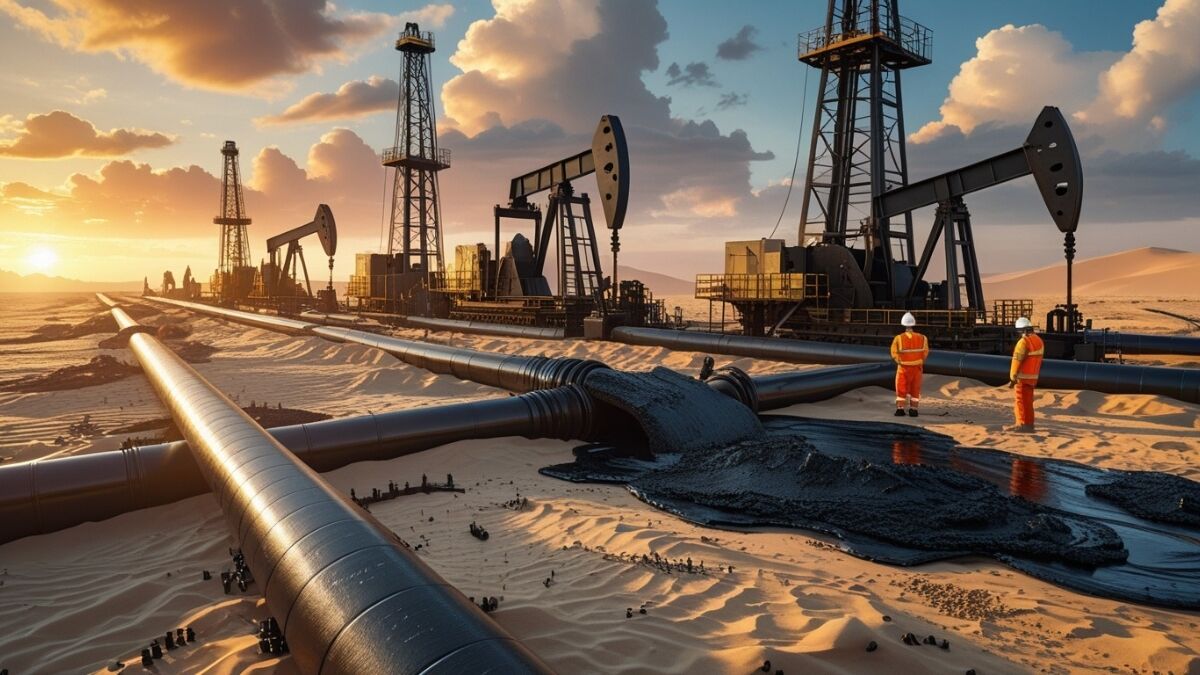
Global crude oil prices are climbing rapidly due to escalating geopolitical tensions between the United States and Iran. This surge is creating ripple effects across industries worldwide, particularly in sectors heavily dependent on petroleum-based raw materials such as the paint industry.
Due to supply bottlenecks caused by the intensification of the US-Iran confrontation, crude oil prices have returned to levels close to $100 per barrel in international markets.
Crude Oil Prices Surge Amid US-Iran Tensions
With growing concerns over imported inflation in India, the situation is expected to worsen even though the Strait of Hormuz is still effectively closed.
US West Texas Intermediate (WTI) crude futures up 6.37% to $92.80, while the price of Brent crude oil increased 6.6% to $98.04 per barrel.
The latest high of about $120 per barrel reached earlier this week, however, is still below the current level. The paints industry is one of the major industries that is suffering from rising energy costs.
📊 Oil Price Impact Snapshot
- Brent crude price: $98.04 per barrel
- WTI crude price: $92.80 per barrel
- Recent peak: Around $120 per barrel
- Major affected sectors: Paints, chemicals, manufacturing
Impact On Paint Manufacturers
In the past, paint manufacturers have been able to pass on inflation through long-term price increases.
Analysts predict that paint manufacturers will have to boost prices if crude oil inflation continues, either by increasing dealer price lists or reducing trade expenditures.
Paint price increases are justified, but there is still fierce competition. However, sharp price increases could also reduce sales.
Potential Impact On Profitability
In the event of a volume reduction, there will probably be an effect on operating leverage and utilization levels.
Analysts at ICICI Securities stated, “We believe that crude oil prices at $80, $100, or $120 instead of our base case of $70 per barrel would require a price hike of 7.5%, 21.5%, and 35.5% for Asian Paints to maintain its EBITDA margin at 18% (lower end of the guided range of 18–20%).”
📈 Paint Industry Cost Structure
- Crude derivatives in raw materials: 60%+
- Total input cost share: About one-third
- Estimated margin drop: 25 basis points for every $1 crude increase
- Possible dealer price hikes: 2%–5%
Expert Insights On Industry Pressure
According to Saurabh Jain, Head of Fundamental Research at SMC Global Securities, the sharp increase in crude oil prices brought on by the intensifying US-Iran war is clearly posing a near-term headwind for the Indian paints industry.
This could cause EBITDA margins to drop by about 25 basis points for every $1 increase with a 1-2 quarter lag.
Additional Market Challenges
Persistent internal issues like subdued volume growth, fierce competition, and weak urban/rural demand exacerbate this burden.
Risk-reward has improved as a result of the steep decline in paint stocks, but short-term margin and pricing issues are probably going to continue, according to Jain.
Dealer Expectations On Price Hikes
According to Systematix’s channel checks in the decorative paints market across India, most dealers anticipate product price increases of two to five percent in April if crude oil prices continue to rise at their current high levels.
Systematix analysts pointed out that the timing of price increases and the location, time, and duration of oil price stabilization would have a significant impact on the margin.
Historical Margin Trends
According to historical study, gross margins have historically decreased by 130 basis points for every 10% increase in crude oil prices.
Systematix points out that although there is short-term caution regarding the impact of fluctuating crude oil prices on pricing, profitability, and volume growth, this is still an evolving narrative with several potential outcomes.
Brokerage Preferences In Paint Stocks
It still favors Berger Paints India, citing the company’s steady development and momentum in both decorative and industrial applications.
Although Asian Paints’ pricing power is favorable in the current climate, the brokerage company stated that it will not become more favorable unless industry demand accelerates.
The target price for Systematix’s “Buy” call on Berger Paints shares is ₹570. It has a ‘Buy’ rating on Asian Paints with a share price target of ₹3,160 apiece.
Long-Term Investment Perspective
Saurabh Jain suggests investing in Asian Paints, a dominant market leader with unparalleled pricing power and durability, and Berger Paints, which has a superior volume momentum and margin track record.
According to Jain, “Asian Paints and Berger Paints have the potential to navigate volatility while riding structural tailwinds of urbanization, housing recovery, and premiumization.”
ICICI Securities is still positive about the paint industry. It thinks that the main negative risk is unanticipated unreasonable competition brought on by a slowdown in overall consumption demand, while the main upside risk is better-than-expected gross margin driven by input price corrections.
Frequently Asked Questions
1. What effects does crude oil have on the paint industry?
Paint basic ingredients including resins and solvents are frequently made from crude oil derivatives. Since these derivatives account for a significant amount of input costs for businesses like Asian Paints and Berger Paints India, rising crude oil prices raise production costs and strain margins.
2. Will paint manufacturers raise their prices?
Yes, paint manufacturers may increase product pricing if the price of crude oil stays high. Dealers anticipate price increases of between 2 to 5%, but if oil prices keep rising, more increases would be required.
3. What impact do growing crude prices have on business profits?
Profitability may suffer as a result of rising raw material costs brought on by higher oil prices. If businesses are unable to rapidly pass costs on to customers, analysts predict that a $1 increase in crude oil might result in a 25 basis point drop in EBITDA margins.
4. Why do analysts continue to view these paint stocks favorably?
Because businesses like Asian Paints and Berger Paints have strong brands, extensive distribution networks, and the capacity to pass costs over time, which helps them manage short-term cost challenges, analysts are still optimistic.
5. What are the current biggest threats facing the paint industry?
The main hazards include persistently high crude oil costs, poor housing market demand, and fierce rivalry that can prevent businesses from raising prices swiftly.
Conclusion
In conclusion, the recent spike in crude oil prices brought on by international tensions may result in higher expenses for the paint industry and short-term price increases.
However, because of their strong market position, pricing power, and growth potential fueled by urbanization and housing demand, industry leaders like Asian Paints and Berger Paints continue to be appealing to long-term investors.
Disclaimer: This article is for informational purposes only and should not be considered financial or investment advice. Readers should conduct their own research or consult financial experts before making investment decisions.
