
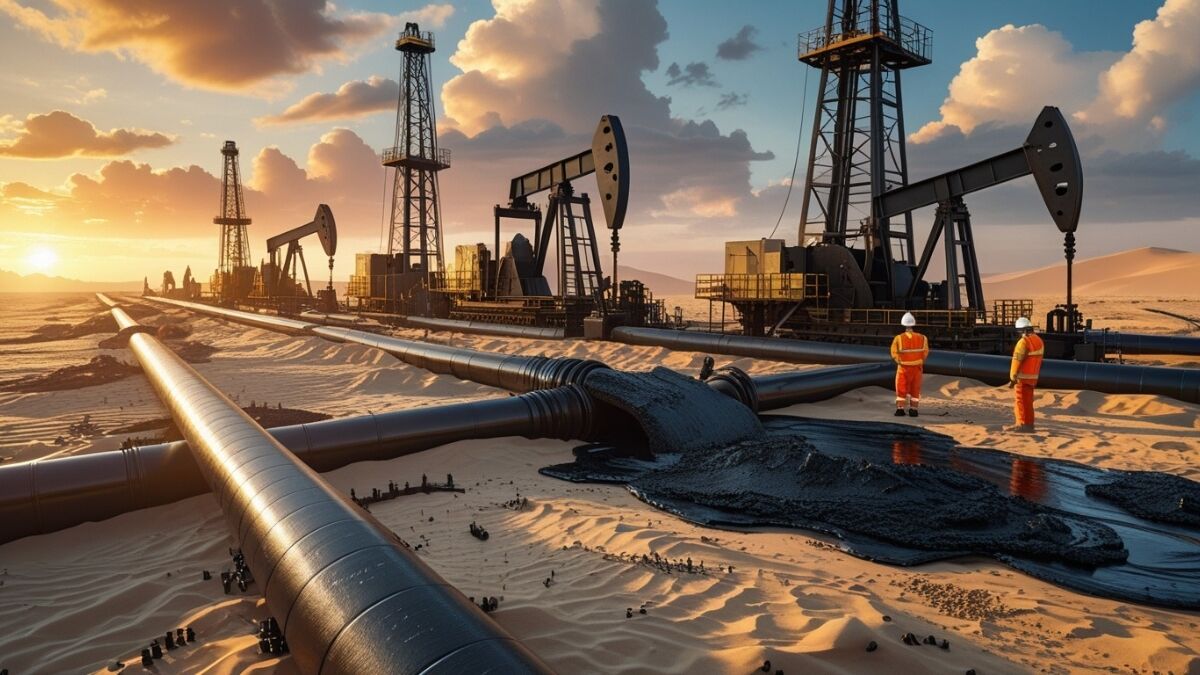
The article below explains how geopolitical tensions in the Middle East are severely affecting global oil markets. With disruptions in the Strait of Hormuz and increasing tanker attacks, analysts warn that energy prices could surge dramatically if the crisis continues.
The oil markets are realizing that the disruption to the Gulf’s enormous energy resources is not going away anytime soon. At first, some dealers anticipated days of chaos when the United States and Israel attacked Iran. They now anticipate that the unrest may continue for weeks or possibly months.
Rising Oil Prices Amid Middle East Tensions
As worries about a prolonged period of disruption to the oil markets grew, Brent crude soared back above $100 per barrel on Thursday. Futures ended the day up more than 9%, closing at $100.46.
Following attacks on multiple tankers in the Strait of Hormuz on Thursday, Iran’s new supreme leader promised to keep the crucial waterway closed. Oil prices are not as important as preventing the Iranian regime from obtaining nuclear weapons, according to President Trump. Crude might reach new multiyear highs if the crisis continues, according to a number of specialists.
⛽ Oil Market Shock: Key Facts
- Brent Crude Price: $100.46 per barrel
- Daily Increase: Futures rose more than 9%
- Main Cause: Attacks on tankers near the Strait of Hormuz
- Geopolitical Tension: Conflict involving Iran, the U.S., and Israel
- Market Concern: Prolonged disruption to Gulf oil supply
- Potential Outcome: Multiyear highs for crude prices
Market Anxiety Over Supply Chain Disruptions
“The market is becoming increasingly anxious,” stated Sparta Commodities’ Neil Crosby. “We see growing medium-term repercussions from all the attacks on infrastructure in the region, in addition to supply chain concerns from the Hormuz closure.”
20% of the world’s oil normally passes through the Strait of Hormuz, a tiny corridor between Iran and Oman that has captured the attention of traders and observers.
Forecasts of Prolonged Turbulence
Oil analysts are now predicting more prolonged turbulence. The strait will probably remain immobile if the conflict goes on. It might still be dangerous if the war concludes fast and the Iranian regime remains in power, thereby giving Tehran additional influence over the vital global energy route.
Due to the longer-than-expected outage, Goldman Sachs increased its oil price projections this week. In a more extreme case, Brent crude may average $145 in March and April, according to the report. The bank had previously predicted that the disruption to flows via the strait would last 10 days, but it now anticipates that it would continue 21 days.
Analysts Predict Oil Price Surges
In March and April, Goldman predicts that Brent futures will average $98 a barrel. The bank predicted that oil prices would be in the $80s in March a week ago.
According to Macquarie Group, if the strait stays closed for a few weeks, crude prices might surpass $150. Others predict significantly greater energy prices. Simon Flowers, chairman and chief analyst at the energy consulting firm Wood Mackenzie, stated this week that “we believe $200 per barrel is not outside the realms of possibilities in 2026.”
⚠️ Possible Oil Price Scenarios
- Goldman Sachs Forecast: $145 per barrel in extreme case
- Macquarie Projection: Prices could exceed $150
- Wood Mackenzie View: $200 oil possible by 2026
- Main Risk: Strait of Hormuz remaining closed
- Additional Threat: Attacks on tankers and energy infrastructure
- Market Impact: Long-term global energy price volatility
Rising Attacks on Oil Tankers
In reference to the destruction of Middle Eastern production facilities, Flowers continued, “Cranking up the supply chain will not be rapid after the battle ends.”
An increase in attacks on tankers close to the strait is one factor contributing to the shifting forecast. At least seven ships have been struck in waters off the coasts of Dubai and Iraq in the last 24 hours. In Iraqi seas, one of the vessels—a foreign tanker transporting Iraqi fuel oil—caught fire. One crew member passed away.
Naval Mines and Escalating Military Risks
According to U.S. authorities, Iran has also begun to scatter naval mines across the strait, which are straightforward but potent weapons that may give the nation excessive potential to wreak havoc on the world economy. Energy Secretary Chris Wright stated on Thursday that the U.S. Navy is not yet prepared to begin escorting tankers over the route.
Iranian-backed Houthis in Yemen and other organizations are now threatening to close the Bab el-Mandeb Strait, further affecting the world’s oil supply. The strait at the southernmost point of the Arabian Peninsula is where about 12% of the world’s seaborne oil travels.
Global Shipping Routes at Risk
If that canal were blocked, ships would no longer be able to enter the Suez Canal through the Red Sea, making one of the few remaining routes around the Strait of Hormuz essentially unusable.
The International Energy Agency cut its prediction for this year’s rise in oil production, stating on Thursday that the conflict in the Middle East is causing the biggest supply disruption in the history of the world oil market. IEA member nations launched the largest-ever release of emergency oil stocks on Wednesday in an attempt to calm markets.
Emergency Oil Reserves and Market Reaction
However, worry has not significantly decreased despite the decision to discharge about 400 million barrels of oil to ease supply pressures. According to traders and analysts, nothing will completely make up for the supplies lost as a result of the strait is shut.
The pace at which the 400 million barrels will be distributed is still unknown, but it is anticipated to take several months. The supply losses of 15 million barrels per day from the Persian Gulf are much greater than the 3.3 million barrels per day that analysts at the Dutch bank ING predict would be released.
Why Oil Prices Could Remain High
“As we have stated time and time again, getting oil through the Strait of Hormuz is the only way to see oil prices trade lower on a sustainable basis. The market highs are still ahead of us if we do not do this, according to the ING experts.
Additionally, several Persian Gulf oil and LNG companies have shut off wells due to a lack of storage capacity. Even once oil begins to flow through Hormuz once more, the disruption to total supply is expected to persist because it may take weeks for oil and LNG facilities to restart. The physical oil market has already come to terms with the long-term upheaval.
Global Energy Policy Responses
In order to prevent price hikes, Japan has announced that it will release 15 days’ worth of oil from private sector stocks and an extra 30 days’ worth from government reserves.
The oldest coal-fired power station in Taiwan, Hsinta Power station, has put its coal-fired units on standby. Thailand has halted some fuel exports, and the junta in Myanmar has begun restricting fuel for private vehicles. Meanwhile, Indian oil refiners have jumped in to take advantage of Moscow’s shipments after receiving a permission from the United States to resume purchasing Russian crude.
Surging Demand for Russian Oil
Approximately 152 million barrels of Russian crude were on the ocean looking for customers prior to the commencement of the war. According to ship tracker Vortexa, the amount has since decreased 12% to 134 million barrels on Thursday.
According to David Wech, chief economist of Vortexa, “plummeting Russian crude on the ocean reflects these barrels all of a sudden selling and being delivered like hotcakes.” Russian oil has been trading below the price of crude oil globally for many years. These days, some dealers are beginning to charge more for the previously avoided oil.
Frequently Asked Questions
1. What is behind the rapid increase in oil prices?
A significant percentage of the world’s oil supply is at risk due to tanker attacks and the possible closing of the Strait of Hormuz, which is driving up oil prices.
2. How much oil typically flows across the Strait of Hormuz?
This vital shipping route carries about 20% of the world’s oil supplies.
3. Could a barrel of oil cost between $150 and $200?
Indeed. Prolonged interruption could drive prices to $150 or perhaps $200 per barrel, said to analysts from big banks and energy consultants.
4. What steps are governments doing to keep the market stable?
While countries like Japan and India are changing their supply plans, countries and the International Energy Agency are releasing emergency reserves.
5. What impact does Russian oil have?
Due to its availability and occasionally lower cost, demand for Russian oil has increased, with certain shipments now selling rapidly at higher prices.
Conclusion
One of the biggest disruptions to the world’s oil markets in decades has resulted from the ongoing turmoil in the Middle East. Supply shortages might last for months due to the danger to important maritime lanes like the Strait of Hormuz and the rise in tanker strikes.
The market is still very unstable, therefore oil prices and the cost of energy globally could remain high for a long time even with emergency reserves and other sources.
Disclaimer: This article is for informational purposes only and does not constitute financial, geopolitical, or investment advice. Readers should verify developments and conduct independent research before making decisions based on global energy market news.
