
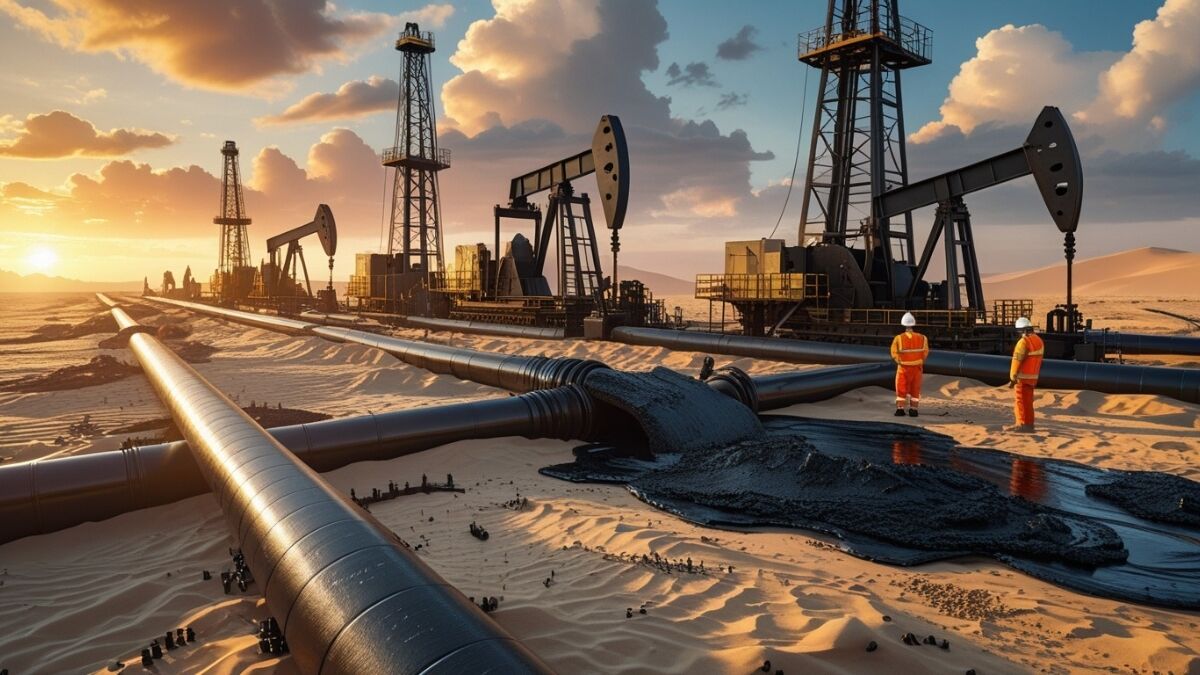
Rising geopolitical tensions in the Middle East are once again bringing global oil markets into focus. Since India imports a large portion of its crude oil requirements, fluctuations in global crude prices and currency movements can directly affect inflation and economic growth. The following report explains how rising crude oil prices and rupee depreciation could impact India’s economy based on recent macro analysis.
According to a macro update by Shriram Wealth on the impact of growing tensions in the Middle East, rising crude oil prices could put pressure on India’s inflation and economic forecast if they go far over the Reserve Bank of India’s baseline expectations.
Rising Crude Oil Prices and India’s Economic Outlook
According to the article, the RBI has set a baseline exchange rate of Rs 88 per dollar and an average crude oil price of USD 70 per barrel for the second half of FY26. The Indian crude oil basket has averaged roughly USD 70.6 per barrel thus far in H2FY26, which is marginally higher than the central bank’s projection.
Nonetheless, the analysis indicates that India’s macroeconomic outlook might change even with a slight increase in petroleum prices. Inflation may rise by almost 30 basis points if the crude oil basket were to increase by 10% from the baseline forecast, bringing it to about USD 77 a barrel.
Impact of Higher Oil Prices on Inflation and Growth
At the same time, if domestic gasoline prices completely reflect the increase in global oil prices, economic growth may drop by about 15 basis points. Therefore, whether or not oil prices stay high will depend greatly on how long geopolitical uncertainty lasts.
Changes in exchange rates may have an additional impact on the inflation forecast. According to the research, inflation might rise by roughly 35 basis points if the rupee depreciates by 5% from the baseline projection, bringing the exchange rate down to about Rs 92.4 per dollar.
🛢 RBI Baseline Assumptions for FY26
- Baseline Crude Price: $70 per barrel
- Baseline Exchange Rate: ₹88 per US dollar
- Current Average Oil Price: $70.6 per barrel
- Economic Period: Second half of FY26
- Key Concern: Rising oil prices due to Middle East tensions
- Main Risk: Higher inflation and slower economic growth
Currency Movements and Their Economic Impact
GDP growth might gain about 25 basis points at the same time. The rupee has averaged about Rs 89.7 per dollar thus far in H2FY26. This implies that inflation might increase by about 35 basis points with an additional depreciation of about 3% from current levels.
Notwithstanding these dangers, the analysis suggests that further RBI foreign exchange intervention is likely to restrict rupee depreciation, and a reduction in geopolitical tensions could help stabilize the currency and lessen its impact on growth and inflation.
📊 Possible Economic Impact if Oil Rises
- Oil Price Increase: 10% rise to about $77 per barrel
- Inflation Impact: Increase of about 30 basis points
- Rupee Depreciation Scenario: 5% fall to around ₹92.4 per dollar
- Inflation Effect from Rupee: Around 35 basis points increase
- GDP Impact: Growth may drop by about 15 basis points
- Possible Benefit: Slight GDP boost from exports if rupee weakens
Frequently Asked Questions
1. Why is India concerned about crude oil prices exceeding $77?
An increase in crude prices above $77 per barrel may result in increased fuel, transportation, and production costs, which could raise inflation in India.
2. What assumptions did the Reserve Bank of India make on the price of crude oil?
With an exchange rate of ₹88 per US dollar, the RBI projected an average price of $70 per barrel for crude oil in H2 FY26.
3. If the price of crude rises by 10%, how much can inflation increase?
If consumers bear the whole expense of a 10% increase in crude prices, inflation might rise by roughly 30 basis points (0.30%).
4. What impact would rising crude prices have on economic expansion?
Higher energy costs diminish consumption and raise corporate expenses, which might lead India’s GDP growth to stall by about 15 basis points.
5. How does inflation relate to the rupee exchange rate?
Inflation could rise by roughly 35 basis points if the rupee depreciates by 5% to about ₹92.4 per dollar, although GDP growth might marginally increase due to export advantages.
Conclusion
According to the Shriram Wealth research, if rising crude oil prices and currency depreciation surpass the Reserve Bank of India’s baseline expectations, they could lead to higher inflation and a minor slowdown in India’s GDP.
However, lowering geopolitical tensions and possibly intervening in the currency market could help stabilize oil prices and lessen the overall impact on the Indian economy.
Disclaimer: This article is for informational purposes only. Economic projections and market insights are based on available research and may change depending on global market conditions.
