
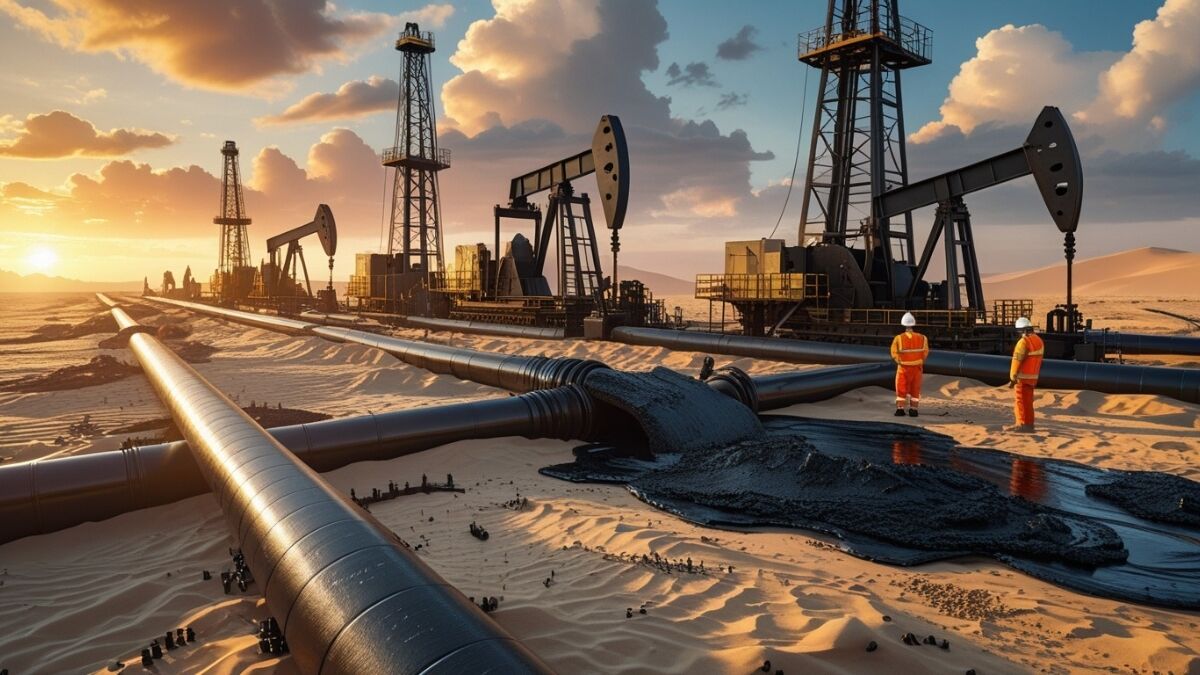
Following new assaults on vital energy infrastructure in West Asia, which increased concerns of a wider supply shock, crude oil prices spiked more than 4% on Thursday morning.
Oil Prices Surge Amid West Asia Conflict
Fears of a protracted supply shock have increased as a result of the conflict’s turn toward attacking energy infrastructure, driving up oil prices and putting import-dependent nations like India at danger.
Crude Oil Price Movement
The April Brent oil contract on the Intercontinental Exchange was trading at $111.78 a barrel at 6:20 AM, up 4.10% from its previous close. West Texas Intermediate (WTI) contracted for April on NYMEX increased 3.37% to $99.57 per barrel.
Iran-Israel Energy Conflict Impact
The increase comes after Iran launched retaliatory assaults on Qatar’s Ras Laffan industrial city, a significant worldwide gas hub, in response to Israel’s attack on Iran’s South Pars gas field, the biggest in the world. Any interruption in South Pars, which is shared by Iran and Qatar (where it is referred to as the North Field), has direct global ramifications.
Majed Al Ansari, a spokesperson for Qatar’s foreign ministry, said that assaults on energy infrastructure “constitutes a danger to global energy security” after Israel’s strikes on the South Pars gas field. Iran attacked Ras Laffan, Qatar’s primary gas complex, after threatening to hit oil and gas installations in the area.
Damage at Ras Laffan Facility
QatarEnergy said in a post on X:
Ras Laffan Industrial City has been the target of missile assaults this evening, according to QatarEnergy. Due to the significant damage inflicted, emergency reaction teams were sent out right away to put out the ensuing flames. No injuries have been recorded as of yet, and all troops have been accounted for.
🛢️ Oil Price Surge Highlights
- Price Spike: Crude oil up 4%+
- Brent Price: $111.78 per barrel
- WTI Price: $99.57 per barrel
- Trigger: Attacks on energy infrastructure
- Key Locations: South Pars & Ras Laffan
- Global Impact: Supply shock fears rising
There are still worries that the war may worsen and threaten additional energy infrastructure in West Asia. About 20% of the world’s gas is produced by QatarEnergy, which had already stopped production earlier in the month after the war’s first attack on the Ras Laffan facility.
Global Supply Concerns and US Response
The US on Wednesday approved a broad license for certain transactions involving Venezuela’s national oil firm PDVSA in an effort to allay supply worries and control prices. However, experts warn that if Gulf problems worsen, such actions could only provide little assistance.
Impact on India’s Economy
For India, which imports about 90% of its crude oil needs, the increase in oil prices has serious ramifications. According to analysts, India’s import bill increases by almost ₹16,000 crore per year for every $1 rise in oil prices per barrel, highlighting the macroeconomic consequences of persistently high pricing.
LPG Supply and Strait of Hormuz Pressure
The government is under pressure to prioritize residential use and limit business usage due to the current LPG supply bottleneck, which has restricted availability due to issues related to the Strait of Hormuz.
🇮🇳 India Impact & Risk Factors
- Import Dependence: ~90% crude oil imported
- Cost Impact: ₹16,000 crore rise per $1 increase
- LPG Issue: Supply bottlenecks rising
- Key Risk: Strait of Hormuz disruption
- Inflation Risk: Higher fuel & transport costs
- Economic Pressure: Trade deficit may widen
Frequently Asked Questions
1. What caused the more than 4% increase in oil prices?
Due to direct attacks on important West Asian energy infrastructure, including as Qatar’s Ras Laffan LNG terminal and Iran’s South Pars gas field, oil prices surged. This immediately sparked worries about supply disruptions in international markets.
2. What makes these places so crucial?
The biggest natural gas field in the world is South Pars, and Ras Laffan is a significant center for the export of LNG. Damage to these facilities has an almost immediate impact on the global energy supply.
3. Could things go worse?
Indeed. Experts caution that the confrontation might aggravate the situation by spreading to other Gulf energy infrastructure or possibly interfering with the Strait of Hormuz, which supplies 20% of the world’s oil.
4. Can substitute materials lessen the effect?
By permitting oil supplies from countries like Venezuela, countries like the US are attempting to alleviate supply, but experts warn this will only partly offset losses if Gulf disruptions worsen.
Conclusion
As energy infrastructure becomes a direct target in the battle, the current jump in oil prices represents a significant change from geopolitical tension to genuine supply interruption. Fears of a protracted global energy shock with possible knock-on implications on trade, inflation, and global economic stability have increased as a result.
Because of their strong reliance on imports, nations like India may be particularly hard hit. Oil prices may stay high or climb more if the battle intensifies or obstructs vital routes like the Strait of Hormuz, putting greater strain on the world economy.
Disclaimer: This content is for informational purposes only and should not be considered financial or investment advice.
