
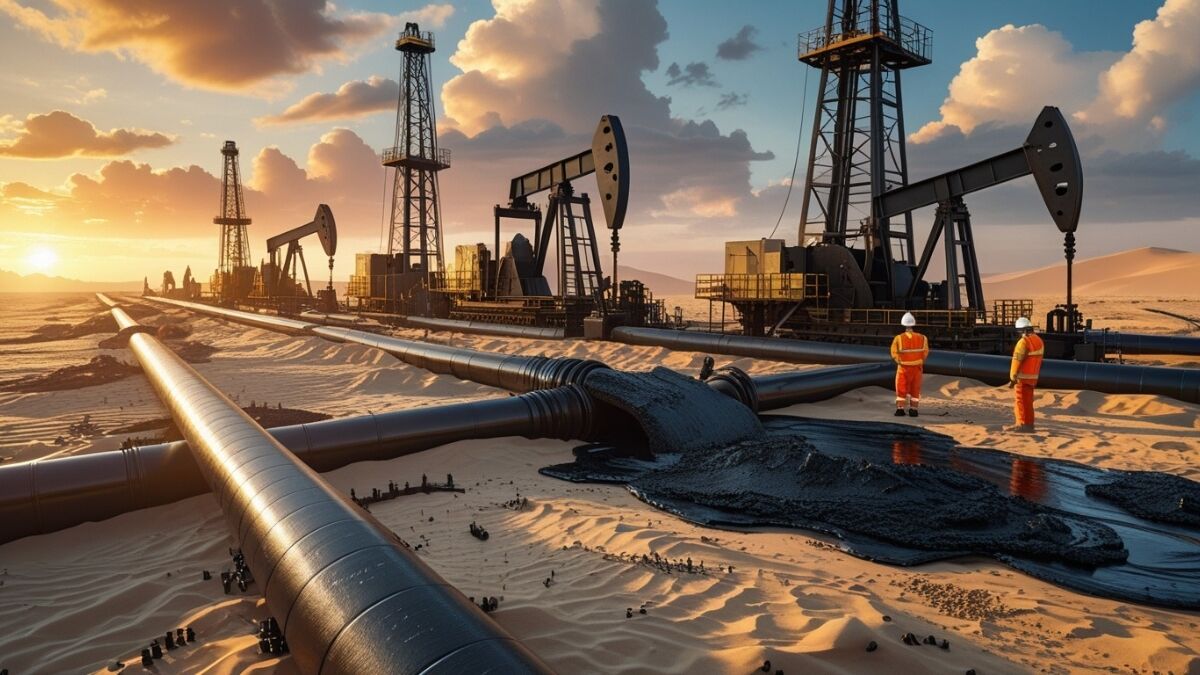
Major energy sources around the Middle East are being targeted in the continuing conflict, which has taken a hazardous turn.
Middle East Energy Crisis Escalates
Supply lines have already seen disruptions due to the Strait of Hormuz’s imminent shutdown. Attacks on major energy facilities have the danger of drastically reducing the output of gas and crude oil.
Global Energy Supply at Risk
Drones and missiles have hit important manufacturing centers in Iran, Saudi Arabia, Kuwait, Qatar, and the United Arab Emirates. The Middle East continues to be crucial to the global energy supply, thus this presents a serious problem. Three of the top twenty gas producers and five of the top ten oil producers in the world are located there.
These assaults have far-reaching effects outside of the area. India is just one of several nations that rely significantly on local gas and fuel. And each of those nations may see an increase in energy prices, if not actual energy shocks.
Key Energy Infrastructure Attacks
A drone struck the Samref refinery on March 19 in the Saudi Arabian coastal city of Yanbu. The extent of the damage is still being evaluated by officials. Samref can produce around 4,00,000 barrels per day.
Amidst an increase in assaults on energy installations, a significant LNG hub in Qatar sustained significant damage. A missile struck the world’s biggest LNG export facility, Ras Laffan Industrial City, which used to provide around one-fifth of the world’s LNG, causing production to stop. With a daily processing capacity of around 3,06,000 barrels, the plant generates clean fuels and other petroleum products.
⚡ Energy Attack Highlights
- Regions Hit: Iran, Saudi, UAE, Qatar, Kuwait
- Main Targets: Refineries & LNG hubs
- Ras Laffan: Major LNG export disruption
- Samref: 4,00,000 barrels/day capacity
- Impact: Global supply risk rising
- Threat Level: Severe escalation
The Bab Oilfield and the Habshan Gas Facility in the United Arab Emirates suffered. At these locations, problems were nevertheless triggered by falling debris even if the missiles were intercepted. With a daily capacity of 6.1 billion standard cubic feet, the Habshan Gas Processing Plant is among the biggest gas processing plants in the world.
Iran has upped pressure on a number of Gulf countries by attacking their energy installations in revenge for an Israeli raid on its South Pars gas production. One of the biggest natural gas reserves in the world, the South Pars Gas Field produces gas for both industrial and energy uses. Every day, it produces around 730 million cubic meters.
Further Damage Across Gulf Facilities
Drones also targeted two of Kuwait is largest refineries. The refineries in the south, Mina al-Ahmadi and Mina Abdullah, caught fire. With a daily capacity of 7,30,000 barrels, Mina al-Ahmadi is one of the biggest refineries in the Middle East.
The price of Brent Crude skyrocketed on Thursday. It was between $114 and $115 a barrel at the time of writing, while US West Texas Intermediate (WTI) had risen to roughly $97. According to a story in The New York Times, European natural gas prices surged by about 30% on Thursday as a result of the fighting.
Strait of Hormuz Disruption
The flow of goods over the Strait of Hormuz has all but stopped. Approximately 20% of the world’s oil and much more LNG go via this route, making it vital.
Global Economic Impact and Inflation Risk
Fears of worldwide inflation have returned due to the skyrocketing cost of gas and oil. Concerns about inflation caused stock markets all around the globe to plummet, and pressure to sell precious metals like gold and silver persisted.
🌍 Global Impact & Inflation Risks
- Oil Prices: Brent $114–$115
- Gas Prices: Up ~30% in Europe
- Supply Route: Strait of Hormuz disrupted
- Inflation: Rising globally
- Markets: Stocks falling worldwide
- Metals: Gold & silver under pressure
Frequently Asked Questions
1. What is behind the rapid increase in oil prices?
Attacks on important Middle Eastern energy infrastructure and interruptions to supply channels like the Strait of Hormuz are driving up oil prices. Global market instability and price surges are being caused by decreased supply and geopolitical conflicts.
2. Which nations are most impacted by these assaults?
Because important oil and gas infrastructure in these areas have been attacked, nations including Saudi Arabia, Qatar, the United Arab Emirates, Kuwait, and Iran are directly affected.
3. What effect does this have on India?
India is largely dependent on Middle Eastern imports of crude oil. Increased inflation, higher gasoline costs, and economic strain on people and businesses nationwide may result from supply interruptions.
4. How significant is the Strait of Hormuz?
About 20% of the world’s oil supply passes via the Strait of Hormuz. Any interruption here has a significant impact on the world’s energy markets, leading to shipping delays and substantial hikes in the price of gas and oil globally.
5. What are the effects on the world economy?
Growing oil and gas prices have the potential to cause global inflation, raise the cost of production and transportation, and have a detrimental effect on financial markets. As energy prices rise and supply chains continue to be unpredictable, nations all around the globe may experience economic instability.
Conclusion
Global energy risks have increased as a result of the growing assaults on Gulf energy infrastructure, driving up oil prices and endangering supply stability. The disruption of vital routes like the Strait of Hormuz might lead to global inflation, economic instability, and protracted volatility.
Disclaimer: This content is for informational purposes only and should not be considered financial or investment advice.
