
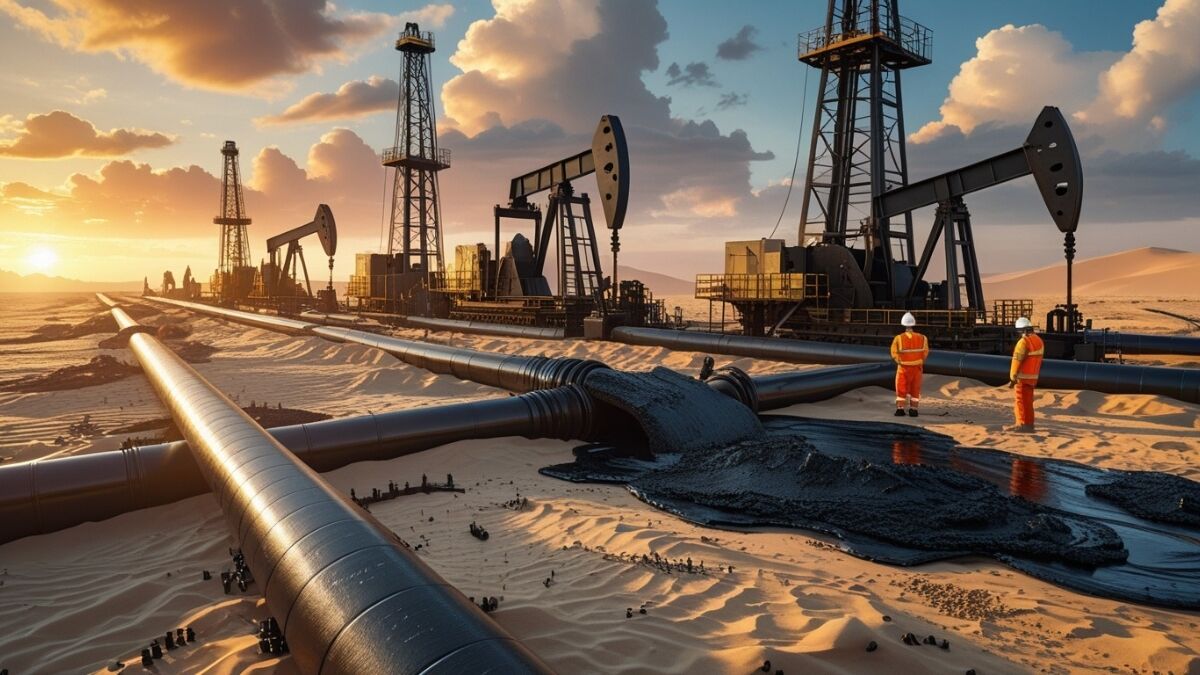
The Strait of Hormuz crisis has escalated into a major global concern, disrupting oil shipments and pushing energy markets into uncertainty. As tensions rise in West Asia, shipping activity has nearly stopped, triggering fears of a global supply shock and rising inflation.
Weeks after the US and Israel initiated attacks on Iran, maritime traffic through the Strait of Hormuz, a crucial route for the export of oil, gas, and other commodities from the Persian Gulf, is still essentially at a stop.
Strait of Hormuz Crisis Deepens
Iran has essentially blocked all but authorized boats from accessing the crucial waterway since it stands above it. Due to assaults on Middle Eastern energy infrastructure, the breakdown of Hormuz transits, and reductions in Gulf crude output as storage tanks fill up, oil and gas prices have skyrocketed.
Global Trade and Energy Disruption
In an effort to resume commerce, the US is thinking about using naval escorts. In an effort to reopen the canal, President Donald Trump has reached out to friends in Europe and Asia, but they are reluctant to get involved in the larger conflict. The canal is an essential shipping channel for the world’s oil commerce.
The Strait of Hormuz, which links the Persian Gulf to the Indian Ocean, is located between Iran to the north and Oman and the United Arab Emirates to the south. At its narrowest point, it is about 24 miles broad and 100 miles (161 kilometers) long. Each direction’s shipping channels are just two miles wide.
🌍 Strait of Hormuz Key Facts
- Global Share: ~25% seaborne oil trade
- Width: 24 miles (narrowest)
- Shipping Lanes: 2 miles each side
- Countries: Iran, Oman, UAE
- Importance: Critical energy chokepoint
- Status: Nearly blocked
About 25% of the world’s seaborne oil commerce passes through the strait, making it a crucial route for the oil market. Crude is sent via Hormuz by Saudi Arabia, Iraq, Iran, Kuwait, Bahrain, Qatar, and the United Arab Emirates, with most of their cargo going to Asia.
Refineries that create massive amounts of diesel, naphtha, which is used to manufacture gasoline and polymers, and other petroleum products that are shipped across the world via the strait are also located in Gulf nations. Crude oil and condensate delivered by the canal by destination in 2025
LNG and Global Supply Dependency
The market for liquefied natural gas also depends on the waterway. Last year, almost 25% of the world’s LNG supply, mostly from Qatar, went via this route. The majority of the very cold gasoline that is transported from the Middle East is purchased by Asian nations. The Strait of Hormuz is a choke point for goods like fertilizer and aluminum in addition to energy.
Iran has sometimes targeted ships in the Persian Gulf. The majority of shipowners are reluctant to take a chance on the loss of people, goods, and ships, even though insurance is available for ships passing through the strait, although at a far greater rate than before to the war.
Restricted Movement and Navigation Risks
A few ships have passed through the channel by hugging the Iranian shore, indicating that Tehran is permitting some crossings to happen on its conditions. Some nations are attempting to negotiate cargo safe passage.
The blocking of global positioning system signals has made navigation more difficult. In addition to being a defensive measure to make it harder for drones and missiles to locate their targets, this method is employed to interfere with commerce. The marine intelligence company Windward reports that signal jamming has impacted over 1,000 ships in the Persian Gulf.
Iran’s Strategic Control Over Shipping
Iran has persisted in using the Strait of Hormuz to transport its own oil. According to statistics from the intelligence company Kpler Ltd., as of mid-March, its exports had only marginally decreased from pre-war levels, although cargoes from other exporters in the area had fallen by almost 95%. Iran dominates the remaining oil shipments, and very few ships are passing through the strait.
Naval Escort Risks and Military Tensions
Trump has urged other countries to assist in reopening the strait. Caution, hesitation, and even outright rejection have been the reactions. Those nations’ officials have questioned whether the US navy and its vessels would be sufficient to significantly restore trade.
Energy Secretary Chris Wright said that the US navy may not be prepared to accompany commercial ships until the end of March. It is unclear whether this protection will apply to all vessels, merely those connected to US interests, or only those owned or flying the US flag.
Why Naval Escorts Are Dangerous
Most military experts agree that escorts would be dangerous in the absence of a truce. Convoys are susceptible to assault due to the strait has short width, which also restricts the number of vessels that may be escorted at once.
“We will not want to put commercial or even escort ships through until we have neutralized Iran’s layered, asymmetric capabilities – mines, fast attack craft, submarines, and drones,” stated Bob McNally, president of consulting firm Rapidan Energy Group and a White House advisor under President George W. Bush.
According to UK Defense Secretary John Healey, Iran “may have begun” planting naval mines in the channel. Trump has cautioned the Islamic Republic against taking this move. The US claimed to have fired bunker-busting bombs on Iranian missile installations close to the canal and destroyed or damaged over thirty Iranian mine-laying boats.
⚠️ Risks & Global Impact
- Shipping: Nearly halted
- Oil Trade: 25% affected
- Risk: Mines, drones, missiles
- Navigation: GPS jamming reported
- Exports: 95% drop (non-Iran)
- Outcome: Global supply shock
The backlog on both sides of the strait may take weeks to clear, even if naval escorts are offered and provide merchants the assurance to go. Bahrain, Qatar, and Kuwait have no alternative maritime export route.
Crude is being rerouted via a pipeline to the Red Sea port of Yanbu by Saudi Arabia, which transports the most oil through Hormuz. Although Yanbu can only handle exports of around 5 million barrels per day, which is less than the kingdom’s typical export levels, producer Saudi Aramco hopes to use the pipeline’s full 7 million barrels per day capacity.
Alternative Routes and Limitations
Iran has previously attacked a Yanbu refinery, and Iran-backed Houthi insurgents in Yemen have vowed to restart assaults on ships in the Red Sea, so this tactic is not without danger. Pipelines in Saudi Arabia and the United Arab Emirates enable them to partially avoid the canal.
To some extent, the UAE may also avoid Hormuz. However, drone assaults have affected the port of Fujairah, which is located at the terminus of a pipeline that links the Gulf of Oman to the UAE’s oil resources. Additionally, not all of Iraq’s exports can be transported via the pipeline that connects its semi-autonomous Kurdistan area to Turkey’s Mediterranean port of Ceyhan.
Frequently Asked Questions
1. What makes the Strait of Hormuz so significant?
Approximately 25% of seaborne oil commerce and substantial LNG supplies pass through the Strait of Hormuz, making it a crucial global energy chokepoint. Its shutdown affects economies that rely significantly on Middle Eastern exports, upsets global supply systems, and drives up energy costs.
2. Has Iran blocked the Strait formally?
Iran has successfully limited access by military threats, selective transit licenses, and disturbances like GPS jamming, even though it has not publicly proclaimed a restriction. The majority of commercial ships is discouraged by these measures, which causes transit activity to almost completely stop.
3. How are nations that export oil managing?
Pipelines are being used by nations like Saudi Arabia and the United Arab Emirates to reroute oil to other ports, such the Red Sea. However, these routes are inadequate to completely replace exports via the Strait of Hormuz because to their limited capacity and security risks.
4. What makes naval escorts dangerous?
Because of the small strait, which restricts mobility and increases susceptibility to mines, drones, and missile assaults, naval escorts are dangerous. Protecting several ships at once would be risky and operationally difficult, and convoys might become easy targets.
5. What may cause the strait to reopen?
Either a truce, effective military neutralization of Iran’s threats, or diplomatic agreements guaranteeing safe passage are probably necessary for reopening the strait. Without them, shipping firms would not feel confident enough to begin regular operations, even with naval escorts.
Conclusion
The Strait of Hormuz crisis serves as an example of how strategic chokepoints may cause immediate disruptions to international energy markets. Iran’s asymmetric strategies have successfully stopped shipments without a formal shutdown, highlighting the necessity for a diplomatic or military solution and revealing weaknesses in international commerce.
Disclaimer: This content is for informational purposes only and should not be considered financial or geopolitical advice.