
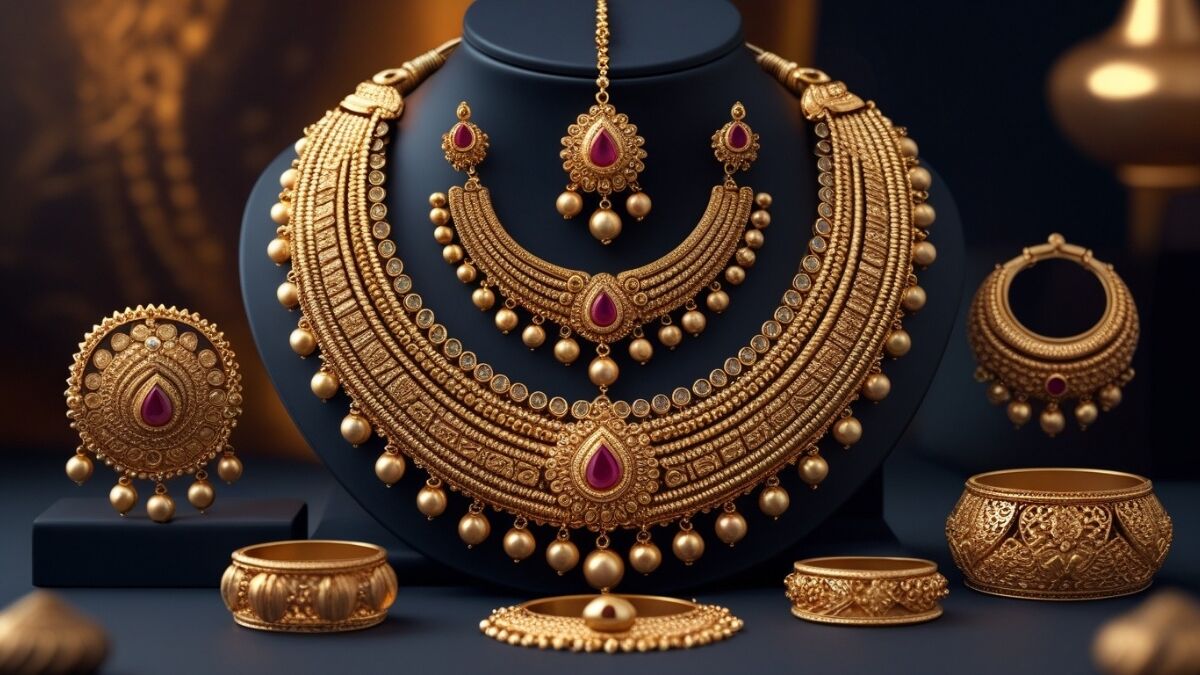
Rising gold prices are reshaping India’s jewelry market, pushing companies like Titan to innovate. As affordability becomes a concern, silver jewelry is emerging as a strong alternative, especially among younger and budget-conscious buyers.
In order to protect growth in its sub-₹1 lakh category, Titan Company Ltd. has doubled down on studded silver jewelry as rising gold prices put pressure on its price-conscious clientele.
Titan Shifts Focus to Silver Jewelry
The pressure is especially noticeable at its youth-oriented brands, CaratLane and Mia by Tanishq, where demand is beginning to strain as gold prices rise. Instead of depending only on lower-carat gold or price adjustments to keep entry-level customers, Titan is increasing its selection of design-led silver.
Rising Gold Prices Driving Change
The change highlights a larger trend in India’s jewelry market: as gold prices rise, purchasers, especially younger ones, are getting more adventurous and favoring lighter, less expensive categories like silver and silver-studded items.
💍 Silver Jewelry Boom
- Gold Price: ₹1.5 lakh / 10g
- Silver Price: ₹2.35 lakh / kg
- Trend: Shift to affordable jewelry
- Target: Young buyers
- Focus: Design-led silver
- Growth: Rapid expansion
Silver is presently selling at around ₹2.35 lakh per kilogram, demonstrating a growing affordability gap between the two metals, while gold is currently trading at about ₹1.5 lakh per 10 grams on the MCX, up significantly over the previous year.
India’s jewelry consumption is undergoing a fundamental change. Silver, gold-plated, and semi-precious categories will continue to gain ground, especially among younger buyers, according to Arvind Singhal, chairman and MD of The Knowledge Company, a management consulting firm. “Gold will remain important, but for many consumers, jewelry is becoming more of an accessory than a store of value.”
Changing Consumer Preferences
During the company’s FY26 December-quarter results conference, Titan’s jewelry business CEO Arun Narayan and managing director Ajoy Chawla recognized pressure in the sub-₹1 lakh category. “Our strategy as a portfolio of brands is to make sure we own that client in the sub-₹1 lakh sector,” Chawla said.
Titan’s Tanishq-led portfolio, which includes Mia and Zoya, recorded sales of ₹19,921 crore in the December quarter (Q3FY26), rising almost 40% year over year; however, Mia’s figures are not available independently. CaratLane reported ₹1,537 crore in revenue, up 42% from the year before. The jewelry division accounted for more than 87% of Titan’s Q3FY26 consolidated sales of ₹24,501 crore.
Brand Expansion and Strategy
About five months ago, CaratLane launched studded silver jewelry under its Shaya brand in the sub-₹10,000 range, according to Shaya’s business head, Ajith Singh Rajapoopathy.
As gold becomes more expensive, this price range is becoming a crucial entry point for first-time purchasers. He claimed that during the previous two years, Shaya has grown by roughly 30% a year. In addition to being inexpensive, silver is becoming more popular among younger consumers as a design-driven and gift-friendly product.
Silver is still a minor component of the total mix at Mia by Tanishq, but the market is growing quickly, therefore the company is formalizing its involvement. According to Shyamala Ramanan, business head of Mia by Tanishq, “Silver is developing fantastically for us, growing about 30–50%.”
Industry-Wide Adoption
“We used to call it ‘sassy silver,’ but we did not do much about it,” she said, noting that the company is now expanding the category via improved visibility and marketing.
The tendency is similar for rivals. Customers are reevaluating their purchases, according to Sanjay Banka, CFO of Senco Gold and Diamonds. “The customer could switch to diamonds or choose silver jewelry with stones,” he said.
Aditya Modak, co-founder of Gargi by PNGS, which joined the market last year with a zircon and crystal line starting at around ₹4,000, said, “Studded silver is becoming a major growth engine for us.”
📈 Market Growth Outlook
- India Share: 25–30% global demand
- Growth Drivers: Urban buyers
- Category: Daily wear jewelry
- Market Size: $3–4 billion (projected)
- Trend: Fashion-focused buying
- Future: Long-term shift
The Silver Institute estimates that between 25 and 30 percent of the world’s silver demand comes from India. Although bullion, coins, and artifacts have historically dominated consumer spending, the jewelry market has been expanding.
According to industry projections, the desire for daily wear and growing urban consumption might propel the nation’s silver jewelry market to above $3–4 billion in the next two to three years.
Frequently Asked Questions
1) Why are purchasers of gold switching to silver jewelry?
Traditional purchases have become more expensive because to rising gold prices, particularly for first-time purchasers. Silver allows for fashionable, modern designs at a far lesser cost. Silver is a useful and attractive substitute for gold as younger customers increasingly see jewelry as fashion accessories.
2) How is Titan adjusting to the rising cost of gold?
Titan is increasing the range of silver jewelry it offers under labels like CaratLane and Mia, especially with studded designs. It is concentrating on design-led silver collections rather than just lower-carat gold in order to draw in price-conscious and first-time customers in lower budget categories.
3) Which price points are driving demand for silver jewelry?
There is significant growth in the sub-₹10,000 and sub-₹1 lakh markets. Younger consumers and new customers are drawn to these pricing ranges. Stylish, reasonably priced silver pieces provide a gateway to branded jewelry, particularly as gold continues to rise beyond affordable price points.
4) Is this change short-term or long-term?
Instead of being a transient trend, industry analysts think this is a fundamental change. Silver and other materials are anticipated to continue to gain popularity alongside conventional gold jewelry as customer tastes shift toward lighter, daily jewelry and fashion-oriented purchases.
5) How are rivals reacting to this development?
Other jewelry companies are also entering the semi-precious and studded silver markets. Businesses are launching collections featuring zircon, crystals, and gold-plated designs in an effort to appeal to budget-conscious and fashion-conscious consumers, demonstrating a wider industry alignment with shifting consumer tastes.
Conclusion
India’s jewelry sector is changing as increasing gold costs drive buyers to more reasonably priced, aesthetically pleasing options like silver. Titan and rivals are profiting from this change, indicating a long-term change in jewelry that increasingly strikes a balance between accessibility, daily fashion, and investment value.
Disclaimer: This content is for informational purposes only and should not be considered financial or investment advice.
