
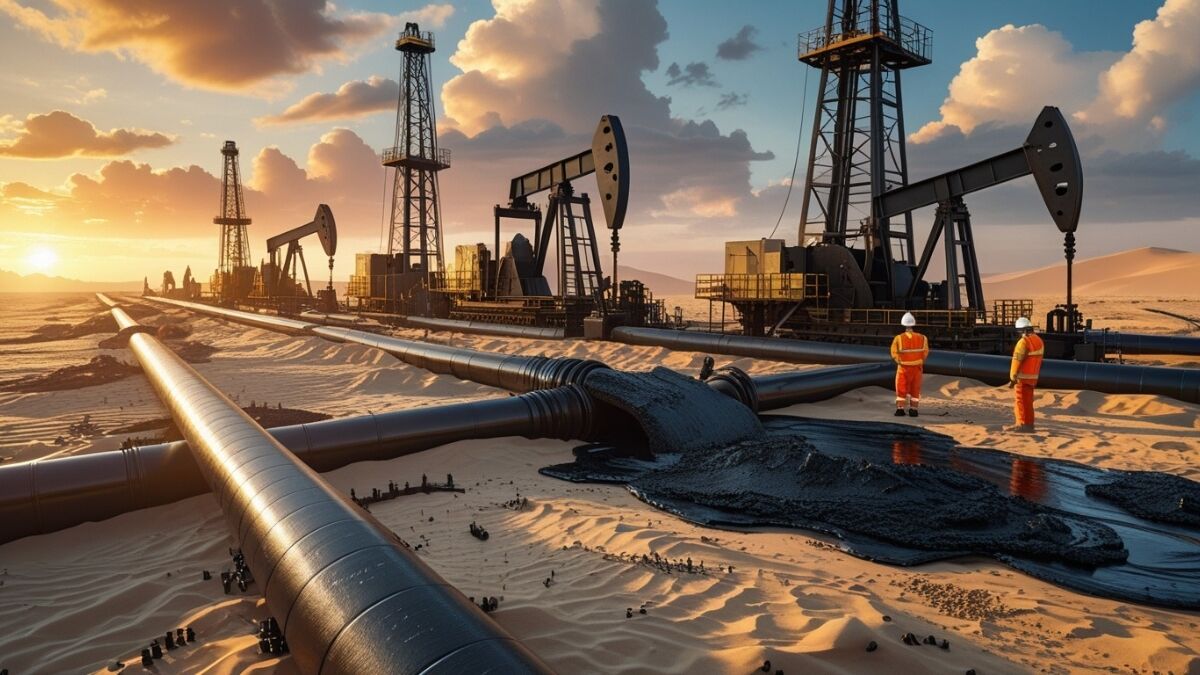
In response to global energy disruptions, the United States has taken temporary measures to ease supply pressures by allowing certain Iranian oil shipments to reach international markets.
In an effort to stabilize the world’s energy supply that have been affected by the violence in West Asia, the US has temporarily lifted restrictions on Iranian oil that is already at sea.
US Eases Sanctions to Stabilize Global Energy Supply
The US has taken action to enhance available oil supply by relaxing restrictions on certain Iranian shipments that are already in route, since the disruptions in West Asia have put pressure on the energy markets.
🌍 Iranian Oil Sanctions Relief
- Action: Temporary sanctions relaxation
- Target: Iranian oil already at sea
- Goal: Stabilize global energy supply
- Reason: West Asia conflict disruptions
- Duration: Until April 19
Scope and Timeline of the Authorization
On Friday, the US Treasury said that restrictions on Iranian oil put aboard ships will be temporarily lifted, enabling these supplies to reach international markets. The Treasury said that the authorization will be in force until April 19 and is applicable to Iranian crude oil and other petroleum products carried into ships before to March 20.
Treasury Secretary Scott Bessent said it was being considered, and the Office of Foreign Assets Control made the decision. It comes after similar relaxation of maritime restrictions on Russian oil supplies.
Impact of Strait of Hormuz Disruptions
The action follows supply chain disruptions caused by Iran’s successful blockade of the Strait of Hormuz and frequent assaults on oil facilities. Approximately 20% of the world’s gas and oil pass via this important waterway.
📊 Global Oil Market Impact
- Supply Boost: ~140 million barrels expected
- Key Route: Strait of Hormuz disruption
- Global Flow: ~20% oil & gas passes here
- Market Goal: Ease supply shortages
- Strategy: Short-term stabilization
US Government Justification and Strategy
According to Bessent, the action was a restricted and short-term solution in line with President Donald Trump’s goal of “maximizing the supply of energy to the globe” and preserving market stability worldwide. “China is now hoarding sanctioned Iranian oil on the cheap,” Bessent said in a statement.
“The United States will swiftly deliver almost 140 million barrels of oil to global markets by temporarily releasing this existing supply for the globe, raising the quantity of international energy and helping to ease the temporary restrictions on supply created by Iran.”
Iran’s Response and Market Reaction
According to Iran, there is not any more oil accessible for international markets. Iranian oil ministry spokesperson Saman Ghoddoosi wrote on X, “At the moment, Iran essentially has no excess crude oil remaining on the sea or for supply in other foreign markets, and the US Treasury secretary’s comments is primarily intended at offering hope to purchasers.”
The Treasury made it clear that the authorization does not apply to oil shipments to North Korea, Cuba, or regions of Ukraine that are under Russian occupation. Friday saw an increase in oil prices, but they remained below the $120 per barrel threshold that has been reached many times since the war started three weeks ago.
West Texas Intermediate had a 2.27 percent gain to $98.32, while North Sea Brent saw a 3.26 percent increase to $112.19.
Frequently Asked Questions
1) Why did the US loosen its oil sanctions on Iran?
In order to assist stabilize the world’s energy supplies that were interrupted by the continuous war in West Asia, which put pressure on oil markets and supply lines, the US temporarily relaxed sanctions on Iranian oil.
2) Which particular shipments are impacted by the lifting of the sanctions?
Iranian petroleum products and crude oil carried aboard ships prior to March 20 are exempt from sanctions. It excludes exports to North Korea, Cuba, and territories of Ukraine under Russian occupation.
3) How long will the respite from sanctions last?
Until April 19, Iranian oil exports will be able to access the international market thanks to the temporary sanctions reprieve, which will also lessen supply constraints on energy prices.
4) Regarding its oil supplies, what did Iran say?
Iran said that it had no excess oil on foreign markets and denied having excess crude oil ready for sale. It further stated that the US’s allegation was more about giving purchasers optimism.
5) How did the news affect oil prices?
As supply fears grew, oil prices increased in tandem with the news, with West Texas Intermediate hitting $98.32 per barrel and North Sea Brent crude rising to $112.19 per barrel.
Conclusion
In order to reduce market pressure amid worldwide disruptions, the US temporarily removed restrictions on Iranian oil supplies. However, Iran disputes having extra oil on hand, raising questions about the dynamics of supply.
Disclaimer: This content is for informational purposes only and based on current reports. Energy markets are volatile and subject to rapid geopolitical changes.
