
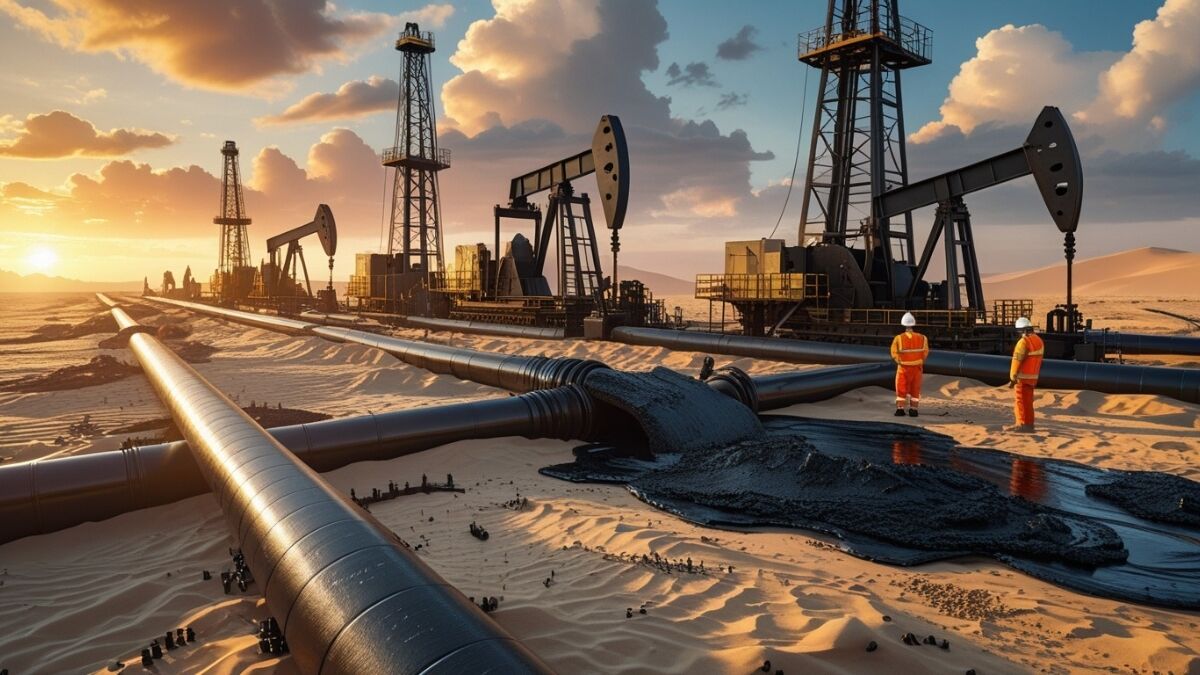
India’s fuel pricing strategy remains steady despite global oil volatility, reflecting efforts to balance economic stability with energy security.
Despite a significant increase in the price of crude oil worldwide, India has maintained the majority of gasoline prices, even as refiners are thinking about buying Iranian oil again after the US temporarily lifted sanctions.
India Maintains Fuel Price Stability
According to Indian Oil Corp Ltd, the most recent price change mainly affects its premium gasoline grade XP-95, minimizing the effect on total usage. The action comes after global oil prices spiked from USD 71 to USD 156 per barrel in only 20 days.
Regular gasoline and diesel prices have not gone up countrywide, according to authorities. But the cost of industrial diesel has increased by 25%, from Rs 87.67 to Rs 109.59 a litre.
⛽ Fuel Price Impact in India
- Crude Price Jump: USD 71 → USD 156 (20 days)
- Petrol Impact: Only XP-95 premium affected
- Diesel Price: Stable nationwide
- Industrial Diesel: Up 25%
- Government Strategy: Controlled retail prices
Demand Pressure and Supply Situation
Additionally, officials said that domestic market pressure was lessening. Bookings for LPG fell to 55 lakh on Thursday, suggesting that panic purchasing has lessened. Although it admitted that LPG supply is still an issue, the administration said that supplies are still sufficient and that no fuel outlets are running low.
7.5 lakh consumers are switching from LPG to piped natural gas, indicating a change in consumer behavior. 32 states and union territories have established district committees and control rooms as part of increased monitoring. Enforcement action has increased, with 1,800 surprise inspections by oil marketing corporations and 4,500 raids nationally.
⚠️ Supply Monitoring & Consumer Shift
- LPG Demand: Dropped to 55 lakh bookings
- Consumer Shift: 7.5 lakh moved to PNG
- Monitoring: Control rooms in 32 regions
- Inspections: 1,800 checks + 4,500 raids
- Supply Status: No fuel outlet shortages
Logistics Support and Government Measures
Additionally, logistical help has been implemented, including a temporary reduction in port fees for shipments of LPG and crude oil at the New Mangalore port between March 14 and March 31.
Separately, according to a Reuters story, Indian refiners are getting ready to start purchasing Iranian oil again after Washington temporarily relaxed sanctions in order to alleviate an energy shortage associated with the US-Israeli confrontation with Iran.
Iranian Oil Imports and US Waiver
According to three refinery sources, they are prepared to go forward but are awaiting US government directives and clarification over payment methods. Following the recent lifting of sanctions, India has already expanded its imports of Russian oil.
For cargo loaded on or before March 20 and released by April 19, the US has granted a 30-day waiver for Iranian oil that is currently at sea. Since the start of the war, there have been three such waivers.
Global Supply and Market Challenges
There are presently between 130 million and 170 million barrels of Iranian petroleum floating at sea, according to estimates. However, there are still issues, such as dependence on aging ships in the so-called shadow fleet and payment uncertainty.
Asian refiners are also reviewing potential purchases, as the region—dependent on the Middle East for 60 per cent of its crude—faces supply strain and reduced refinery operations.
Frequently Asked Questions
1) Why is Iranian oil being considered by India once more?
Due to a short-term US waiver and a worldwide supply shortage, India is investigating Iranian crude in an effort to control increasing global oil prices and stabilize fuel supplies.
2) What led to the recent spike in the price of crude oil worldwide?
Geopolitical tensions between the United States and Iran caused prices to rise, upsetting supply networks and generating uncertainty in the world’s energy markets.
3) Why have not the costs of gasoline and diesel gone up in India?
In order to safeguard consumers, the government has absorbed cost pressures by restricting increases to premium gasoline and industrial diesel while keeping retail prices steady throughout the country.
4) In relation to Iranian oil, what is the US waiver?
In times of shortages, the waiver helps nations like India temporarily access supplies by permitting restricted transactions for Iranian petroleum currently in route.
5) How are customers responding to fuel-related issues?
While panic purchasing has decreased, suggesting increased confidence in fuel supplies, some users are switching from LPG to piped natural gas.
Conclusion
In spite of geopolitical tensions and changing consumer demand patterns, India maintains supply stability and controls local pricing while balancing energy security and affordability in uncertain markets via the use of exemptions and diverse sourcing.
Disclaimer: This content is for informational purposes only. Fuel prices and policies may change based on global and domestic conditions.
