
This article highlights how CPUs are making a strong comeback in the AI era, driven by the rapid rise of agentic AI and increasing computing demands.
SAN FRANCISCO—The CEO of the chip business Arm Holdings, Rene Haas, took the stage on Tuesday in a renovated waterfront pavilion to present his company’s newest offering, a fresh design for the same kind of computer chip that Arm has been producing for over 30 years.
Return of CPUs in the AI Era
Haas said to the audience, “People thought CPUs were dead.” However, he stated that “you need more and more CPUs” as artificial intelligence advances quickly. “Many of them.”

In the field of artificial intelligence computing, central processing units, or CPUs—the fundamental components of the majority of computers, including laptops, smartphones, and data-center servers—have been somewhat of an afterthought for the past few years. They are now the stars of the show because of how quickly AI is evolving.
💻 CPU Comeback in AI
- Technology Focus: Central Processing Units (CPUs)
- Main Driver: Rise of agentic AI
- Industry Shift: From GPU dominance to CPU balance
- Key Benefit: Task management & system coordination
- Demand Trend: Rapidly increasing
- Future Outlook: Essential for AI infrastructure
Industry Shift Toward CPU Demand
Chip manufacturers are acting swiftly to take advantage of the surge in demand for CPUs caused by the rise of so-called agentic AI. The semiconductor giant Nvidia is best known for producing potent graphics processing units, or GPUs, which speed up the processing required to train and execute sophisticated AI models. It revealed last week that it would provide a new server rack with just its Vera CPUs and no graphics cards.
Recently, Meta Platforms placed a large order for Nvidia CPUs, claiming it was the first major CPU-only data-center deployment. Meta Platforms has been making huge investments in its computer infrastructure and in employing AI agents to target ads more effectively and assist with other duties.
Expert Insights on CPU Growth
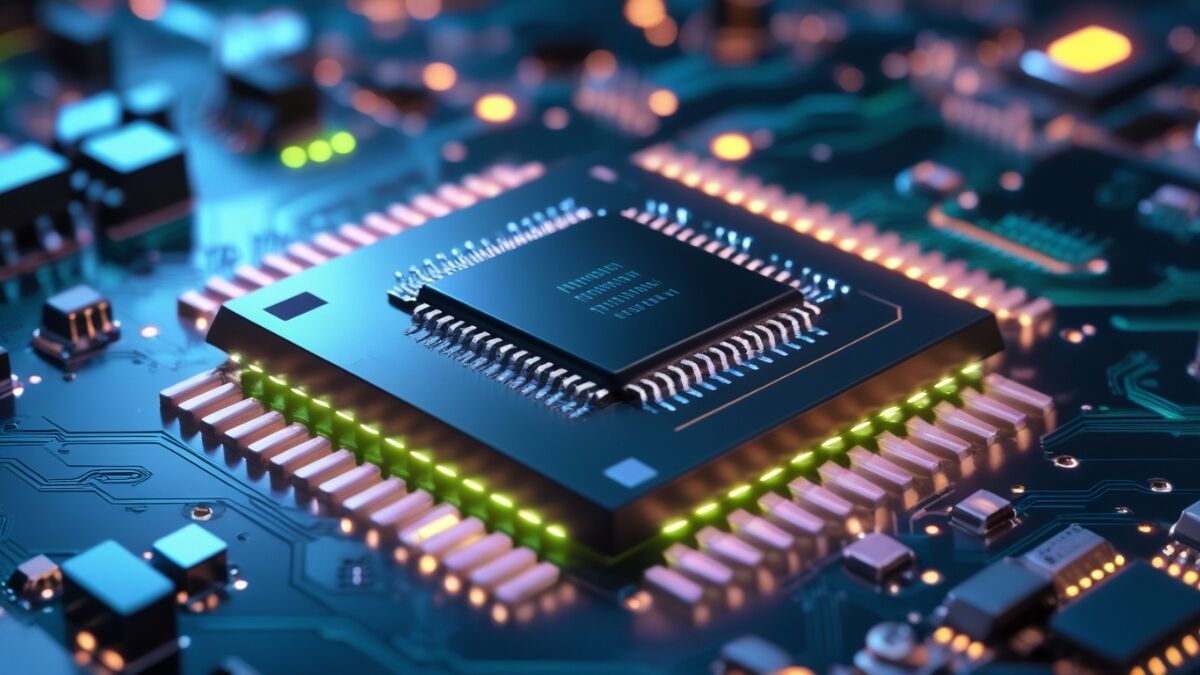
According to Jeroen Kusters, a senior semiconductor specialist at Deloitte, “there is a rebalancing toward CPUs.” “The GPU side of things was more revolutionary. It now affects the whole system. Although CPUs have always been a crucial component of AI, their demand has recently skyrocketed.One of the most striking examples of how drastically the emergence of AI agents is altering the technology sector to date is Arm’s latest processors.
Arm has been profitable for decades by licensing its CPU architecture to larger firms like Qualcomm and Nvidia, who use it to make CPUs that they resell. Arm is now competing with them by reinventing itself as a chip designer.
⚡ AI Demand & Market Growth
- Market Projection: $100 billion CPU market
- Growth Driver: AI agents & automation
- Key Companies: Arm, Nvidia, Meta, OpenAI
- Infrastructure Need: High compute & energy
- Trend: Dedicated CPU environments
- Future: Massive computing demand
Arm’s Strategic Transformation
According to the business, the new chip is the “world’s most efficient agentic CPU.” Arm, which has a reputation for creating designs for semiconductors that use less energy than others, said that its AGI CPU is twice as efficient as comparable processors produced by rivals.
Additionally, Arm anticipates a significant cash boost from its transition from selling intellectual property to actually creating and marketing chips. Meta has agreed to become the chips’ primary partner and first significant client. OpenAI, Cerebras, SAP, Cloudflare, SK Telecom, and Rebellions are further clients.
Revenue Growth and Market Expectations
In an interview, Haas stated that Arm anticipates yearly revenue to almost quadruple to $25 billion over the next five years, which is roughly one-third more than analysts surveyed by FactSet had projected. Following its chip releases, shares increased by more than 16% on Wednesday.
The powerful graphics processing processors, or GPUs, for which the business is renowned are not present in the Nvidia Vera CPU tray; just CPUs are.
Rising Demand for Agentic AI Computing
The anticipated increase is a reflection of how coding tools like OpenAI’s Codex and Claude Code have accelerated the need for AI agents. A preview of the impending frantic dash for agentic AI computing power was provided with the launch of OpenClaw, a platform that enables users to build virtual personal assistants that can do tasks in the real world. In order to meet the processing demands of agentic AI platforms, vibe-coders hurried to purchase high-memory computers, such Apple’s Mac Mini.
According to Thomas Sohmers, chief technology officer and co-founder of Positron AI, a chip startup that has an agreement with Arm to use its new chips in its computing platform, “you want these agents to have their own computing environment, and you need to have a certain number of CPUs to run them.”
Massive Computational Needs
“You need a lot of dedicated CPUs if people run several OpenClaws all day. People just were not managing this many agents a few months ago, according to Sohmers. “This computational demand is genuinely new.”
In an agentic environment, an agent may produce 15 times as many tokens in a minute or two as a human can, according to Haas. CPU work is all of that.
Future of AI Infrastructure
Over the next five years, Arm projects that the addressable market for data-center CPUs will reach roughly $100 billion annually. Taiwan Semiconductor Manufacturing Co. fabricates the chips, which the company intends to send its initial orders of in the coming months.
Customers of Arm, such as Meta and OpenAI, concurred at Tuesday’s presentation event that the rise of agentic AI has created an enormous demand for processing capacity.
Industry Leaders on AI Expansion
The chief of infrastructure at Meta, Santosh Janardhan, stated that the company’s objective is “to give personal superintelligence to billions of individuals,” a massive undertaking requiring enormous amounts of gear, electricity, and land. However, silicon is the most important component. “A lot of silicon,” he remarked. “There is no indication that this will slow down at all.”
According to Kevin Weil, vice president for science at OpenAI, powering AI computing now depends more on “system performance” than just one or two processors, making CPUs like the one Arm is introducing more important than ever.
According to Weil, “GPUs kind of receive top credit wherever they go, but really the CPU is playing an extraordinarily significant role.” “The coin of the realm is “I need more compute.” To be honest, there are more things we want to do and more demands from clients than the sector can handle.
Frequently Asked Questions
1) Why are CPUs becoming crucial in AI once more?
CPUs are excellent in coordination, memory handling, and task management, all of which are necessary for AI systems, particularly agentic AI. CPUs efficiently manage the system as a whole, whereas GPUs perform complex math.
2) Why does agentic AI require CPUs and what does it entail?
The term “agentic AI” describes autonomous systems that carry out tasks on their own. Because each agent frequently needs its own runtime environment, managing processes and operations increases the need for CPUs.
3) What role does Nvidia play in CPU growth?
Known for its GPUs, Nvidia is now producing CPU-only systems like Vera. This indicates a move toward balanced designs, in which CPUs manage orchestration in conjunction with or even independently of GPUs.
4) In what ways is Arm Holdings’ business model evolving?
In an effort to increase value and directly compete with leading chipmakers, Arm is switching from licensing chip designs to producing and marketing its own CPUs.
5) Who are these new CPUs’ main consumers?
These CPUs are being used by large tech companies like Meta Platforms and OpenAI to handle expanding AI infrastructure and autonomous agent workloads.
Disclaimer: This content is for informational and educational purposes only and does not constitute financial or investment advice.
