
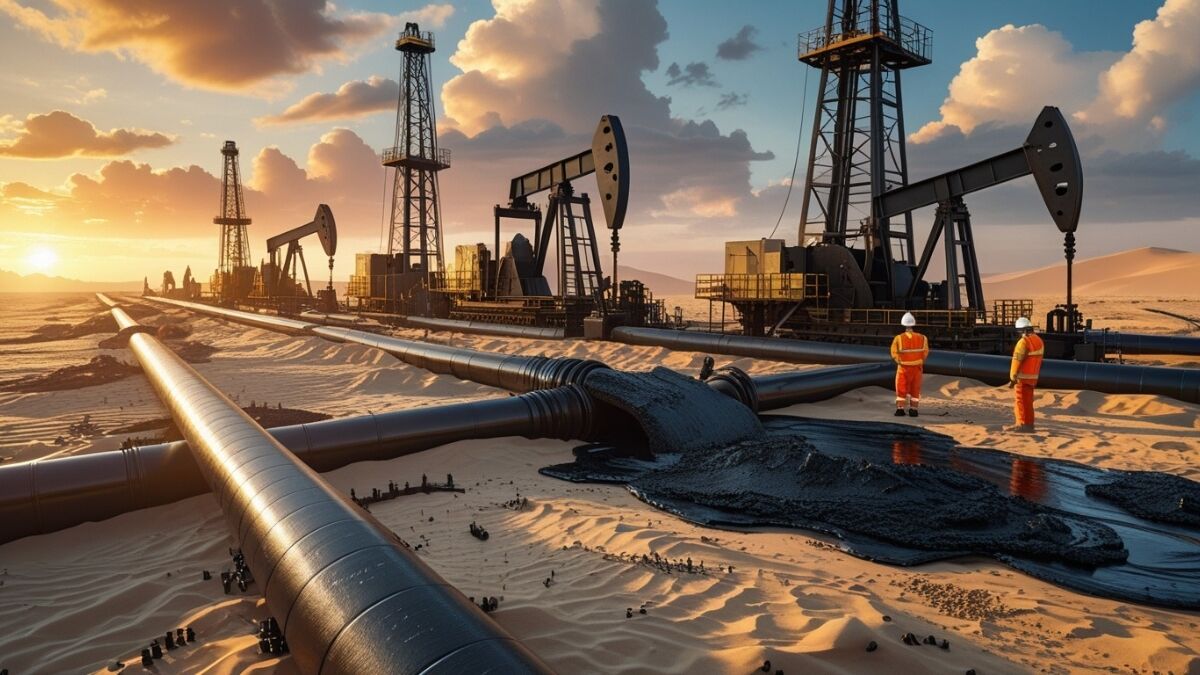
This article explains the rising crude oil prices due to geopolitical tensions and their impact on global fuel markets, inflation, and India’s economic strategy.
As the crisis in West Asia intensifies, crude oil prices are rising dramatically, putting more pressure on the world’s gasoline and diesel markets.
With US WTI lingering around $100 and Brent crude trading over $110–112 per barrel, markets and governments are once again facing concerns about increased fuel prices, limited supply, and protracted energy instability.
Global Oil Crisis and Government Response
During Sunday’s 132nd broadcast of Mann Ki Baat, Prime Minister Narendra Modi issued a warning about the impending global petroleum crisis. “A problem is growing over the world about petrol and diesel,” he warned, attributing the disruption to recurring shocks to the world since the Covid-19 pandemic and continued geopolitical instability.
He proceeded by saying that although the world had anticipated calm following the pandemic, conflict-driven disruption has persisted. “We all anticipated that the globe would advance after overcoming the Covid crisis, but conditions of war and strife continued to grow in other countries,” he stated.
Fears about Supplies Cause Oil Prices to Rise
Concerns concerning supply routes in West Asia, particularly the Strait of Hormuz, which passes through a significant portion of the world’s oil exports, have caused a surge in crude oil prices, which is the direct cause of the most recent fuel pressure.
While WTI is trading near $100, Brent crude has increased more than 50% since late February, surpassing the $110–112 per barrel area. According to analysts, persistently high prices have historically resulted in increased retail gasoline and diesel prices worldwide, particularly in economies that rely heavily on imports.
📊 Global Oil Price Surge Impact
- WTI Crude: Around $100 per barrel
- Brent Crude: $110–112 per barrel
- Cause: Geopolitical tension in West Asia
- Impact: Rising fuel prices worldwide
- Risk: Inflation and supply chain pressure
With stocks declining and investors turning to safe-haven assets like gold, market volatility has also increased. Additionally, currency markets have responded, putting additional pressure on countries that import petroleum and have dollar-denominated oil bills.
PM Modi emphasized that greater international alliances and domestic resilience make India more equipped to withstand shocks from the outside world. “Our international contacts, the support we receive from other nations, and the strengths we have established over the past ten years have helped India to meet these challenges boldly,” he stated.
How the Price of Gasoline and Diesel is Changing Globally
Although crude oil is traded internationally, retail prices for gasoline and diesel vary greatly between nations due to government policies, taxes, subsidies, and exchange rates.
>> United States: Fuel prices have begun to rise in tandem with crude, and gasoline is predicted to remain volatile if oil stays above $100.
>> Asia: Import-dependent economies like India, Japan, and South Korea are keeping a close eye on rising refinery margins and import bills.
>> Emerging markets: Currency depreciation against the US dollar is putting additional pressure on fuel prices.
>> Europe: Already dealing with high energy costs, European countries are experiencing renewed inflation pressure, particularly in transport fuel.
India’s Approach to the Situation
Retail fuel costs in India are currently steady yet susceptible to changes in the price of crude oil worldwide:
In Delhi, petrol costs between Rs. 94 and 96 per litre.
Delhi diesel: Rs 87–89 per litre
⚠️ India Fuel Strategy & Stability
- Petrol Price: Rs 94–96 per litre (Delhi)
- Diesel Price: Rs 87–89 per litre (Delhi)
- Action: Reduced excise duty on fuel
- Goal: Maintain price stability
- Import: India imports over 80% crude oil
To lower domestic fuel prices, the Center has implemented supply-side and fiscal policies. In order to provide an overall relief of roughly Rs 10 per litre, the Centre drastically reduced excise charges. The special additional excise duty on petrol was lowered from approximately Rs 13 per litre to Rs 3 per litre, while the duty on diesel was practically eliminated. Additionally, refiners prioritized domestic supplies by adjusting export duties.
In terms of supply, the Center has concentrated on bolstering stocks, diversifying crude imports, and guaranteeing consistent fuel availability through public sector oil businesses. As oil marketing organizations absorb some of the cost pressure and use tax relief to offset increasing import expenditures, retail petrol and diesel prices have stayed relatively steady. The policy focus is still on price stability rather than immediate cutbacks.
Rising Global Economic Risk
Agencies and financial executives have cautioned that persistently high oil prices may have wider economic repercussions. Earlier this month, BlackRock CEO Larry Fink stated that in the event of a protracted battle, oil might stay “over $100, closer to $150,” possibly leading to a “stark and harsh recession.”
Additionally, the International Energy Agency has called the current state of affairs a “very serious” energy shock, cautioning that if supply problems persist, no nation will be exempt.
Central banks are wary of lowering interest rates because rising gasoline prices often contribute to inflation through transportation, food logistics, and industrial expenses.
Frequently Asked Questions
1. Why are crude oil prices rising?
Crude oil prices are rising due to geopolitical tensions in West Asia, especially concerns over supply routes like the Strait of Hormuz.
2. How does oil price affect petrol and diesel?
Higher crude oil prices directly increase the cost of refining and importing fuel, leading to higher petrol and diesel prices globally.
3. How is India handling rising oil prices?
India is managing prices through tax reductions, stock management, and diversified crude oil imports.
4. Will fuel prices increase further?
If crude oil remains above $100–$120 per barrel, fuel prices may continue to rise globally.
5. Why is India affected more than other countries?
India imports over 80% of its crude oil, making it highly vulnerable to global price changes.
Energy markets are predicted to continue to be turbulent due to the unresolved West Asia conflict and the strain on important shipping lanes. As long as crude stays above $100, the price of gasoline and diesel will probably continue to rise globally.
As global markets continue to respond violently to geopolitical developments, the immediate issue for India and other import-dependent countries will be striking a balance between energy security and inflation control.
Disclaimer: This article is for informational purposes only. Fuel prices and economic conditions may change due to global factors. Always refer to official sources for the latest updates.
