
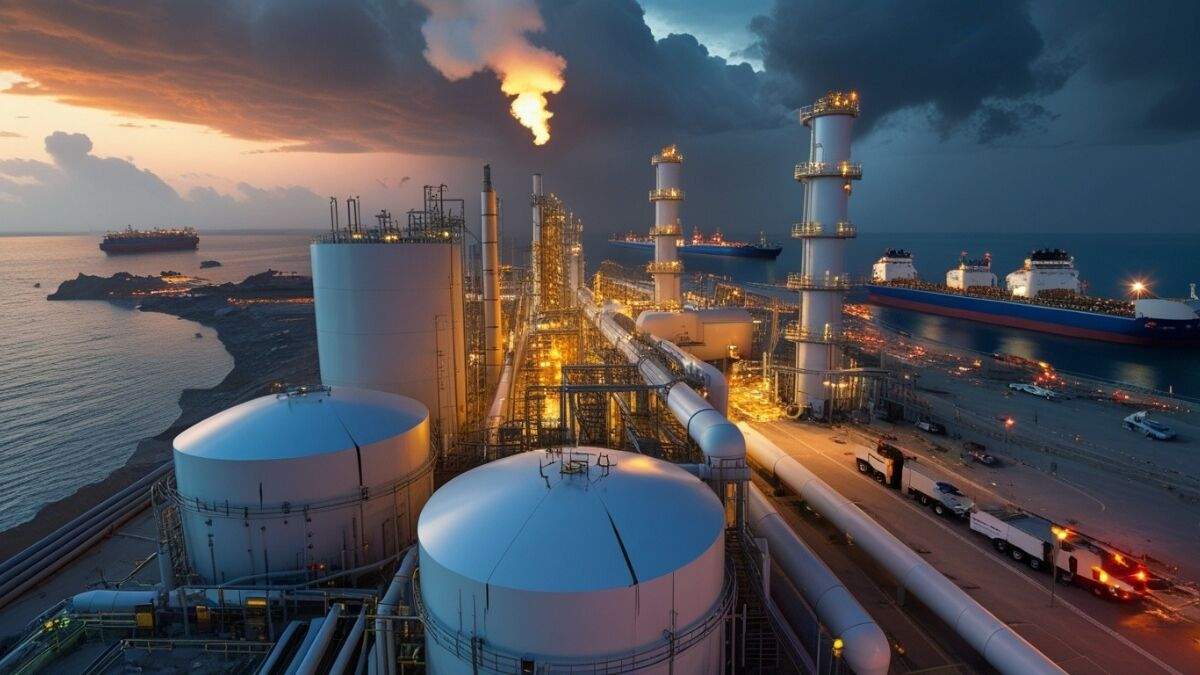
The ongoing West Asia conflict has significantly impacted global energy markets, leading to fuel supply disruptions and rising LPG prices in India.
The conflict in West Asia has produced volatility in the oil market and interrupted fuel supplies worldwide. As the Strait of Hormuz closes, the Center stated in a statement on Sunday that it is working to ensure enough gas and fuel supplies.
Global Conflict Triggers Fuel Supply Concerns
“Domestic LPG Production from refineries has been raised to accommodate domestic consumption,” the Ministry of Petroleum and Natural Gas stated in the midst of the LPG crisis.
🔥 LPG Crisis Key Updates
- Cause: West Asia conflict & Strait of Hormuz disruption
- Action: Increased domestic LPG production
- Priority: Households & transport sectors
- Impact: Supply shortage & rising prices
- Government Move: Export duty & tax cuts
- Goal: Stabilize domestic fuel availability
Government Response and Coordination
Officers from the Ministries of Petroleum and Natural Gas, Ports, Shipping and Waterways, and External Affairs attended a media conference on Monday in response to the global shortfall of energy supplies.
Fuel availability, maritime operations, assistance provided to Indian people in the area, and steps being made to preserve stability in these areas were the key topics of discussion.
Impact on Urea Production and Gas Allocation
“After being originally cut to about 60%, the gas supply to urea factories has been gradually increased to 65% and then further augmented to 75–80% through various arrangements. According to the press release, this has reduced the monthly production loss from 9–10 LMT to about 6–7 LMT by increasing urea production by 12,000–15,000 tonnes per day. In order to encourage domestic use, the authorities proposed increasing domestic LPG production from refineries.
The price of 14.2 kilogram residential and 19 kg commercial liquefied petroleum gas (LPG) cylinders increased by ₹60 and ₹144, respectively, over the past month due to the ongoing war in the Middle East.
⚠️ Fuel Pricing & Supply Strategy
- LPG Price Rise: ₹60 (domestic), ₹144 (commercial)
- PNG Priority: Households & transport sectors
- Supply Level: 80% for industries
- Tax Cut: ₹10 per litre on petrol & diesel
- Export Duty: ₹21.5 diesel, ₹29.5 ATF
- Strategy: Stabilize supply & reduce panic
PNG Expansion and Priority Allocation
The oil ministry admitted that customers that receive a 100% supply of residential piped natural gas (PNG) and CNG transport are given precedence. It stated that supplies to grid-connected commercial and industrial customers are kept at about 80% of their usual demand.
PNG distribution networks are expanding more quickly. For commercial enterprises including restaurants, hotels, and canteens, the government has requested that CGD organizations give priority to PNG connections.
Industry Measures and Global Shipping Risks
CGD businesses, including as IGL, MGL, GAIL Gas, and BPCL, are providing incentives to encourage home and commercial PNG connections and adoption. In order to guarantee availability in the domestic market, the government recently lowered the excise duty on gasoline and diesel by ₹10 per litre and set an export fee of ₹21.5 per litre on diesel and ₹29.5 per litre on aviation turbine fuel (ATF).
Companies traveling through the Strait of Hormuz are reportedly employing a number of strategies to evade detection, such as turning off their AIS tracking transponders and sailing at night to reduce visibility, according to a Reuters investigation. Two LPG ships flying the Indian flag crossed the strait on Saturday.
Frequently Asked Questions
1) What effects has the fighting in West Asia had on prices and supply?
The disruption of the Strait of Hormuz limits the flow of gas and oil, which leads to shortages, increased prices, and instability in the energy markets.
2) How is the government handling the gasoline and LPG crisis?
It prioritized domestic customers, reduced fuel prices, levied export levies, expanded refinery LPG output, and diversified imports.
3) How has the shortage affected the distribution of gas to urea plants?
Despite continued energy constraints, supply increased from sixty percent to over eighty percent, increasing productivity and lowering monthly losses.
4) Why have the costs of LPG cylinders gone up?
Increased import costs have resulted in higher domestic pricing for household and business users due to decreased global supply, increased transportation hazards, and disrupted shipping routes.
5) Why are households and transportation given priority in PNG supply?
During supply constraints, maintaining cooking gas and cleaner transportation fuel promotes public welfare, lowers anxiety, stabilizes demand, and minimizes economic disruption.
Conclusion
While geopolitical tensions continue to impact global energy markets and India’s overall fuel security outlook, the government is mitigating supply interruptions with domestic measures, increasing output, controlling consumption, and stabilizing prices.
Disclaimer: This article is for informational purposes only and reflects current developments which may change based on global conditions.
