
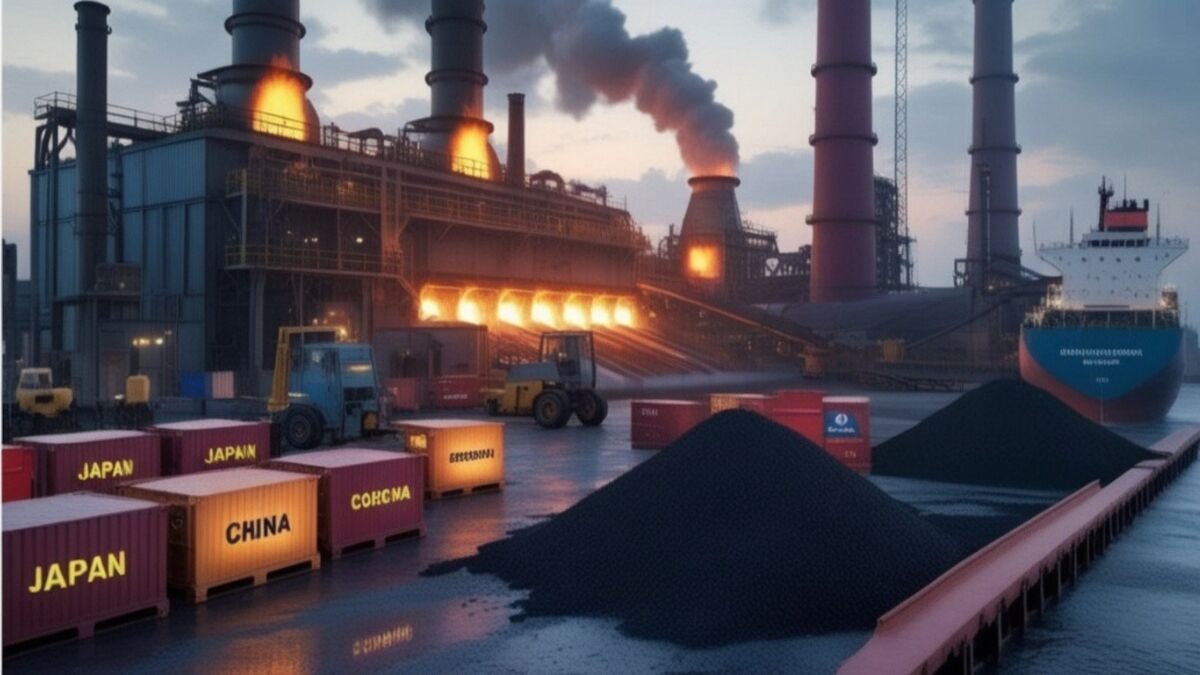
Despite recent declines in steel stocks due to global uncertainties, strong domestic fundamentals suggest a positive earnings outlook for Indian steel companies in Q4FY26.
The battle in West Asia has caused steel stocks to drop 8–12%, but manufacturers may see solid Q4FY26 earnings due to rising domestic pricing, declining imports, and stronger spreads.
Steel Stocks Decline Amid West Asia Conflict
Since the start of the war in West Asia, the share prices of domestic steel companies have decreased by 8–12%, reflecting the general weakness of the market. However, the March quarter (Q4FY26) can present a different picture. Strong earnings for steelmakers are anticipated to be supported by improving spreads, strong demand, and higher domestic prices—aided by safeguard duties on imports.
Since imports were subject to a safeguard tariff in December, domestic steel prices have increased dramatically. Along with the weakening of the rupee, the war has further disrupted important trade channels, raising freight costs and putting more strain on imports.
Rising Steel Prices and Import Challenges
According to a Nomura Global Market Research analysis, the spot price of hot rolled coil (HRC) has increased by almost 22% above its Q3FY26 average to ₹57,700 per tonne, but it is still less than the landed cost of imports from China, giving domestic producers an edge.
The average HRC price for Q4FY26 was ₹53,866 per tonne, a sequential rise of 14%. The price of rebar (long goods) increased even more dramatically, rising 21% in a row to ₹57,196 per tonne. For Jindal Steel Ltd., where long goods make up more than half of sales volumes, this is encouraging.
📈 Steel Price Surge & Market Advantage
- HRC Price Rise: +22% vs Q3FY26
- Average Price: ₹53,866 per tonne
- Rebar Growth: +21% sequential rise
- Key Driver: Safeguard duty on imports
- Advantage: Domestic prices lower than import cost
- Outcome: Stronger margins for producers
Cost Pressures and Raw Material Trends
In terms of expenses, iron ore prices remained mostly steady during the quarter. Nonetheless, NMDC’s price increase in March is probably going to negatively impact profits in the June quarter. In Q4FY26, the cost of coking coal increased by $15–20 per tonne (about ₹1,400–1,900), somewhat offsetting the benefits of greater realizations.
In the traditionally strong March quarter, steelmakers should also report good offtake. In contrast to a moderate 3.9% growth in Q3FY26, domestic finished steel consumption increased 8.8% year over year in the first two months of Q4FY26, according to data from the Joint Plant Committee.
Demand Growth and Trade Dynamics
During that time, exports increased by 50% while imports decreased by almost 40%. Nevertheless, exports continue to make up only 4% of overall production. According to JM Financial Institutional Securities, higher spreads and operating leverage will raise Ebitda per tonne by about ₹4,500 sequentially in Q4.
Firming European pricing after the carbon border adjustment system standards went into effect on January 1st could also be advantageous to Tata Steel Ltd. These regulations increase costs by requiring European steel customers to buy carbon certificates for imports.
⚠️ Risks & Cost Pressures in Steel Sector
- Coal Cost: Increased by $15–20/tonne
- Iron Ore: Stable but NMDC hike risk
- LNG Risk: Potential supply disruptions
- Production Impact: 2–3% possible decline
- Exposure: Limited gas dependency (6%)
- Concern: Margin pressure in coming quarters
Impact of LNG Disruptions
On the other hand, disruptions in West Asian LNG supplies could put pressure on production. Assuming a 30–40% decline in gas supplies, ICICI Securities projects a 2-3% decrease in crude steel production.
The brokerage stated, “We consider the impact of the present LNG crisis on the Indian metals industry to be minimal, considering that the majority of primary ferrous players are strongly dependent on coal, with only approximately 6% exposed to gas.” JSW Steel Ltd., which runs a 1.5 mtpa natural gas-based factory in Dolvi, Maharashtra, is one of the businesses exposed to LNG.
Stock Performance and Valuation Trends
With the exception of JSW Steel, which is up roughly 6%, shares of steel companies have increased by 22–28% over the past year despite the recent drag, thanks to the implementation of an interim safeguard duty in April of last year.
The valuations are to blame. According to FY27 Bloomberg consensus predictions, JSW trades at an expensive enterprise value-to-Ebitda of 10 times, which results in underperformance, while other stocks are trading at 7–9 times. Investors will now keep a careful eye on the West Asia War’s developments and how they affect demand, input costs, and trade flows.
Frequently Asked Questions
1) What is the reason behind the recent decline in steel equities such as Tata Steel?
Despite better domestic fundamentals and improved price trends supporting the earnings outlook, steel stocks fell due to investor nervousness, growing costs, and worldwide uncertainty brought on by the war in West Asia.
2) How are businesses like JSW Steel affected by domestic steel prices?
Despite raw material cost challenges, higher domestic steel prices are increasing realizations, enhancing margins, and strengthening the profitability prospects for producers due to safeguard taxes and lower imports.
3) How do imports and exports affect the performance of Q4FY26?
The domestic supply-demand balance was improved by lower imports and higher exports, which supported price rises, better spreads, and increased capacity utilization. All of these factors increased steelmakers’ operating leverage and revenue growth.
4) Do businesses like NMDC worry about growing input costs?
Indeed, stable iron ore may put pressure on margins due to increased coking coal and NMDC price increases, which might partially offset gains from higher steel prices. This would particularly affect profitability in the approaching quarters.
5) What impact would LNG disruptions have on manufacturers like Jindal Steel Ltd.?
Since the majority of steelmakers rely on coal and only a tiny percentage of capacity is dependent on gas-based operations, disruptions to the LNG supply may marginally lower production.
Conclusion
Strong local demand, growing prices, less imports, and better spreads position Indian steel companies for strong Q4FY26 results despite short-term stock falls; but, cost pressures and geopolitical risks continue to be important monitorables.
Disclaimer: This content is for informational purposes only and does not constitute investment advice.
