
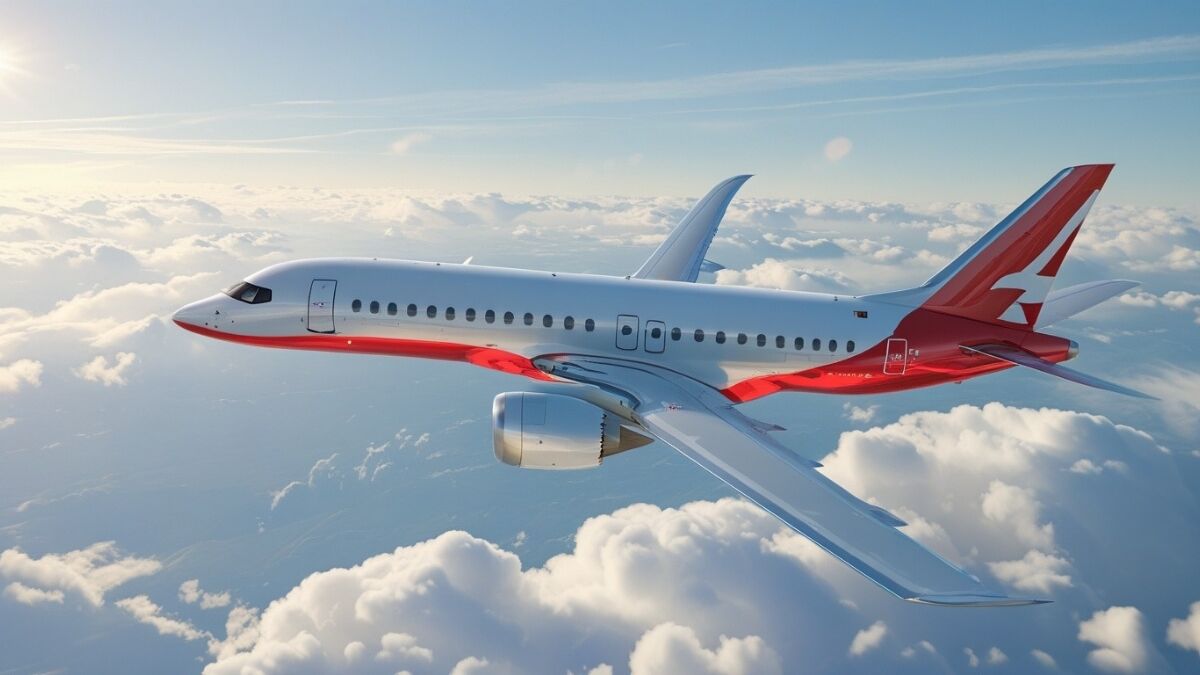
The government has temporarily put on hold a major aviation rule that aimed to make air travel more affordable, following strong pushback from airlines over cost and operational concerns.
According to PTI, the Center announced on Thursday that it was delaying an order requiring airlines to provide at least 60% of flight tickets at no cost starting on April 20.
Government Pauses Free Seat Mandate for Airlines
In order to guarantee equitable access for passengers, the civil aviation ministry issued an order on March 18 directing the Directorate General of Civil Aviation (DGCA) to request that airlines set aside at least 60% of seats for selection on any flight at no additional cost.
The civil aviation ministry stated in a letter to the DGCA that it had examined the directive requiring 60% of flight seats to be provided at no cost after airline representatives emphasized the order’s operational and commercial implications.
Why the Policy Was Put on Hold
The ministry stated, “The matter has been reviewed in light of representations received from the Federation of Indian Airlines and Akasa Air, highlighting operational and commercial implications of the above provision, including its potential impact on fare structures and consistency with the prevailing deregulated tariff regime.” It stated that the clause will remain inactive until further notice.
In the letter to the DGCA, the Civil Aviation Ministry stated, “In light of the above, and pending a thorough assessment of the subject, it has been determined that the provision relating to supplying at least 60% of seats free of charge shall be put in abeyance till further orders.”
✈️ Policy Snapshot
- Rule: 60% free seat selection
- Deadline: April 20 (paused)
- Status: On hold
- Reason: Airline objections
- Authority: Civil Aviation Ministry
- Next Step: Further review
Impact on Airlines and Pricing
Generally, airlines charge ₹200 to ₹2,100 for choosing seats, depending on various factors, including front rows and extra leg room, a travel industry executive had said last week..Currently, Indian airlines must offer 20% of the seats at no cost, with the remaining seats being available for purchase.
In order to guarantee equitable access for travelers, the civil aviation ministry issued an order last month directing the DGCA to request that airlines provide at least 60% of tickets for selection on any flight at no cost. The deadline for implementing the order was April 20.
Airlines’ Opposition
However, airline corporations opposed the idea, claiming they would have to raise rates and might lose money. On March 20, the Federation of Indian Airlines, which stands for IndiGo, Air India, and SpiceJet, filed a letter to the government requesting action.
The policy will have a substantial financial impact on airlines, forcing them to raise rates in order to make up for the lost profits. All travelers would ultimately pay higher tickets as a result, including those who might not want to reserve seats, the statement stated.
⚠️ Industry Concerns
- Revenue Loss: Seat fees removed
- Higher Ticket Prices: Cost recovery
- Operational Issues: Seat allocation
- Profit Pressure: Margin impact
- Policy Clash: Deregulated pricing
- Industry Pushback: Strong opposition
Fuel Price Surge and Aviation Challenges
Due to a lack of crude oil brought on by the US-Iran war, air turbine fuel prices in India increased by more than 100% to more than ₹2 lakh per kilolitre on April 1. This occurred at a time when airspace limitations during the conflict are forcing airlines to close important routes.
Because of this, the majority of Indian carriers implemented a fuel surcharge that, depending on the route, presently ranges from ₹199 to ₹18,000.
The government has restricted the rise in Aviation Turbine Fuel (ATF) prices for domestic airlines to 25% in an effort to shield domestic travel from a severe worldwide fuel shock, despite international benchmarks suggesting a possible increase of more than 100%.
Conclusion
The original government mandate required airlines to provide 60% of seats for free in order to provide equitable access for travelers. Airlines voiced fear that the directive will result in higher ticket costs for all travelers.
The government’s decision to abandon the proposal emphasizes how important it is for the airline industry to carefully assess operational effects and fare structures.
Disclaimer: This content is for informational purposes only and does not constitute policy or travel advice.
