
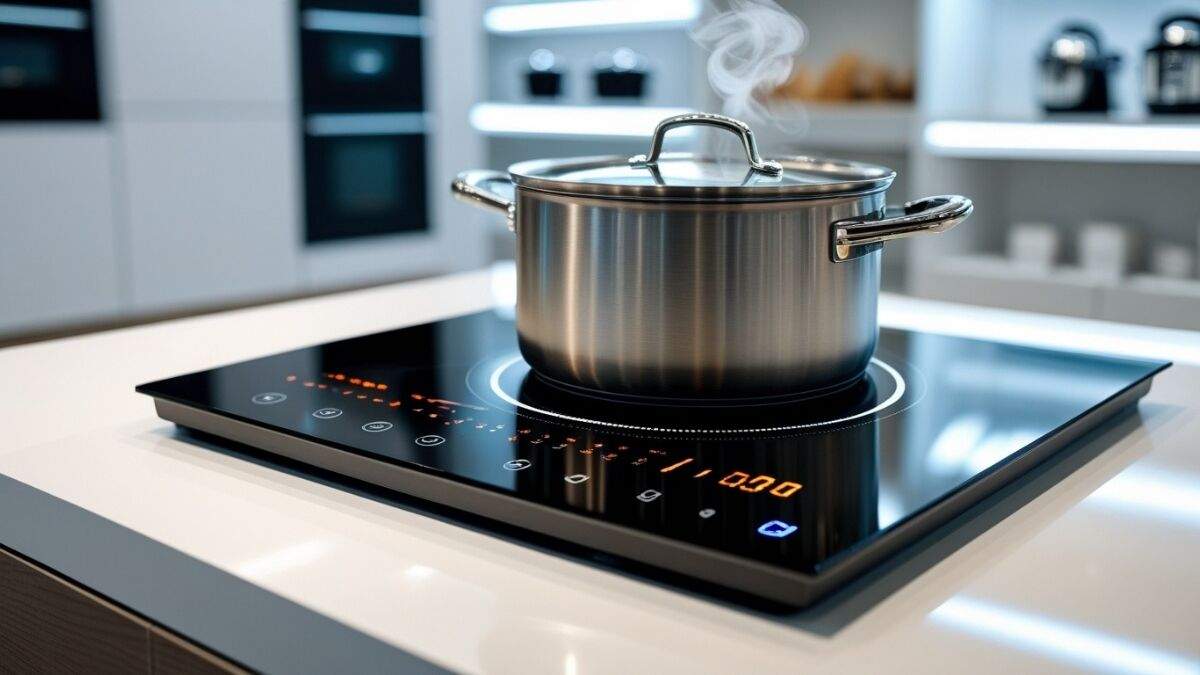
This article highlights the rising demand for induction cooktops and electric cooking appliances in India amid West Asia tensions and LPG supply concerns, along with government actions and industry response.
According to reports, the government is considering ways to motivate businesses to increase the manufacture of induction cooktops, warmers, and related items. Due to worries about LPG availability in the midst of the turmoil in West Asia, these categories are currently seeing strong demand.
Government Strategy to Boost Induction Cooktop Production
According to reports, the Commerce Ministry convened a meeting on Friday with senior representatives from several important Ministries, including the Power Ministry, DPIIT, and DGFT, to discuss how businesses can boost their production of induction heaters and cooktops, among other things. Piyush Goyal, the Minister of Commerce and Industry, reportedly presided over the meeting.
Concerns regarding the import of natural gas and crude oil have arisen as a result of the ongoing geopolitical tensions that have disrupted ship traffic via the Strait of Hormuz. Demand for products like electric kettles and cookers and induction heaters and cooktops has increased as people consider using less LPG gas for cooking.
Rising Consumer Demand Due to LPG Concerns
Wonderchef’s founder and CEO, Ravi Saxena, told businessline, “We have seen an 8–10 times increased demand for induction cooktops in the past three weeks due to LPG concerns generated by the West Asia crisis.” In fact, demand for other categories including rice cookers, kettles, Nutri-pot (electric pressure cookers), and OTG has increased three to five times.
We anticipate strong demand for these categories over the next 12 to 24 months due to the shifting geopolitical landscape, particularly in light of induction cooktops’ comparatively low price barriers. In order to meet the increased demand, we are increasing production in these categories.
Industry Challenges and Supply Chain Concerns
Industry executive: While some components are sourced domestically, others are imported in order to manufacture these items.
The government on Thursday exempted the import of essential petrochemical products from customs duty for three months, until June 30, in order to preserve the supply chain in other industries. This provided relief to industries like textiles, chemicals, and pharmaceuticals and ensured supply stability amid the ongoing West Asia crisis.
⚡ Growth in Electric Cooking Demand
- Demand Spike: 8–10x increase in induction cooktops
- Other Appliances: 3–5x growth in kettles & cookers
- Reason: LPG supply concerns & price sensitivity
- Trend: Shift toward electric cooking solutions
- Duration: Expected strong demand for 12–24 months
Government Support and Economic Impact
To increase output, optimize supply chains, and promote local production of induction appliances across industries, authorities under the leadership of Piyush Goyal are engaging with ministries.
The shift toward electric appliances is also helping industries stabilize supply chains while reducing dependence on imported LPG and gas-based cooking systems.
Supply Chain Adjustments and Import Relief
While domestic sourcing gaps and unexpected demand surges necessitate quick capacity growth and logistical modifications across the nation, some components are imported, posing supply risks.
Due to geopolitical disruptions, India is focusing on strengthening domestic manufacturing and reducing reliance on imports wherever possible.
🏭 Government Manufacturing Push
- Focus: Increase domestic appliance production
- Policy: Customs duty exemption on key imports
- Ministries: Commerce, Power, DPIIT, DGFT coordination
- Goal: Strengthen supply chain stability
- Outcome: Support industries & reduce dependency
Frequently Asked Questions
1) What factors are influencing India’s demand for induction cooktops?
Concerns over the availability of LPG owing to the turmoil in West Asia caused demand to spike, driving households toward more cost-effective electric cooking solutions.
2) How is the government handling the increased demand?
To increase output, optimize supply chains, and promote local production of induction appliances across industries, authorities under the leadership of Piyush Goyal are engaging with ministries.
3) What difficulties do producers encounter?
While domestic sourcing gaps and unexpected demand surges necessitate quick capacity growth and logistical modifications across the nation, some components are imported, posing supply risks.
4) For what length of time will demand be high?
Due to continuous geopolitical unpredictability and shifting customer preferences toward electric vehicles, industry projections indicate that elevated demand may last for twelve to twenty-four months.
5) Aside from cooktops, what other goods are in more demand?
As households expand their cooking options beyond relying solely on LPG at home, electric kettles, rice cookers, and pressure cookers are also seeing significant increase.
Conclusion
In general, the move to electric cooking reflects worries about pricing and supply, which has prompted government support and industry growth to guarantee availability, stabilize markets, and lessen India’s reliance on LPG imports.
Disclaimer: This content is for informational purposes only and should not be considered financial, business, or policy advice.