
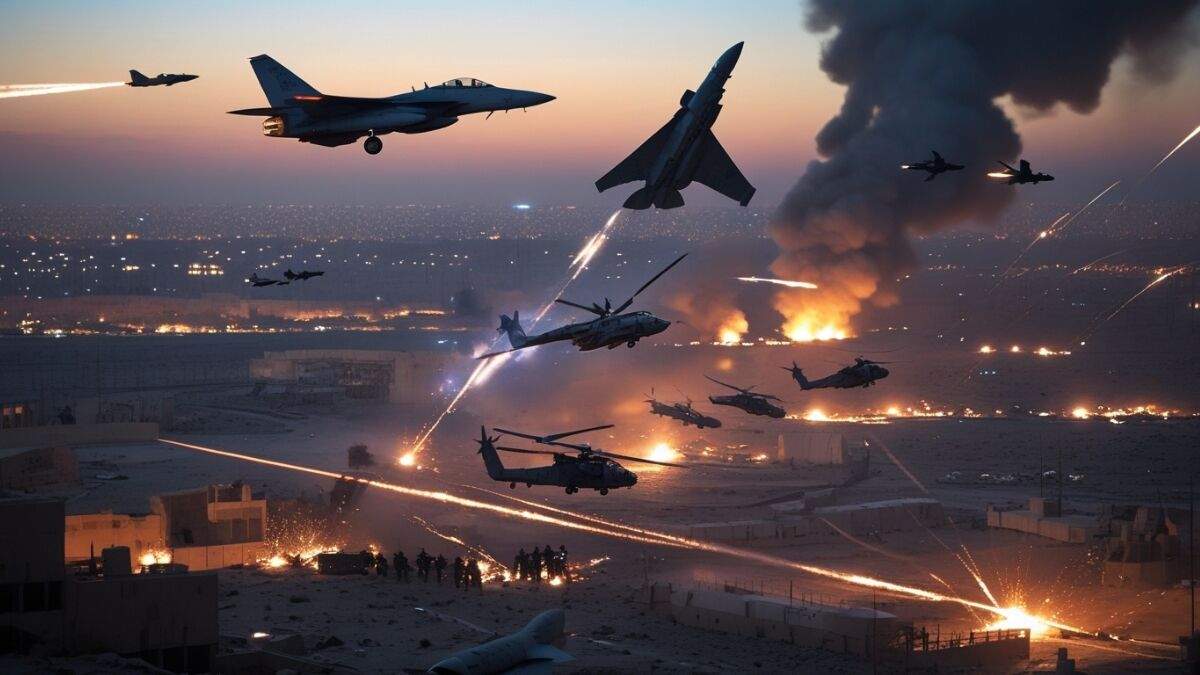
This article examines the evolving dynamics of the US-Iran conflict, highlighting military developments, losses, and the broader political and strategic implications.
On March 25, U.S. President Donald Trump declared, “We are roaming free over Tehran, can do whatever.” He listed what he deemed the war’s accomplishments while addressing reporters on the White House’s South Lawn, saying, “We literally have planes flying over Tehran… they can not do a thing about it.”
Initial US Claims of Dominance
Nine days later, on the 35th day of the conflict, Iran struck at least one Black Hawk helicopter and shot down two American fighter jets, significantly raising the cost of war for the American president.
The Israel Defence Force declared on March 5 that it had destroyed almost 60% of Iran’s ballistic missile launchers and 80% of its air defense systems, calling this “a very significant victory that decreases the harm to the home front.” On March 10, U.S. Secretary of War Pete Hegseth declared, “[W]e are winning decisively with merciless efficiency, total air domination.”
Contradictions Between Claims and Ground Reality
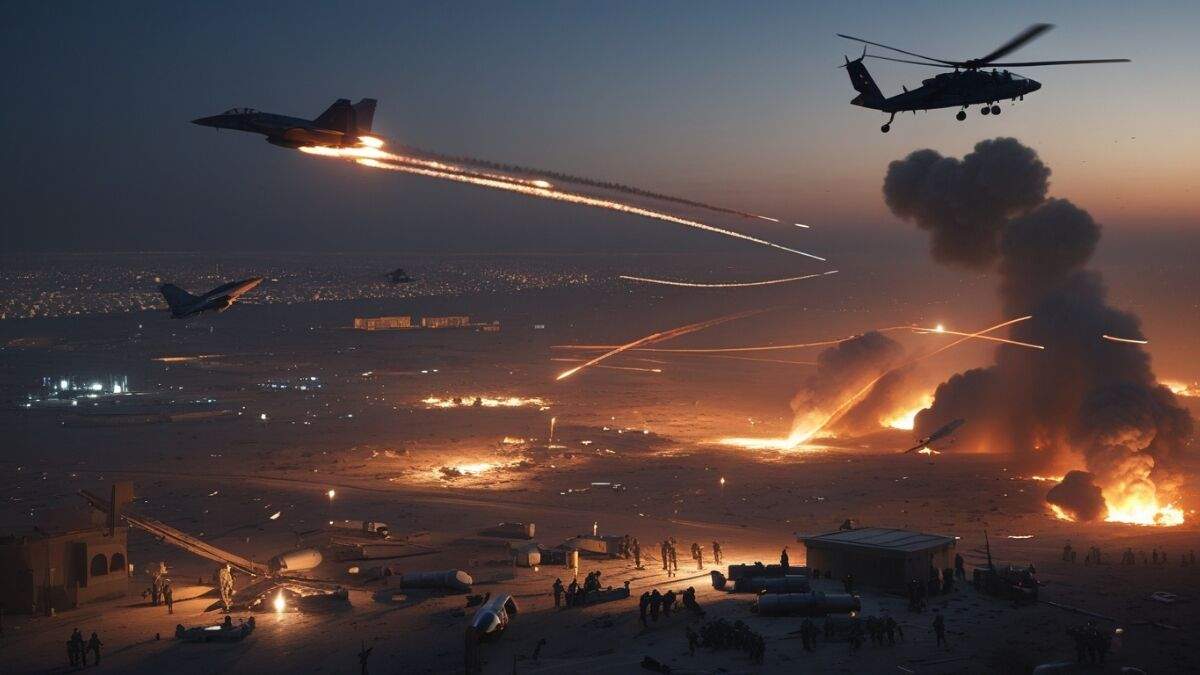
Mr. Trump has asserted time and again over the last few weeks that the United States is winning the battle. He claimed that Iran’s air force, navy, radars, and anti-aircraft systems were all “destroyed” and that the country was being “decimated.” In his prime-time national address on April 1, Mr. Trump declared that the United States was accomplishing all of its war goals.
Iran has persisted in attacking American sites in the Persian Gulf and hundreds of targets in Israel, despite Mr. Trump’s assertions that Iran’s military capabilities are being “destroyed.” “Many of the 13 American military sites in the region are all but untenable,” according to a New York Times analysis of satellite photos. [The impact of the Iranian attack is strictly censored in both Israel and the Gulf monarchies.]
⚔️ Key War Developments
- US Claim: Air dominance over Iran
- Reality: Continued Iranian retaliation
- Losses: Jets, drones, radar systems
- Conflict: Prolonged and escalating
- Impact: Rising costs of war
Escalation and Military Losses
In his speech on April 1, Mr. Trump likened the war on Iran to his attack on Venezuela on January 3, when American forces flew into the South American nation, kidnapped President Nicolas Maduro, and then fled. The raid did not result in significant material or human losses for the United States.
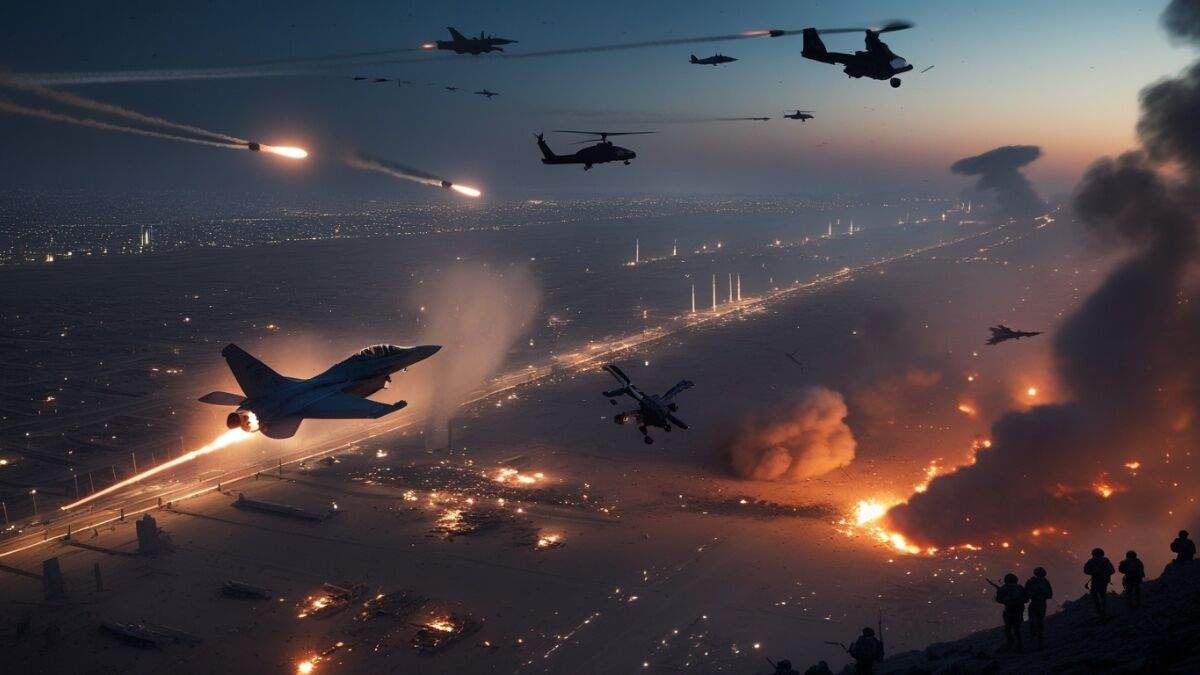
However, the assault on Iran is proving to be rather different. Since the start of the conflict, at least 13 American soldiers have been officially declared dead, while hundreds more have been injured.
Aircraft and Equipment Losses
On March 1, the Pentagon described an incident above Kuwait is skies as “friendly fire,” which resulted in the loss of three F-15Es for the United States. On March 19, Iranian air defense fire damaged at least one F-35, the most sophisticated American fighter jet, and forced it to make an emergency landing.
One KC-135 Stratotanker aerial refueling aircraft went down in western Iraq on March 12 as a result of “an accident.” According to the Pentagon, hostile fire was not the reason of the accident. There was significant damage to a second KC-135 involved in the incident.
Two Iranian missile and drone attacks at the Prince Sultan Air Base in Saudi Arabia damaged at least six KC-135s. An Iranian attack on March 27 damaged a single Boeing E-3 Sentry AWACS airborne surveillance aircraft. According to some sources, the United States has also lost at least 12 MQ-9 Reaper drones since the start of the conflict.
⚠️ Major US Losses
- Aircraft: F-15E, F-35 damage
- Drones: MQ-9 Reapers lost
- Radar: Multiple systems destroyed
- Casualties: Soldiers killed & injured
- Bases: Several heavily damaged
Ongoing Conflict and Strategic Challenges
In addition to aircraft, the United States’ AN/TPY-2 THAAD radar equipment, which are meant to detect long-range missiles, have been struck or destroyed at many bases in Jordan and the Gulf. AN/MPQ-64 Sentinel Systems and AN/FPS-132 early warning radar at Al Udeid Air Base in Qatar were among the other radar systems struck.
Thus far, Mr. Trump has downplayed the Iranian assaults. However, given that two jets went down on April 3—one in Iran and the other in the Persian Gulf—he might not be able to do the same regarding the losses. According to U.S. sources, this was the first American fighter shot down by enemy fire since the start of the war.
Recent Incidents and Uncertain Outcomes
Iranian fire struck the F-15E Strike Eagle while aircraft was carrying a crew of two military officers. They got out of the plane. U.S. media reported that one of them was saved, but the other crew member’s condition was still unknown. Another Air Force combat aircraft, the A-10 Warthog, crashed in the Gulf with just one pilot.
According to reports, the pilot was saved. Whether the remaining crew member is in Iran’s captivity is yet unknown. According to U.S. sources, the Black Hawk chopper, which was engaged in search and rescue operations, was struck by Iranian fire but managed to land safely in Iraq.
Political and Strategic Implications
For the past five weeks, the United States and Israel have been attacking Iran. Mr. Trump posted about attacks on Iran’s tallest bridge last week. Although there is a dearth of independent information from inside Iran, the strikes have severely damaged Iran. However, Tehran’s ongoing attacks demonstrate that it still has both offensive and defensive weaponry in spite of thousands of airstrikes.
The political cost of the war, which is already unpopular at home, is growing for Mr. Trump as material losses increase. He has yet to present an exit strategy. He has stated again and time and again that the war will finish “soon” and that Iran must reach an agreement or risk “Stone Age” bombing. However, Tehran does not seem eager to engage in talks.
Frequently Asked Questions
1. Is America winning the war?
Aircraft losses, destroyed bases, and ongoing Iranian retaliation indicate that the fight is still fought and that no side has yet attained clear-cut, uncontested military or strategic advantage despite official assertions of control.
2. What losses has the United States incurred?
The United States has lost people, radar systems, drones, and airplanes. High-value equipment losses, confirmed casualties, and destroyed bases all point to growing operational and political consequences of extended involvement.
3. To what extent is Iran capable of responding?
Despite persistent bombings and claimed infrastructure devastation, Iran continues to launch missile and drone strikes against Israel and neighboring sites, displaying survivable defense systems and offensive capability.
4. What distinguishes this war from previous conflicts?
Iran offers greater military resistance, geographic depth, and regional impact than swift operations like Venezuela, making the battle more expensive, time-consuming, and strategically challenging for the United States.
5. How does this affect Trump politically?
Trump is under more domestic pressure as a result of growing casualties, ambiguous goals, and the lack of an exit strategy. This is especially true given the stark contrast between early assertions of a speedy success and persistent opposition and growing losses.
Conclusion
The struggle demonstrates how early assertions of authority can be deceptive. Persistent opposition, increasing casualties, and ambiguous goals underscore the intricacy of contemporary combat and the challenge of attaining swift triumphs.
Disclaimer: This article is for informational purposes only and does not represent political or military advice.
