
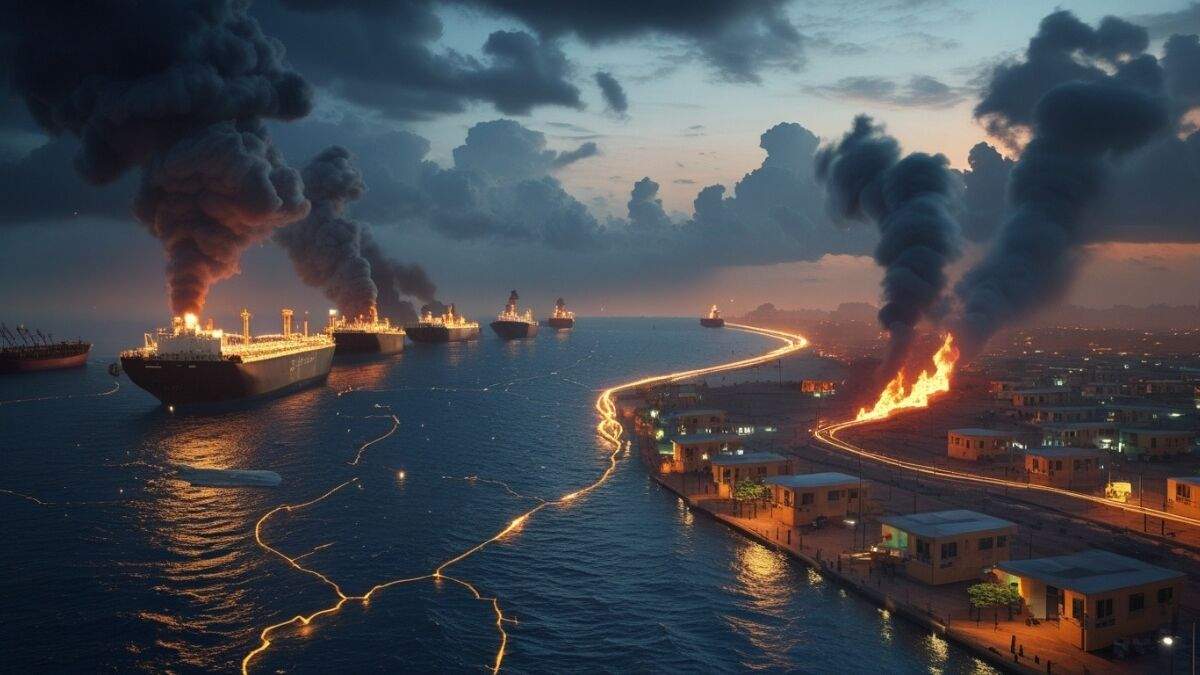
India is navigating a critical energy challenge as geopolitical tensions in West Asia disrupt LPG supplies, prompting urgent government action and diversification strategies.
As the situation in West Asia moves into its second month, former Indian Ambassador to the UAE Sanjay Sudhir praised “proactive government steps” as India manages the “disproportionate” LPG hit.
India Faces LPG Supply Pressure Amid West Asia Crisis
In an interview with ANI, he issued a clear warning about India’s energy security and characterized the current geopolitical environment as one of complete “uncertainty,” cautioning that the effective closure of the Strait of Hormuz has put one-sixth of humanity at a crucial economic crossroads. “I think if I were to use one word, that is uncertainty,” he said. And I believe that uncertainty is still as prevalent now as it was during the first week of this war, which began on February 28,” he stated.
Sudhir emphasized that Liquefied Petroleum Gas (LPG) is experiencing the worst crisis, despite the fact that the entire hydrocarbon spectrum is in disarray. Since LPG powers more than 340 million Indian households, it is more than just an industrial necessity—it is essential to the country’s survival. For 62% of its LPG needs, India is dependent on imports. Importantly, 90% of those imports come from the Gulf nations that are presently involved in or influenced by the conflict.
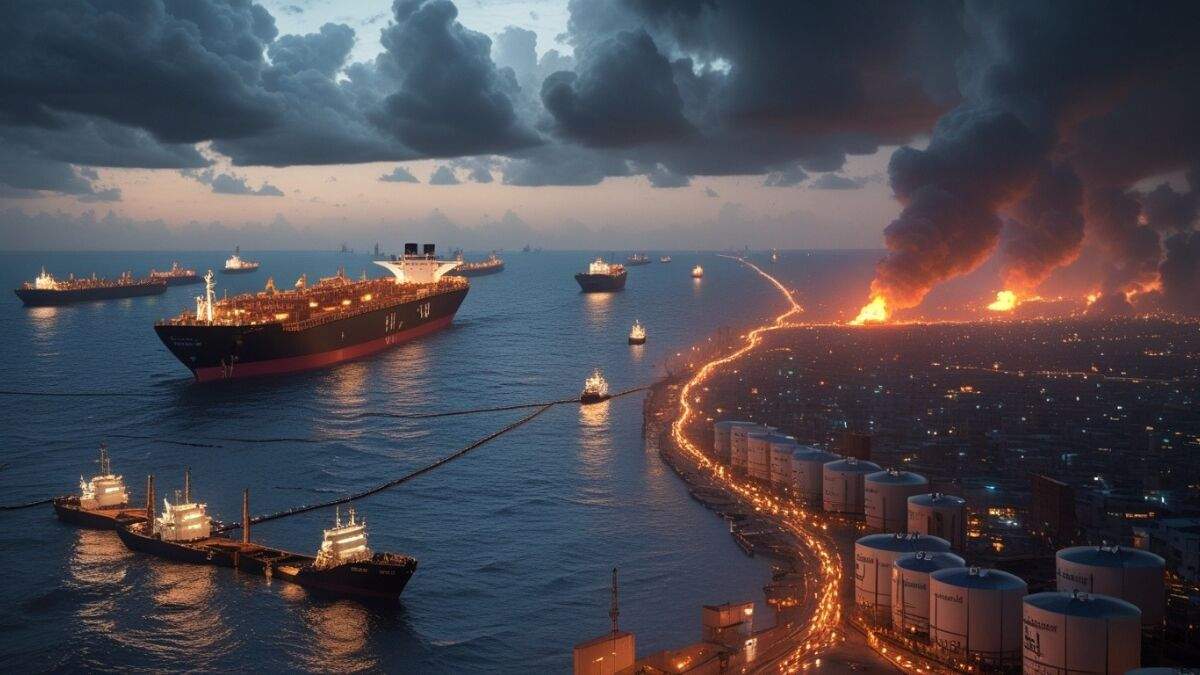
“Well, I think that while our full spectrum of hydrocarbons has been damaged, LPG has taken a disproportionate hit,” he said. Furthermore, LPG is a crucial fuel for the straightforward reason that it powers over 340 million houses. And that is why its significance is so crucial. Additionally, we must remember that 62% of our LPG comes from imports, of which 90% originates from Gulf nations,” he stated.
LPG Crisis and Import Dependency
🔥 India LPG Supply Crisis
- Households Affected: 340+ million
- Import Dependency: 62%
- Gulf Share: 90% of LPG imports
- Main Issue: Strait of Hormuz disruption
- Impact: Supply risk & price pressure
- Risk Level: High geopolitical exposure
Despite the dire situation, Sudhir pointed out that “proactive government actions” are presently preventing a complete collapse, emphasizing the Center’s initiatives to maximize refining and give home cooking gas priority over industrial consumption. Refineries in the country have been instructed to increase LPG production to maximum capacity.
And this has been severely damaged by the situation that we all witness in West Asia as well as the actual blockage of the Strait of Hormuz. However, the good news is that the government’s proactive measures, such as invoking the LPG Control Act and asking our refineries to produce as much LPG as they can, proactive diplomacy on our part to procure as much LPG as possible, and prioritizing LPG for domestic consumption as opposed to, say, industrial consumption, have had a good impact to just mitigate the situation,” he said.
Government Measures to Stabilize Supply
“Well, to answer the first part of your question first, it is not just India, I think the entire world is pretty dependent on the Gulf for its energy needs,” Sudhir stated, adding that India’s predicament becomes extremely significant because it must support one-sixth of mankind. India, especially due to our location, our closeness to the Gulf, and the fact that we are the third-largest energy importer and user in the world.
And since our economy is the fourth largest in the world, that is also rather evident. One-sixth of mankind is our responsibility. And as a result, we might be far more dependent on the Gulf than others,” he stated. He added to ANI that 45% of India’s 89% import dependency comes from the Gulf.
India’s Heavy Reliance on Gulf Energy
🌍 India Energy Dependency Snapshot
- Crude Import: 89% dependent
- Gulf Share: 45% of crude imports
- LPG Imports: 90% from Gulf
- LNG Dependency: 50% imports
- Qatar Share: 60% of LNG imports
- Risk: Supply chain disruption
“To give you some numbers, we are 89% dependent on imports for crude, with 45% coming from the Gulf. As I previously stated, 90% of LPG comes from the Gulf, and 62% is dependent on imports. Since LNG is just 50% dependent on imports, things are obviously a little better overall. However, more than 60% of this 50% comes from the Gulf, especially Qatar.
And as a result, we are heavily reliant on Qatar. Thus, it affects us in two ways. One is the Strait of Hormuz’s effective closure and the severe damage to Qatar’s Ras Laffan LNG project,” he stated.
Diversification and Future Energy Strategy
“And Qatar has itself claimed that about 17% of the facility has been damaged, which will take more than five years to build back again, and they have declared force majeure,” the former diplomat continued, adding that India is looking toward Mozambique and new long-term contracts with the UAE (expected by late 2026) to decouple from current hotspots. Thus, that presents an issue for us. However, in general, there will probably be a glut of LNG by 2030; the fact that this problem is occurring in early 2026 is a different story.
Additionally, we are currently working to diversify our LNG resources. Since we have made significant investments in Mozambique, we ought to purchase LNG from them. Additionally, we have four long-term LNG contracts with the United Arab Emirates. However, by the end of this year, perhaps, the LNG under these contracts will begin to arrive,” he stated.
Government Advisory and Public Response
The Ministry of Petroleum and Natural Gas released a public advisory on Friday in tandem with Sudhir’s caution. The Ministry informed the public that “appropriate procedures” are in place to ensure an uninterrupted supply while noting the closing of the Strait of Hormuz.
In order to avert artificial shortages, citizens were advised not to buy gasoline and diesel in a panic and to avoid making “unnecessary” advance reservations for LPG cylinders.
Frequently Asked Questions
1. Why is India’s LPG supply under stress?
LPG imports are negatively impacted by the continuous fighting in West Asia and the disruption near the Strait of Hormuz, which handles significant global energy exports.
2. To what extent does India rely on imports of LPG?
Nearly 90% of India’s LPG imports come from Gulf nations, making the country’s supply extremely susceptible to geopolitical unrest in that area.
3. What actions is the government taking?
To secure alternative supply and stabilize availability, authorities are seeking diplomatic channels, enforcing regulatory limits, emphasizing home LPG over industrial use, and optimizing refinery production.
4. What makes LPG more important than other fuels?
Unlike fuels that are mostly utilized for transportation or industry, LPG is used for cooking in over 340 million Indian households, making it vital to daily living and national stability.
5. What other options is India looking into?
In an effort to lessen its reliance on areas afflicted by war, India is diversifying its energy supplies, including LNG imports from Mozambique and new agreements with the United Arab Emirates.
Conclusion
Geopolitical disturbances pose serious hazards to India’s LPG supply, but proactive policies, diversification initiatives, and public cooperation are helping to stabilize supplies and guarantee energy security for millions of households across the country.
Disclaimer: This content is for informational purposes only and does not constitute policy, financial, or energy investment advice.
