
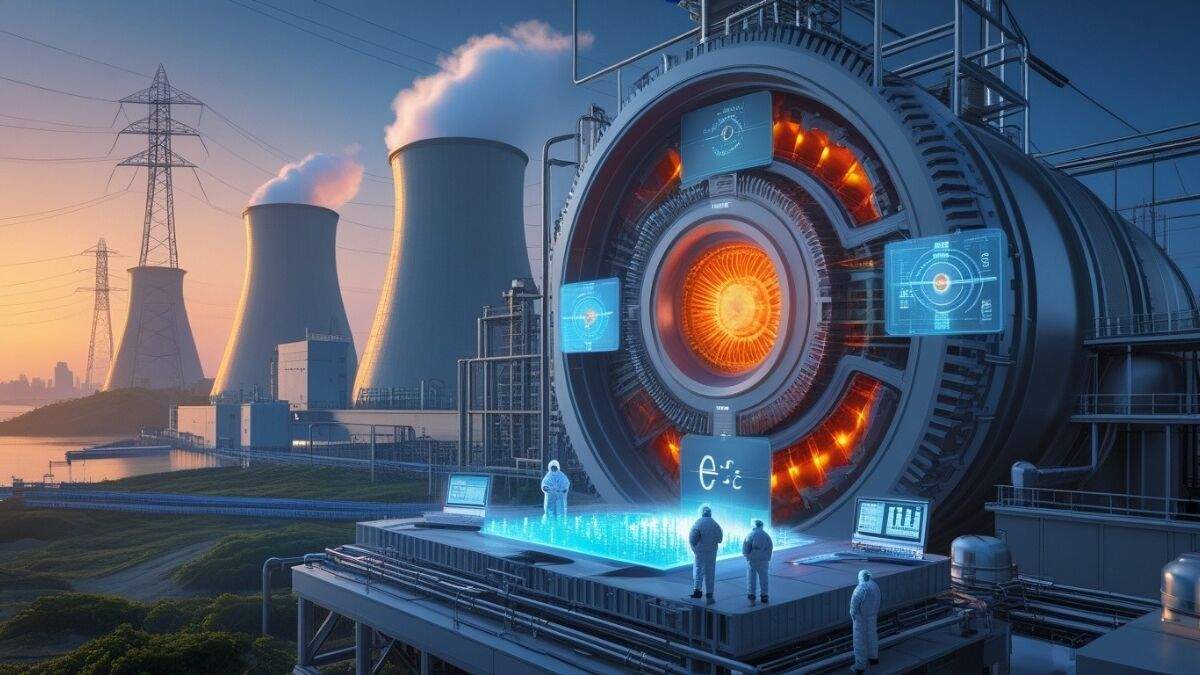
India has reached a major milestone in its nuclear journey, advancing toward energy independence through indigenous technology and efficient fuel utilization.
India’s three-stage nuclear program has hit a significant milestone with the criticality of its domestic fast breeder reactor. It will demonstrate our progress toward energy independence by enabling us to recycle fuel, utilize our thorium supplies, and lessen our reliance on uranium imports.
India’s Nuclear Program Enters Second Phase
The second phase of Homi J. Bhabha’s three-phase nuclear power generation program has begun with the “critical” operation of India’s prototype fast breeder reactor in Kalpakkam, Tamil Nadu.
When a reactor reaches criticality, it emits enough neutrons from a single atomic fission event to, on average, cause exactly one further fission. This is sufficient to keep uranium breaking down into lighter atoms, eliminating some mass and producing energy at a pace determined by Einstein’s well-known equation, E=mc².
Understanding Reactor Criticality
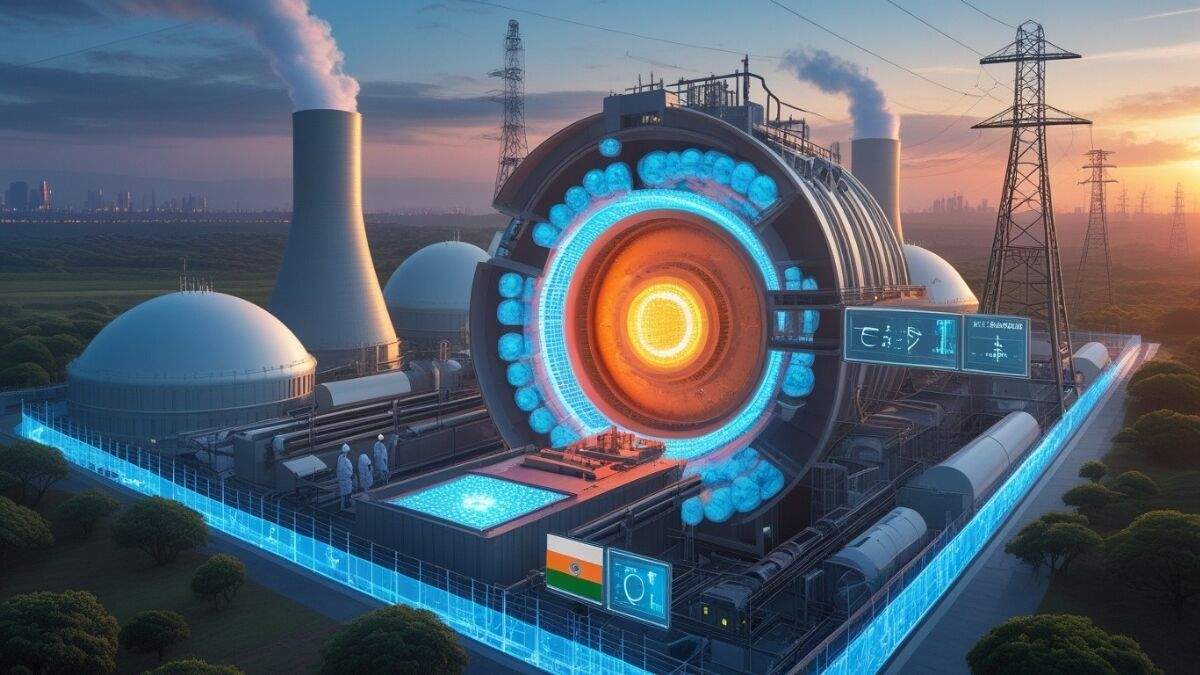
Every fission of a uranium atom would not result in another fission if the fission is sub-critical, and the chain reaction would end. The reactor would go into uncontrollable overdrive if it became super-critical, as each fission would trigger several more.
Our fast breeder reactor’s goal is to “breed” more plutonium using plutonium recovered from first-stage fission reactors’ spent fuel. In the third stage of the proposal, this material can interact with locally available thorium to make uranium once it is produced in sufficient quantities.
⚛️ Fast Breeder Reactor Highlights
- Location: Kalpakkam, Tamil Nadu
- Technology: Indigenous fast breeder reactor
- Purpose: Fuel recycling & plutonium generation
- Key Benefit: Reduces uranium imports
- Future Role: Enables thorium-based energy
Science Behind Fast Breeder Technology
Think about the science behind it. Actinides are a class of elements that includes uranium, plutonium, and thorium. In a nuclear reactor, uranium becomes plutonium when neutrons bombard it with extreme heat. This plutonium is present in the spent fuel of a typical reactor; if it is not extracted, it makes the waste material extremely poisonous and radioactive, making disposal difficult.
Nevertheless, after recovery, an oxidized form of it can be combined with uranium oxide to create “Mox” fuel for a fast breeder reactor. When uranium and fissile plutonium combine, the combination functions similarly to enriched uranium. A fast breeder reactor not only generates electricity but also a significant amount of plutonium, which may be utilized to create new batches of Mox and further plutonium.
Role of Thorium in India’s Energy Future
When sufficient thorium is produced, it can be used to replace the uranium blanket covering the reactor’s core. This can be converted into fissile uranium, which can then be used to power India’s typical pressurized heavy water reactors (PHWRs).
Before the 2008 India-US nuclear agreement freed us from the constraints of a tech-denial environment, work on our fast breeder reactor started in the early 2000s. Therefore, the design and construction of this fast breeder reactor are indigenous. Although it has taken some time, India is now as proficient in this area as it is in PHWR.
🔋 Energy Independence Benefits
- Fuel Recycling: Reduces nuclear waste
- Thorium Use: Leverages domestic resources
- Import Reduction: Less reliance on uranium
- Clean Energy: Low-carbon power generation
- Strategic Strength: Boosts self-reliance
Challenges and Policy Debates
However, a lobbying campaign is in work to advocate for a technology being developed in the United States that would use a combination of thorium and high-assay low enriched uranium as fuel for PHWRs, citing delayed progress on our three-stage project.
We should disregard any attempt to abandon this goal now that our prototype fast breeder reactor has reached criticality. Let us follow the fast-breeder route we selected all the way to the end. It will lessen the amount of uranium we need to import.
Future Outlook of Nuclear Energy in India
It is imperative that we strive for self-sufficiency to the greatest extent feasible in an unpredictable world where essential supplies may be susceptible to geopolitical limits and historical understandings have been disintegrating.
The establishment of compact modular reactors has been made possible by recent legislation targeted at generating clean energy from nuclear plants. Although they will require a lot of imports, these initiatives are also appreciated. And if the US (and China) develops feasible fusion reactors in the interim, it might be the sole justification for giving up on our domestic nuclear energy program.
Frequently Asked Questions
1) What is criticality in a reactor?
When each nuclear fission generates another fission, maintaining a steady chain reaction, this is known as criticality. It guarantees steady, regulated energy production without reactor shutdown or hazardous escalation.
2) How do fast breeder reactors operate?
Utilizing plutonium from spent fuel, fast breeder reactors create additional plutonium while producing energy. They increase efficiency and long-term sustainability by recycling nuclear waste and producing more fuel.
3) What makes thorium crucial for India?
India has a lot of thorium, but it is not immediately useful. Reactors can transform it into fissile uranium, lowering reliance on imported uranium resources and contributing to long-term energy security.
4) Why is the construction of domestic reactors important?
Indigenous development improves strategic capacities, lessens dependency on foreign assistance, and increases technical self-sufficiency. It demonstrates India’s capacity to create sophisticated nuclear systems in spite of limitations and protracted development difficulties.
5) Why is nuclear power essential to achieving energy independence?
Nuclear energy lessens dependency on imports and offers dependable, low-carbon power. It aids in maintaining a steady supply, promotes economic expansion, and guards against risks in the global geopolitical and energy markets.
Conclusion
By enabling fuel recycling, the use of thorium, and a decrease in imports, the reactor’s criticality represents a step forward in India’s nuclear program and strengthens long-term energy security, sustainability, and technological self-reliance.
Disclaimer: This content is for informational purposes only and should not be considered scientific or investment advice. Always verify with official sources.
