
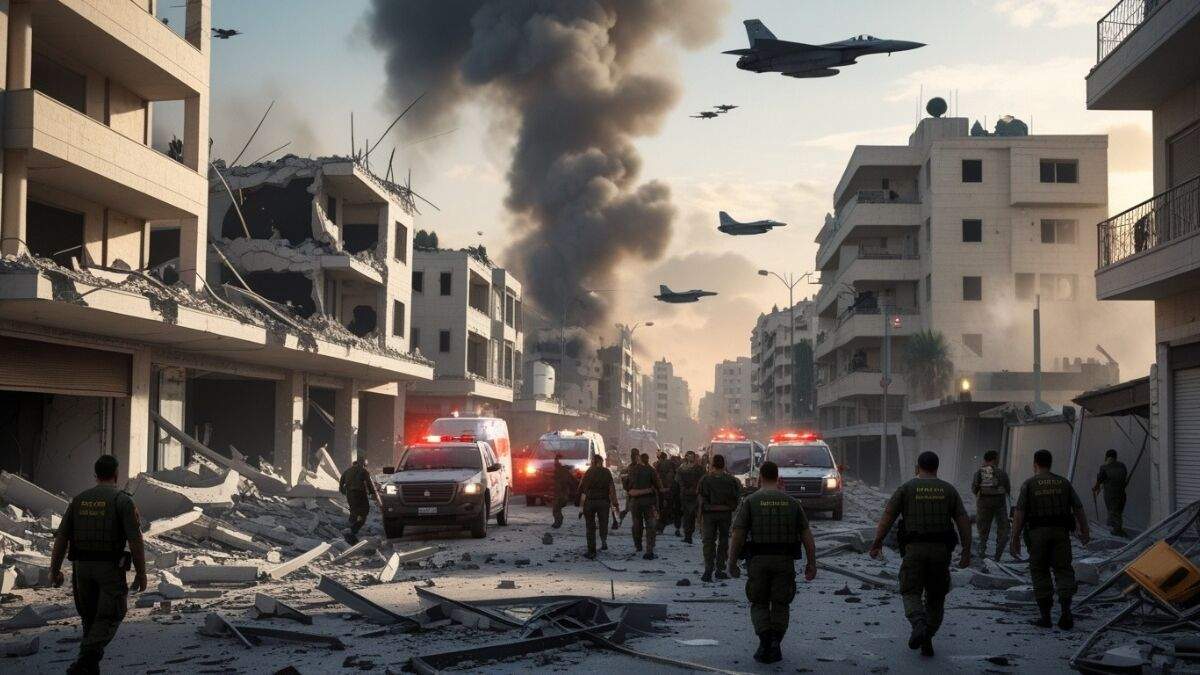
Rising tensions in the Middle East have intensified as Lebanon moves to tighten internal security while facing continued Israeli strikes and regional instability.
In response to Israel’s increasing strikes, Lebanon’s prime minister, Nawaf Salam, has directed security personnel to impose stringent state control over weaponry in Beirut. The policy effectively targets non-state organizations like Hezbollah by ensuring that only official state entities have access to weapons.
Lebanon Security Crackdown
🚨 Lebanon Tightens Weapon Control
- Order By: PM Nawaf Salam
- Target: Non-state armed groups like Hezbollah
- Action: Restrict weapons to state authorities
- Location: Beirut and across Lebanon
- Goal: Strengthen national security control
- Challenge: Internal political opposition
Intense Israeli bombardment throughout Lebanon, including central Beirut, preceded the decision. Salam gave the army and security forces orders to bolster their power right away and restrict access to weapons to authorized establishments. Hezbollah-affiliated cabinet members, however, opposed the command, hence the initiative encountered opposition within the administration.
Internal Political Tensions
Hezbollah has carried on with its activities in spite of Lebanon’s earlier prohibition on its military operations in March. On April 9, Israel launched one of its biggest attack waves since hostilities started on March 2, drastically escalating the ongoing battle. According to Lebanese health authorities, these strikes reportedly resulted in more than 200 deaths in a single day, raising the overall death toll to 1,700.
Escalation of Conflict
⚠️ Conflict Impact Snapshot
- Major Attack Date: April 9
- Daily Death Toll: 200+ casualties
- Total Deaths: Around 1,700
- Conflict Start: March 2
- Region Affected: Lebanon including Beirut
- Status: Rapid escalation ongoing
Lebanon is to formally complain to the UN Security Council about the growing violence. Salam warned that the situation is a “dangerous escalation,” endangering regional stability and undermining continued diplomatic efforts.
Diplomatic Actions and Warnings
Global leaders have expressed concern over the escalating war in the meantime. The current US-Iran ceasefire should be extended to Lebanon, according to European diplomats. Yvette Cooper and Jean-Noel Barrot called for an immediate de-escalation, while Kaja Kallas stressed that Israeli measures could stretch the precarious peace.
Global Reactions and Concerns
Hezbollah has responded to truce violations by firing rockets into Israel. To further complicate matters, US officials confirmed that Lebanon is not included by the ceasefire agreement with Iran.
Ceasefire Complications
As diplomatic attempts continue to stop further escalation, the crisis highlights rising regional tensions and the possibility of a wid
er conflict.
Disclaimer: This content is for informational purposes only and reflects ongoing geopolitical developments which may change rapidly.
