
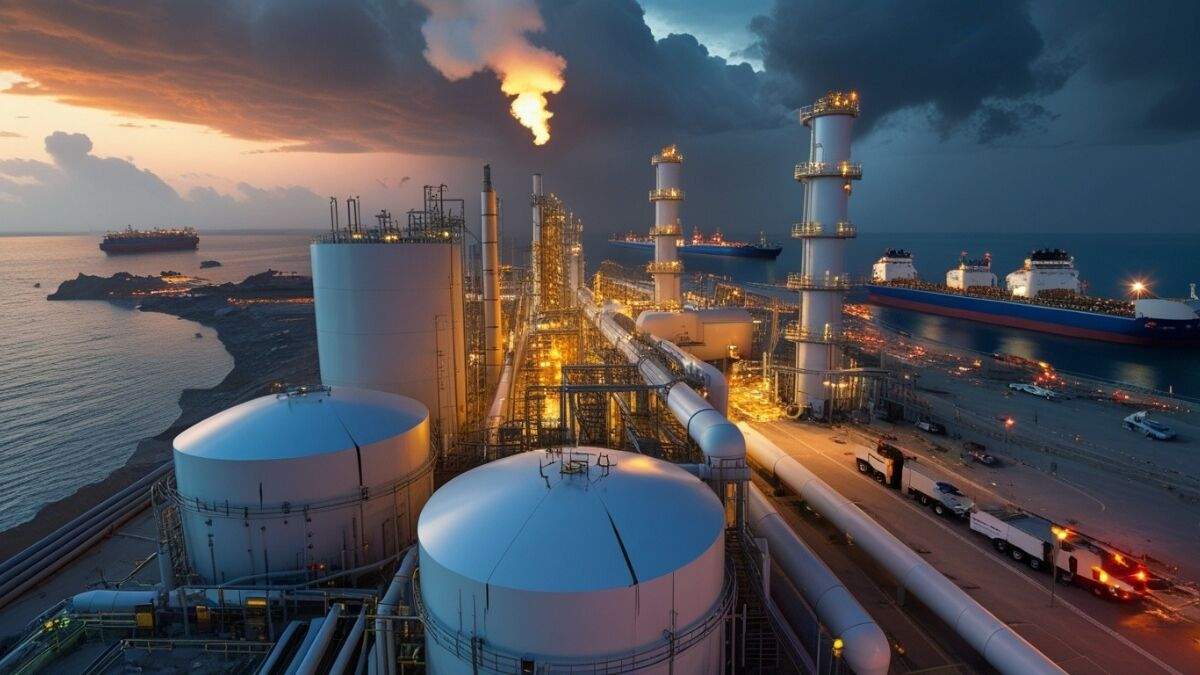
The easing of tensions between the US and Iran has brought temporary relief to global energy markets, with key shipping routes like the Strait of Hormuz gradually reopening.
Global energy markets have temporarily benefited from the recent US-Iran ceasefire, with a significant development being the smooth passage of an LPG tanker flying the Indian flag across the vital Strait of Hormuz following weeks of disruption. With more than 20,000 tonnes of LPG on board, the ship Jag Vikram is the first Indian passage since the crisis intensified, indicating a slow return to normalcy in marine operations.
Energy Supply Relief as Hormuz Reopens
🚢 Key Shipping Update
- Ship Name: Jag Vikram
- Cargo: 20,000+ tonnes LPG
- Route: Strait of Hormuz
- Status: First Indian transit post-crisis
- Impact: Supply chain recovery
- Signal: Return to normal operations
For India, which is mostly dependent on Gulf countries for energy imports, the reopening of this vital canal is critical. This route is essential to the nation’s energy security because it handles a significant portion of shipments of LPG, natural gas, and crude oil. Numerous Indian and international ships became stuck in the Persian Gulf during the battle, upsetting supply systems and raising expenses.
Importance for India’s Energy Security
Many Indian ships are still awaiting safe passage, but a few have been able to leave the area since early March. To guarantee seafarer safety and seamless maritime operations, the government has been actively collaborating with international parties. Indian ports have continued to operate properly and without congestion despite the delays.
Ongoing Maritime Coordination
⛽ Supply Impact & Recovery
- Priority: Household LPG & fuel
- Affected: Hotels & restaurants
- Recovery: Gradual improvement
- Support: Alternate sourcing
- Industry: Gas supply increasing
- Fertilizers: Allocations rising
Due to the conflict, India had to prioritize basic services like transportation fuel and household cooking gas over LPG supplies to commercial sectors like hotels and restaurants. However, supply levels have already partially recovered thanks to improved logistics and alternate sourcing. Additionally, industry and fertilizer plants are gradually receiving more gas allocations.
Domestic Supply Adjustments
There is a limited window of opportunity to stabilize international energy supplies thanks to the ceasefire between the US and Iran. However, given the region’s continued geopolitical sensitivity, uncertainty persists. In order to keep petroleum supplies steady and keep inflation under control in nations that rely heavily on energy, such as India, experts predict that continued calm and unhindered shipping via Hormuz will be es
sential.
Outlook and Ongoing Risks
Disclaimer: This content is for informational purposes only and reflects current global energy market developments.
