
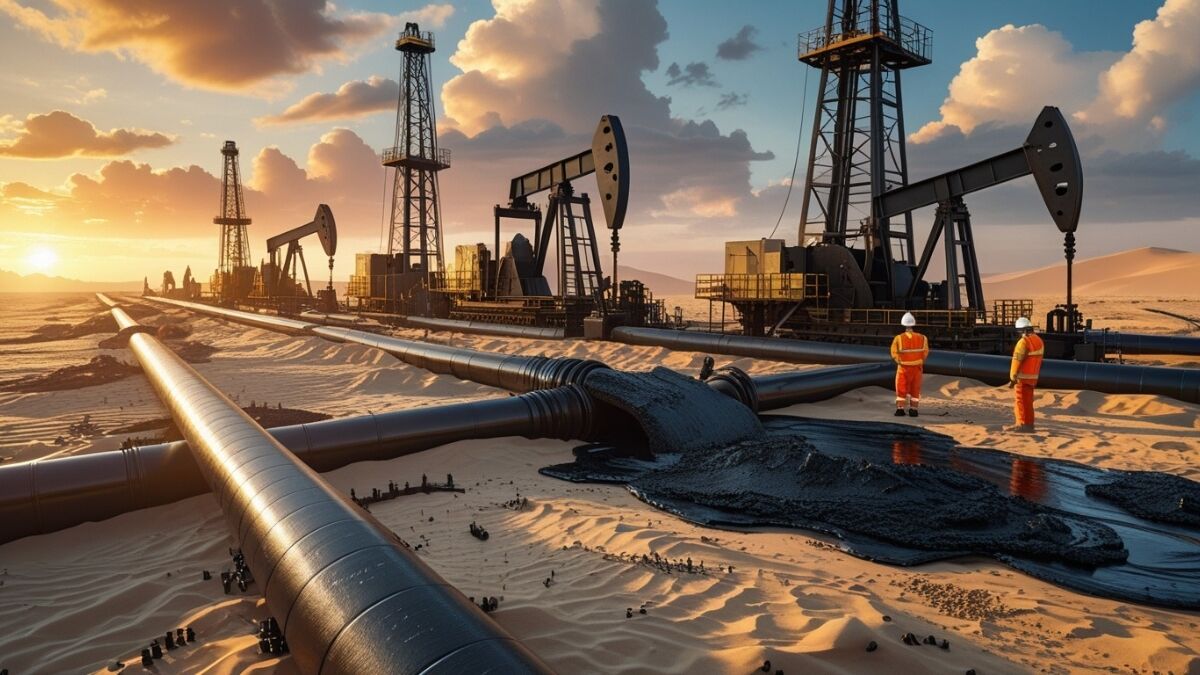
Intro: The following report details the growing tensions between the oil industry and President Trump over offshore wind policy and its broader impact on U.S. energy permitting reform.
President Trump has received an unexpected request from Big Oil: Please put an end to your fight against offshore wind.
Big Oil Urges Trump to Ease Offshore Wind Crackdown
According to people familiar with the situation, oil lobbyists have argued to Trump officials in recent weeks that his attacks on wind farms off the U.S. coast run the risk of thwarting congressional efforts to expedite energy project licenses. The oil and gas sector is worried about losing out on a significant chance to use new pipelines to deliver more of its goods to markets.
🛢️ Oil Industry’s Core Concern
- Issue: Offshore wind crackdown
- Risk: Delay in energy permitting reform
- Impact: Pipeline expansion uncertainty
- Industry Goal: Long-term legal protection for fossil fuel projects
- Political Challenge: Senate Democrats blocking negotiations
Trump has frequently attacked wind farms since taking office, calling them unsightly, costly, and harmful to animals. Energy businesses sued the government after his Interior Department froze all offshore wind projects under development from Massachusetts to Virginia. However, Trump has persisted despite judges siding with developers against the administration and permitting projects to proceed.
During a White House meeting with oil CEOs last month, Trump stated, “I want to prevent the construction of any windmills.” “They are the most costly and the worst type of energy.”
Wind Industry Faces Uncertainty
The wind business is in disarray as a result of Trump’s activities. They now run the danger of hurting his oil buddies and jeopardizing their own initiatives.
For months, the oil and gas sector has warned the government that its actions to speed up fossil fuel projects should be legally protected, lest they be undone by a future Democratic president. However, Trump’s ongoing campaign against wind is undermining a vital legislative effort to accomplish precisely that.
Congressional Deadlock Over Energy Permitting
Senate Democrats have stated that as long as Trump continues to delay wind farms, they will not engage in negotiations for a bipartisan package to reform energy licenses. Before the midterm elections, when they anticipate Democrats to retake the House, oil lobbyists see a dwindling window of opportunity to break the impasse.
At an energy conference in Houston last week, Mike Sommers, president of the American Petroleum Institute, the biggest trade association in the U.S. industry, declared, “This administration has done everything that they could do at the administrative level.” “Wait till the Democrats take control of the US House of Representatives if you believe that long-term reform is difficult to implement today.”
Oil Industry’s Strategic Balancing Act
The fossil fuel business is undergoing strange changes as a result of Trump’s intensifying conflict with wind. Former President Joe Biden’s moves to halt new natural gas exports and abandon the contentious Keystone XL crude pipeline infuriated it. It is now acting as a de facto, if reluctant, mediator between the Trump administration and wind developers who are facing their own difficulties.
According to one person familiar with the situation, lobbyists have informed employees of the National Energy Dominance Council, an organization Trump established to support energy projects, that the administration’s opposition to wind makes it more harder to get a bipartisan agreement in Congress.
Legislative Priorities and Policy Reform
According to persons familiar with the situation, API has made it plain to the administration that its top legislative priority is permitting, and it supports making sure that all projects that have been approved by the federal government can be completed, including wind projects.
The group has been very clear about its priorities with legislators and the administration, said to Dustin Meyer, senior vice president of policy, economics, and regulatory relations at API. One of these aims is changing a statute that requires government reviews of projects’ environmental impact.
White House Position on Offshore Wind
Trump’s assertion that “wind farms are a liability that jeopardizes the safety of the American people” was reiterated by a White House spokesperson. According to her, the administration is closely collaborating with its congressional allies to advance changes to the permitting procedure.
Trump’s plans to win the AI race and reshore vital sectors may suffer from the congressional impasse. Without a significant energy build-out, the United States will not be able to fulfill the growing demand for electricity from factories, data centers, and electric vehicles.
Infrastructure Bottlenecks and Pipeline Challenges
New mines are necessary to reduce the United States’ dependency on imports of vital minerals like copper and lithium. All of these factors have made it a bipartisan goal on Capitol Hill to simplify the intricate system of laws and rules governing energy projects.
There is a great chance for the oil and gas sector to construct new pipelines. Environmental organizations have mastered the art of obstructing new channels by delaying projects in court. In recent years, numerous businesses have abandoned multibillion-dollar projects due to the delays they have experienced in battling legal and regulatory issues.
⚡ Pipeline Expansion & Permitting Reform
- Main Bottleneck: Infrastructure and pipeline approvals
- Legal Risk: Court delays & environmental reviews
- Industry Demand: Permanent legislative reform
- Energy Goal: Secure long-term fossil fuel expansion
- Political Barrier: Offshore wind dispute blocking bipartisan deal
“One bottleneck has been pipelines. “Infrastructure has been a bottleneck,” stated Toby Rice, CEO of EQT, a company that produces natural gas. “We have had more difficulty getting our gas to market.”
Trump has effectively benefited his allies in the oil and gas industry by using his influence to obstruct wind installations. The state of New York approved a natural gas pipeline project that energy giant Williams had earlier abandoned after Trump overturned a stop-work order on a significant wind farm off the coast last May.
Political Fallout and Legislative Tensions
However, the fossil fuel sector is insistent that a law is necessary to ensure that it can construct pipelines without having its permits revoked by a future government. It commended the House in December for enacting bipartisan legislation to shorten the timeframes for energy project lawsuits and environmental reviews.
Four days later, “owing to national security vulnerabilities identified by the Department of War in recently completed secret reports,” the administration halted the government leases for five offshore wind projects that were still under development. Democrats protested by declaring that until Trump stopped his insults, they would not be able to move on with Senate negotiations to pass a version of the House measure.
Industry Frustration Over Policy Conflict
In private, some oil lobbyists claim that they do not understand Trump’s strong dislike of wind farms. Numerous professionals in the field express their frustration with the current state of affairs.
Sam Sledge, board chair of the Energy Workforce and Technology Council, a trade association for the industry, stated, “We have been very focused on permitting reform as kind of the cork in the bottle.” “I believe that Trump’s administration has run that afoul of some other goals.”
Frequently Asked Questions
1. Why is Big Oil urging Trump to ease offshore wind restrictions?
Oil lobbyists fear that blocking offshore wind projects is delaying bipartisan energy permitting reform needed for pipeline expansion and fossil fuel infrastructure security.
2. What is energy permitting reform?
Energy permitting reform refers to changes in environmental review laws and approval timelines to speed up oil, gas, mining, wind, and other infrastructure projects.
3. How does offshore wind affect pipeline construction?
Senate Democrats have linked wind project approvals to broader permitting negotiations, creating a legislative deadlock affecting fossil fuel pipeline expansion.
4. Why is bipartisan support important?
Without bipartisan legislation, future administrations could reverse fossil fuel project approvals, creating long-term investment uncertainty.
5. What is at stake for U.S. energy policy?
Electricity demand from AI, manufacturing, EVs, and data centers requires large-scale energy build-out, including pipelines, mining, and renewable energy projects.
Disclaimer: This article is for informational purposes only and does not constitute political or financial advice.
