
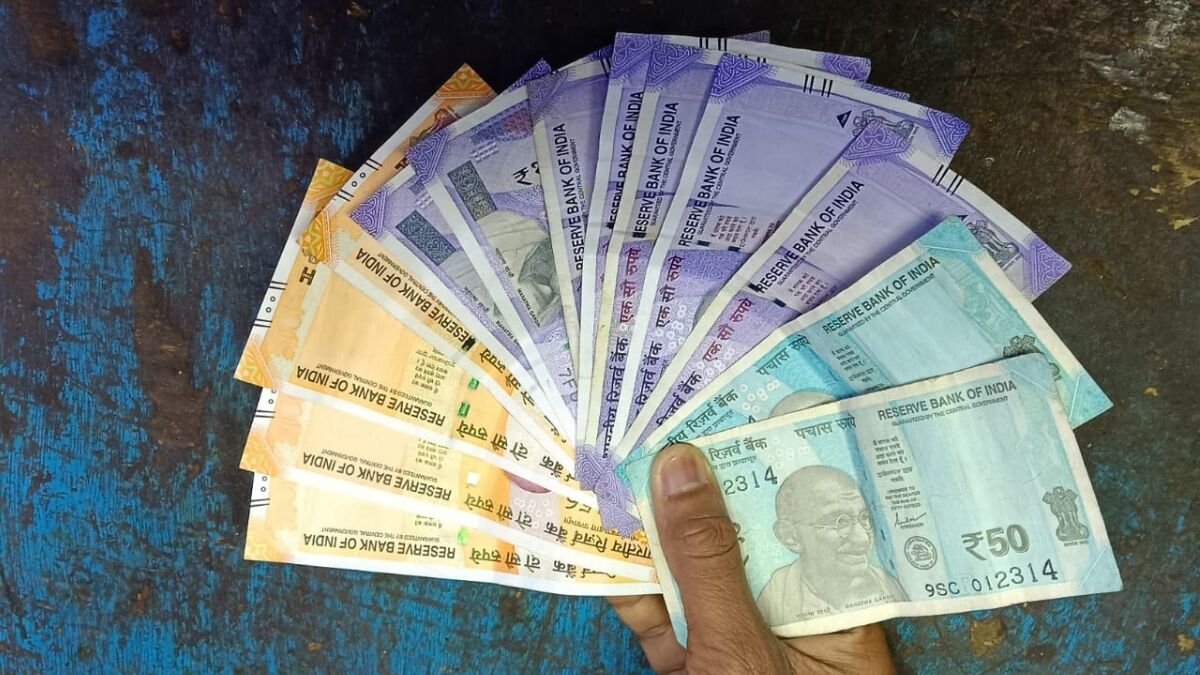
Middle-class taxpayers will once again have high hopes when Finance Minister Nirmala Sitharaman delivers the Union Budget on February 1.
Budget 2026 Expectations for Middle-Class Taxpayers
The background is different this year. In contrast to previous years, many taxpayers’ monthly paystubs showed the effects of Budget 2025. Under the new government, the Modi administration earned up to Rs 12.75 lakh in tax-free revenue. The crucial issue at hand is whether Budget 2026 will increase that alleviation or just build on the progress that has already been made.
Why Budget 2025 Was a Turning Point
For many years, income tax reduction was mostly theoretical and only showed up in calculations rather than actual cash flows. Budget 2025 brought about one of the most significant changes to the new tax system.
Higher deductions combined with slab rearrangement provided the most relief, according to Anita Basrur, partner at Sudit K Parekh & Co LLP. “The rise in the tax-free maximum for FY 2025–2026 under the new system up to Rs 12 lakh for resident people and an additional 75,000 for salaried personnel is the most substantial tax relief.”
Key Changes in Deductions and Slabs
In addition, the standard deduction for salaried taxpayers was doubled from Rs 50,000 to Rs 75,000, and the basic exemption level was enhanced from Rs 3 lakh to Rs 4 lakh. The highest tax rate now only applies to amounts above Rs 24 lakh, rather than Rs 15 lakh, as a result of the slab reorganization.
The overall impact was significant. Budget 2025 was a significant change from the previous year, according to Akshay Jain, Direct Tax Partner at NPV & Associates LLP.
How Much Taxpayers Actually Saved
“In contrast to Budget 2024, Budget 2025 significantly relieved middle-class taxpayers by expanding the tax slabs under the new tax system and raising the basic exemption level from Rs 3,00,000 to Rs 4,00,000, resulting in tax savings of up to Rs 1,14,400.”
Furthermore, the Section 87A refund was increased to Rs 60,000, so guaranteeing that anyone earning up to Rs 12 lakh paid no income tax. Although the savings varied depending on income level, many taxpayers with salaries saw a noticeable difference. The relief immediately resulted in increased take-home pay, according to Amit Baid, Head of Tax at BTG Advaya.
Real Impact on Salaried Individuals
“Tax savings appeared on paystubs for the first time in years. All individuals’ income up to Rs 12 lakh and salaried taxpayers’ income up to Rs 12.75 lakh are now virtually tax-free.
He continues by saying that, depending on deductions, salaried people making between Rs 10 lakh and Rs 12 lakh might save between Rs 40,000 and Rs 75,000 a year, while those making approximately Rs 20 lakh could save almost Rs 1.3 lakh. Beyond the figures, this offered psychological solace during a period of growing home bills, tuition fees, and EMIs.
Will Budget 2026 Bring Further Tax Relief?
Experts generally agree that Budget 2026 is unlikely to bring forth another round of drastic slab modifications after such a major reset.
According to Richa Sawhney, Partner, Tax at Grant Thornton Bharat, there is not much space or need for the government to make any changes to slabs. “Considering the revamp of slab rates completed last year under the new tax system, we do not really envisage any big adjustments in this year’s budget for salaried classes.”
Growing Popularity of the New Tax Regime
She adds that even before to the slab rejig, over 75% of taxpayers had already switched to the new system, and that figure is predicted to have significantly grown after Budget 2025. Expectations for targeted alleviation are still high even if significant slab adjustments may not be possible. Salaried taxpayers are looking for further improvements to the standard deduction, as Anita Basrur points out.
She also highlights hopes around reducing surcharge rates, increasing the income threshold for the 30% tax band from Rs 24 lakh to Rs 35 lakh, and making the new system more workable by allowing deductions like Mediclaim and home loan advantages.
💰 Major Middle-Class Tax Relief (Budget 2025)
- Tax-Free Income: Up to ₹12 lakh (₹12.75 lakh for salaried)
- Standard Deduction: Increased to ₹75,000
- Basic Exemption: Raised from ₹3 lakh to ₹4 lakh
- Top Tax Slab: Now applies above ₹24 lakh
- Section 87A Rebate: Increased to ₹60,000
- Result: Higher take-home pay and real cash-flow relief
📊 Budget 2026: Middle-Class Expectations
- Standard Deduction: Possible increase up to ₹1 lakh
- 30% Slab Threshold: Hope to raise from ₹24 lakh to ₹35 lakh
- Compliance: Easier filing, quicker refunds
- TDS/TCS: Rationalisation expected
- New Tax Law: Smooth rollout of Income-tax Act, 2025
- Focus: Stability, simplicity, and taxpayer-friendly system
Beyond Slabs: Structural Tax Reforms
Expectations now go beyond rates and slabs, says Akshay Jain. Clarity about transition, compliance deadlines, and dispute resolution has become essential because the Income-tax Act, 2025 will go into effect on April 1, 2026.
“We anticipate streamlined changes, improved taxpayer services and experience, less conflicts, prompt resolution of CIT appeals, and less harassment during scrutiny assessment with the implementation of the New Income Tax Act.”
Additional Relief Measures Under Discussion
In order to enhance cash flows, there is also an increasing desire for a bigger standard deduction, preferably up to Rs 1 lakh, and the rationalization of TDS and TCS rates. A paid salary is not the only expectation. According to Jain, there is optimism that capital gains income might be included inside the Rs 12 lakh rebate level to lessen the burden on small investors, even if slab revisions might not occur.
Higher deductions for house loan interest and National Pension System (NPS) payments are among the relief that taxpayers who are still using the previous system are requesting.
New Ideas Gaining Attention
Joint taxes for married couples is another new concept that is gaining popularity. Tax neutrality between single and dual-income families, optional joint filing, and intra-family loss set-offs—a mechanism used in a number of international economies—are among the proposals.
Expert View on Budget 2026 Outlook
Amit Baid provides a concise summary of the general attitude. He claims that although there would not be significant tax reductions for the middle class in Budget 2026, that might not be the true necessity. “A seamless and dependable tax system may provide the greatest relief for the middle class, rather than lower rates.”
Taxpayers seem to be adjusting their expectations as Budget Day draws near. Even if headline-grabbing tax cuts are still unattainable, the expectation today is for stability, easier compliance, quicker refunds, and a predictable tax system after the significant savings provided in Budget 2025.
Frequently asked questions
1. Will Budget 2026 raise middle-class income tax slabs?
Major slab adjustments are unlikely in Budget 2026, according to experts, since Budget 2025 already included big improvements.
2. Will income up to ₹12 lakh continue to be tax-free?
Indeed, the majority of experts anticipate that the current Section 87A rebate mechanism would remain in place, preserving income up to ₹12 lakh tax-free under the new system.
3. Is it possible to raise the 30% tax slab threshold to ₹35 lakh?
Although taxpayers are optimistic, experts argue that this is not probable in Budget 2026 and is only a goal.
4. Will there be a further rise in the standard deduction?
Raising the standard deduction for salaried taxpayers from ₹75,000 to ₹1 lakh is a highly anticipated possibility.
5. Will Budget 2026 include any non-slab changes?
Indeed, taxpayers anticipate more seamless compliance, quicker refunds, fewer lawsuits, rationalized TDS/TCS, and improved execution of the new Income-tax Act, 2025.
Conclusion
The middle class received significant tax relief in Budget 2025, which improved actual cash flows for the first time in many years. Expectations have changed from drastic tax cuts to stability, ease of use, and an improved taxpayer experience as Budget 2026 draws near. For paid taxpayers, a predictable and simple tax system could provide the greatest comfort, even in the absence of dramatic pronouncements.
Disclaimer
This material should not be interpreted as financial, legal, or tax advice; it is just meant to be informative. Before making any tax-related choices, readers are urged to speak with a knowledgeable tax expert.
