
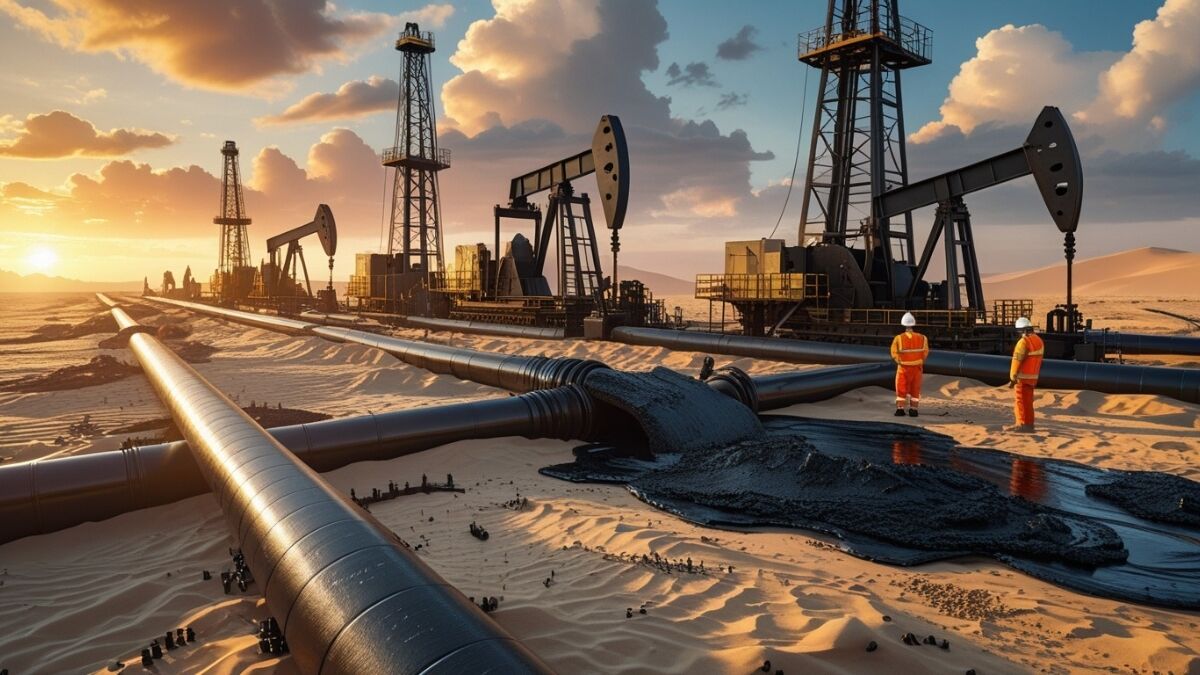
It is thought that Donald Trump might sell cheap oil to the globe, including India, when the US seized control of Venezuela.
Impact on Indian Oil Companies and Government Oversight
Indian oil firms may profit greatly if this occurs. But the government is keeping a careful eye on this. According to brokerage company JM Financial, by raising the excise charge in the next budget, the government might stop these businesses’ soaring earnings. The average person may be impacted if the government takes this action.
The price of a barrel of crude oil is now around $60. Investors should exercise caution when making investments in oil and gas firms, according to JM Financial. State-owned businesses like Oil India and ONGC continue to have the firm’s “buy” recommendation. In the meanwhile, it alerts state-owned oil marketing corporations (OMCs) to certain financial concerns.
Marketing Margins and Excise Duty Impact
According to JM Financial, since crude oil prices are presently low, oil marketing businesses should benefit from strong marketing margins, or profit margins. The company points out that the government may raise the excise tax on gasoline and diesel in the next budget, which would lessen the advantages that oil businesses get from cheaper crude oil prices.
According to the trading business, the total gross marketing margin (GMM) of OMCs on motor fuels is around ₹8.2 per liter, as opposed to ₹3.5 per liter historically. This indicates that a hike in excise charge of ₹3 to ₹4 per liter is possible. The company said that the federal government could earn an extra ₹165 billion a year for every ₹1 rise in excise charge per liter.
🛢️ Oil Companies’ Margin & Excise Duty Alert
- Current GMM: ₹8.2 per liter (historical ₹3.5)
- Potential Excise Hike: ₹3–₹4 per liter
- Revenue Impact: ₹165 billion per ₹1 per liter increase
- Government Action: May request companies to absorb or pass on excise duty
Effect on Consumers and Inflation
Oil corporations may pass the cost on to the public if the government raises the excise tax. The cost of gasoline and diesel may increase as a result. The nation’s inflation rate may grow as a result. But the government might also request that oil firms refrain from raising their prices. Last year, the administration followed suit. The earnings of oil firms may suffer as a result.
Global Oversupply and Brent Crude Prices
According to JM Financial, the ongoing surplus in the world’s oil markets is the reason for the decline in Brent crude prices. According to the company, the International Energy Agency (IEA) projects that the world’s oil surplus would be around 2.3 million barrels per day in 2025 and rise to approximately 3.8 million barrels per day in 2026. This rise will result from both higher supply from non-OPEC nations and increasing output by OPEC+ nations. Supply pressure may rise if sanctions against Russia are relaxed as part of the peace agreement with Ukraine.
🌍 Global Oil Oversupply Warning
- 2025 Surplus: 2.3 million barrels/day
- 2026 Projected Surplus: 3.8 million barrels/day
- Drivers: OPEC+ production increase, non-OPEC supply rise
- Risk Factor: Possible easing of Russia sanctions increasing supply pressure
Frequently asked questions
- Will gasoline costs in India immediately drop due to cheaper Venezuelan oil?
Global prices are just one element, thus it is not always the case. Retail gasoline costs are significantly impacted by domestic taxes and excise levies. - Could increases in government excise taxes impact inflation?
Indeed, gasoline costs may increase if customers pay higher tariffs, which might contribute to overall inflation. - Do Indian oil firms anticipate making money off of Venezuela’s oil?
Improved margins or cheaper crude may help certain refiners, but benefits may be negated by market circumstances and tax changes. - Will consumers undoubtedly pay more at the pump?
Not necessarily; it depends on whether the government permits businesses to pass on increases in excise taxes to customers. - Does the US takeover ensure a lower price for crude?
No. Geopolitical concerns and sanctions policy will continue to affect oil prices, even if additional supply may be beneficial.
In conclusion
India’s energy industry may profit from cheaper oil from suppliers like Venezuela, which might also lower the price of crude oil globally. However, government action on excise duties could offset such advantages. Fuel costs for the general population may rise if tariffs are raised and passed on, adding to the inflationary pressure. However, the earnings of oil firms may suffer if the government absorbs the charge without transferring it.
Disclaimer
This information is based on current news reports and expert commentary. Market conditions, government policies, and global oil dynamics can evolve, and outcomes are subject to change.
