
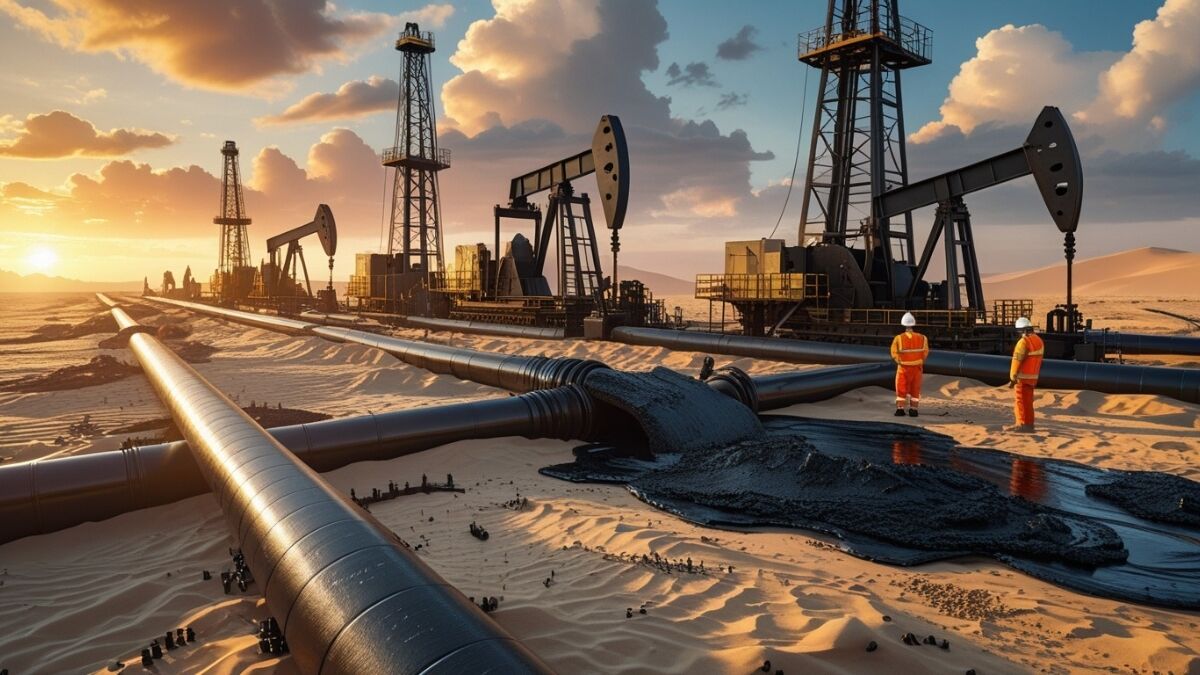
Fears of Iranian supply interruptions owing to a possible U.S. strike on Iran and potential reprisal against U.S. regional interests caused oil prices to rise on Wednesday for the fifth consecutive session.
Oil Prices Surge Amid Geopolitical Tensions
At 1411 GMT, Brent futures were up 76 cents, or 1.2%, at $66.23 a barrel. At $61.83 a barrel, U.S. West Texas Intermediate oil was up 68 cents, or 1.1%. Tehran threatened to attack American outposts in the Middle East if Washington attacked Iran. A U.S. military installation in Qatar encouraged some of its employees to go.
Jorge Montepeque, managing director of Onyx Capital Group, said, “We are at a time of global uncertainty and probable supply interruption.” “It is believed that the Iranian demonstrations might result in a government change. That is a significant one, and there seems to be a good chance of an American strike.”
Brent Forecast and Market Reactions
In a report, Citi analysts raised their forecast for Brent over the next three months to $70 per barrel, stating that protests in Iran might tighten global oil balances via short-term supply disruptions, but mostly through growing geopolitical risk premiums.
On Tuesday, U.S. President Donald Trump encouraged Iranians to continue protesting and said help was on the way, though he did not specify what that meant. However, the experts pointed out that the demonstrations had restricted the impact on real supplies since they had not extended to Iran’s major oil-producing regions.
📈 Oil Supply & Geopolitical Risk
- Focus: Potential Iranian supply disruption
- Impact: Rising oil prices amid protests
- Market Movement: Brent up $66.23, WTI $61.83 per barrel
- Risk Factor: U.S. military tensions in Middle East
- Supply Check: Protests limited to non-major oil regions
- Expert Opinion: Geopolitical premium affecting futures
U.S. Stockpiles and Venezuelan Supply
The American Petroleum Institute stated late on Tuesday that substantial crude and product buildup in the United States also slowed the increase in oil prices.
According to the API, which cited market sources, crude stockpiles in the United States, the largest oil consumer in the world, increased by 5.23 million barrels for the week ending January 9. Distillate stockpiles increased by 4.34 million barrels from the previous week, while gasoline inventories increased by 8.23 million barrels.
Upcoming Stockpile Data
Later on Wednesday, the U.S. Energy Information Administration will reveal stockpile statistics. U.S. crude oil stocks were predicted to have decreased last week, but gasoline and distillate inventories probably increased, according to a Reuters poll released on Tuesday.
According to three sources, Venezuela, a member of the Organization of Petroleum Exporting Countries, has started to reverse oil production limits set under a U.S. embargo while still controlling pricing. Crude shipments are reportedly restarting.
In what may be the first shipments of a 50-million-barrel supply agreement between Caracas and Washington to restart exports after the U.S. captured Venezuelan President Nicolas Maduro, two supertankers carrying around 1.8 million barrels of petroleum each left Venezuelan seas on Monday.
🛢️ Venezuela Oil Export Update
- Country: Venezuela
- Production: Reversing limits under U.S. embargo
- Shipments: Restarted with 1.8 million barrels each on two supertankers
- Impact: Helps offset global supply disruptions
- Pricing: Controlled despite lifting limits
- Global Effect: May reduce short-term oil price volatility
Frequently Asked Questions
1. Despite the fact that there has not been a reduction in supply, why are oil prices increasing?
Owing to the fact that markets are accounting for the possibility of future supply disruptions from Iran as a result of political turmoil and even military escalation. When the likelihood of a supply disruption increases, traders often pay more for oil futures.
2. What is Iran’s production size?
Iran has traditionally produced several million barrels of petroleum per day, making it one of OPEC’s top producers. Therefore, any major interruption may significantly reduce the world’s supply.
3. What may disturb the physical supply?
Sanctions tightening, direct confrontation involving Iran’s export facilities or important oil routes like the Strait of Hormuz, or massive internal upheaval harming oil infrastructure are all possible outcomes.
4. Are prices influenced by other factors?
Indeed, some of the risk-driven gains are being offset by growing U.S. stockpiles and higher oil shipments from Venezuela.
5. What prices are experts projecting?
As long as geopolitical risk is strong, many expect prices to be maintained at higher levels. In the medium term, several projections put Brent at or over $70 per barrel.
Conclusion
Due to increased geopolitical tensions brought on by Iranian unrest and the possibility of a wider confrontation including the United States, oil prices have increased. Markets are incorporating a risk premium that raises oil futures even in the absence of rapid supply reductions. The prevalent fear of disruption, particularly near important facilities or shipping routes, is keeping oil markets on edge, even while other factors like growing U.S. stockpiles and Venezuelan shipments are somewhat restricting prices.
Disclaimer:
This article is for informational purposes only. Oil prices and geopolitical developments can change rapidly. Readers should verify details from official and reliable sources before making any financial or investment decisions.
