
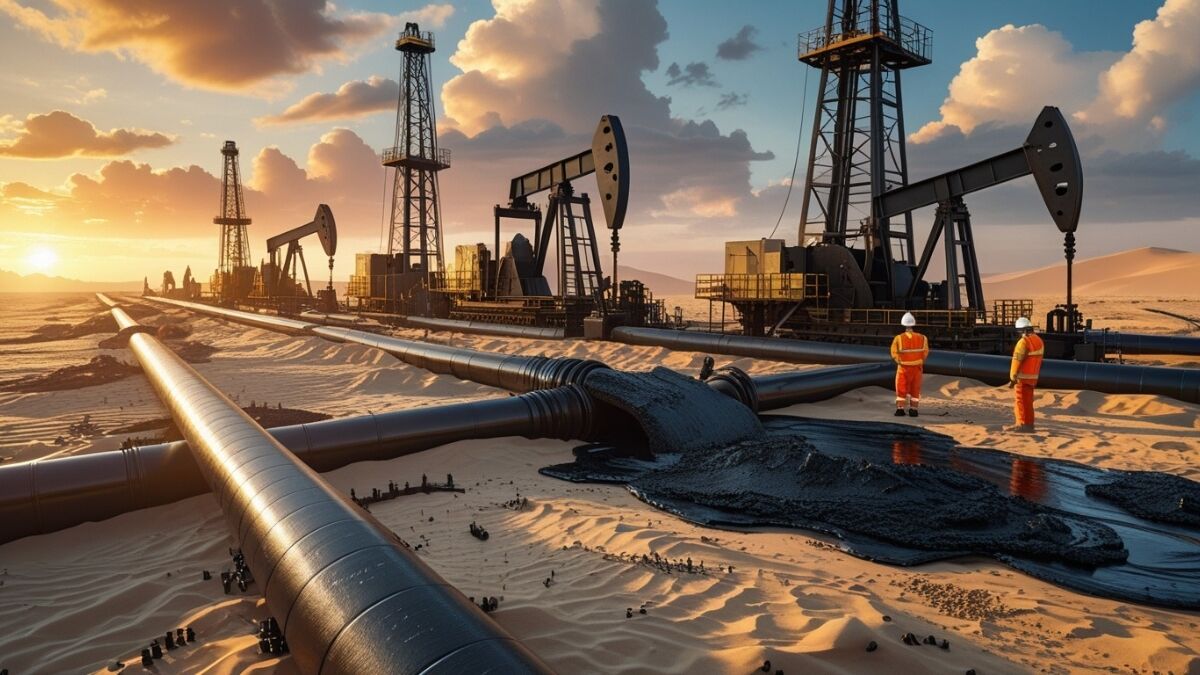
Crude oil prices are adjusting as geopolitical tensions between the United States and Iran ease. Explore the latest updates, market drivers, and regional political factors impacting oil.
As the likelihood of a direct military conflict between the United States and Iran decreased, crude oil prices were poised for their first weekly drop since the year began.
Crude Oil Prices Update Amid Geopolitical Shifts
Brent crude was trading at $68.09 per barrel at the time of writing, while West Texas Intermediate was trading at $63.95 per barrel, both of which were somewhat higher than Thursday’s closing but lower than Monday.
For the past seven weeks, oil prices have been rising, primarily due to U.S. foreign policy in several regions of the world. Since the U.S. president threatened to strike Iran unless it gave up its nuclear aspirations, the Iran nuclear issue has been by far the most bullish for benchmarks. The two are meeting in Oman today, but they have not decided on the agenda, according to a report from Reuters earlier today.
Geopolitical Risk Premium Remains Elevated
Tensions are high since the two sides are still far apart. “This should ensure that the geopolitical risk premium stays in place,” Reuters said Daniel Hynes, an analyst at ANZ. Because Iran controls the Strait of Hormuz and might close the chokepoint in the event of conflict, any tensions in the Middle East involving Iran are especially positive for oil prices. Considering the U.S. military presence in the region, Iran has never blocked the Hormuz Strait previously, and critics point out that it is unlikely to do so because doing so would hurt its own exports.
📉 Crude Oil Prices Market Alert
- Brent Crude: $68.09 per barrel
- WTI Crude: $63.95 per barrel
- Trend: First weekly decline since 2026 began
- Reason: De-escalation of US-Iran tensions
- Geopolitical Risk Premium: Still slightly elevated
Regional Political Factors Impacting Oil
In the meantime, ING analysts have identified a disagreement with the United States and Iran’s neighbor, Iraq, as further bullish factors for oil prices. The United States believes that Nouri al-Maliki is too close to Iran, but it appears that Iraqi lawmakers want him to be the country’s next prime minister. Al-Maliki’s appointment as prime minister has already prompted President Trump to threaten Baghdad with dire consequences.
⚠️ Middle East Oil Risk Summary
- Geopolitical Tension: US-Iran nuclear talks
- Strategic Chokepoint: Strait of Hormuz under observation
- Iraq Politics: Nouri al-Maliki potential premiership
- Market Impact: Risk premium gradually fading
- Analyst Watch: Market closely monitoring Middle East developments
Frequently Asked Questions
FAQ 1: What is causing this week’s drop in crude oil prices?
The geopolitical risk premium that has drove crude oil prices higher for seven weeks is lowering as tensions between the United States and Iran lessen.
FAQ 2: What are the current prices of WTI and Brent crude?
WTI is currently trading at $63.95 per barrel, down from Monday but marginally up from Thursday, while Brent crude is trading at $68.09 per barrel.
FAQ 3: How do tensions between the US and Iran impact the price of oil?
Iran controls the Strait of Hormuz, a vital oil shipping route, thus tensions are positive for oil prices. Conflict threats have the potential to raise global oil benchmarks’ geopolitical risk premium.
FAQ 4: Why do oil markets care about the Strait of Hormuz?
A large amount of the world’s oil exports pass via the Strait of Hormuz, a crucial chokepoint. Any interruption or shutdown may drastically cut supply, raising costs.
FAQ 5: What effect does the political climate in Iraq have on oil prices?
Political disputes in Iraq, especially those pertaining to Nouri al-Maliki’s possible premiership and U.S.-Iranian influence, erode regional stability and have an indirect impact on oil prices.
Conclusion
As tensions between the United States and Iran decrease, crude oil prices are falling following a period of steady gains. Although there are still geopolitical uncertainties, the risk premium on oil prices has decreased due to the reduction of immediate threats and political changes in Iraq. Since any escalation might swiftly reverse the present downward trend, analysts are nonetheless keeping a tight eye on developments in the Middle East.
Disclaimer: This article is for informational purposes only and does not constitute financial or investment advice.
