
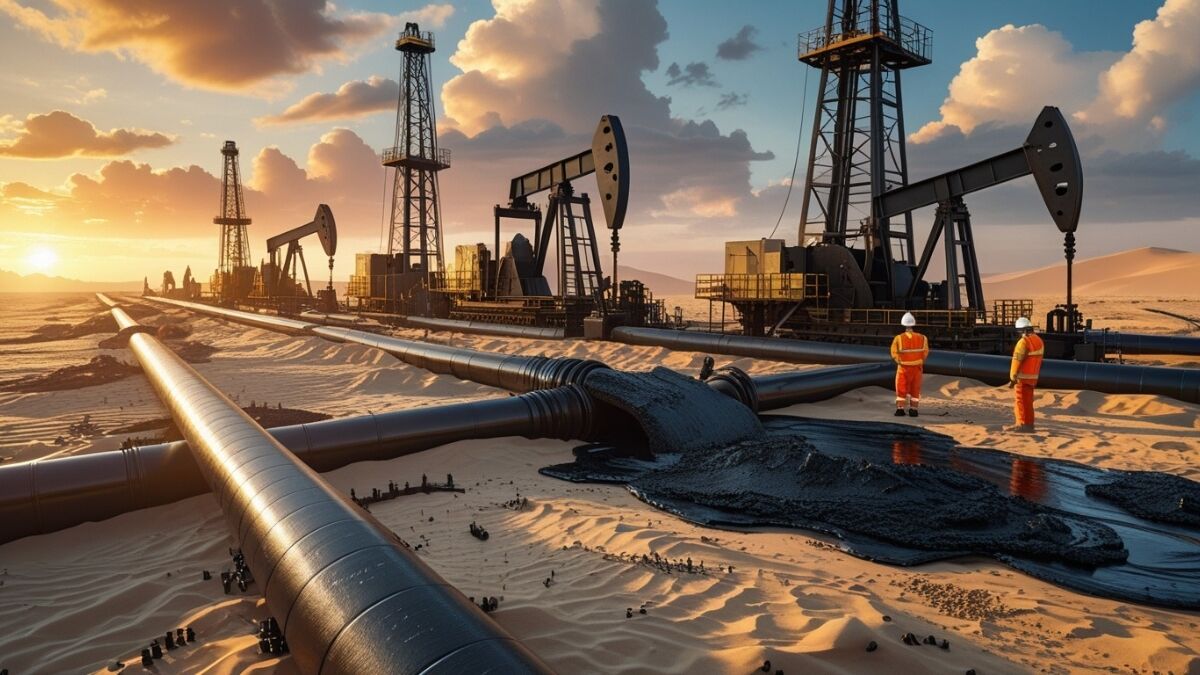
Cuba is facing a severe oil shortage, with supplies expected to last only 15–20 days. U.S. actions, including sanctions and military pressure on Venezuela, have disrupted the island’s main sources of fuel, threatening power, transport, and food security.
Oil Shortage Crisis in Cuba
According to data analytics firm Kpler, Cuba has only 15 to 20 days of oil left at current levels of domestic production and demand, which might be an existential crisis for the socialist country. The U.S. military activities in Venezuela that kidnapped President Nicolás Maduro set off the conflict.
The assault came when the United States illegally stopped ships carrying oil from Venezuela to nations like Cuba due to a naval embargo. An executive order that U.S. President Donald Trump signed on January 29 that threatens punitive penalties on any nation that sells oil to Cuba has made it worse.
Dependence on Oil
Because oil generates 83% of all power and oil products account for 56% of all energy use in households, businesses, transportation, and agriculture, Cuba is structurally dependent on oil. Power outages are disastrous for a nation that imports around 80% of its food because they interfere with refrigeration, which is essential for keeping perishables fresh.
Under the oil-for-doctors program put in place by former Venezuelan President Hugo Chávez, Venezuelan oil flowed to Cuba, serving as both the country’s main supply of imported oil and a vital lifeline. In 2022, 75% of Cuba’s imports of crude oil were from Venezuela.
In 2023, when Cuba diversified and Mexico became a major supplier with a 31% share, this fell to 58%. After Mr. Trump came back to power in 2025, oil imports had significantly decreased. Until Mr. Maduro’s kidnapping, Venezuela continued to supply Cuba with an average of 46,500 barrels of oil per day in December 2025. After then, this amount fell to zero.
Mexico’s Role & Diplomatic Pressure
The January 29 order placed a great deal of strain on Mexico and its President Claudia Sheinbaum, who filled the void. At first, she referred to the cancellation of a scheduled cargo as a “sovereign decision.” However, Ms. Sheinbaum categorically contradicted Mr. Trump’s Saturday assertion that she had consented to halt oil shipments at his request, saying, “We never discussed with President Trump the topic of oil with Cuba.”
Later, she stated that Mexico was “exploring all diplomatic possibilities” to provide humanitarian relief in the form of fuel. Mexico’s options seem to have been limited by the possibility that its crude could be seized if Mr. Trump went ahead with a complete oil blockade, especially because a crucial free-trade agreement with the United States and Canada is due for renegotiation this year.
Historical Context: U.S. Blockade
Additionally, the current Cuban crisis is the result of a six-decade-old U.S. campaign of economic pressure. After the Cuban Revolution and the nationalization of industry, including foreign-owned businesses, what Cubans call the “blockade” started in 1962. The “Torricelli Act,” which forbade overseas subsidiaries of American companies from engaging in trade with Cuba and restricted ships that had docked in Cuba from accessing American ports for 180 days, further strengthened this embargo in 1992.
The Helms-Burton Act of 1996 empowered U.S. residents to sue foreign investors using seized American property, extended penalties to foreign businesses operating in Cuba, and formalized the embargo into law. Days before leaving office, in January 2021, the first Trump administration rebranded Cuba as a “State Sponsor of Terrorism,” further isolating it financially from international trade. Between 2021 and 2024, Cuban authorities recorded more than 1,000 cases of international banks declining to provide services.
U.S. Leadership & Policy
The son of Cuban immigrants who fled Cuba in 1956, Secretary of State Marco Rubio leads U.S. policy toward Cuba in the second Trump administration. Mr. Rubio was up in Miami’s Cuban immigrant community, where strong animosity for the Castro regime and recollections of the island have persisted. He has publicly advocated for Havana’s dictatorship to change. Following the attack on Venezuela on January 3, Mr. Rubio proclaimed on X, “This is our hemisphere.”
Past Economic Crises in Cuba
Cuba has had serious economic crises in the past. Cuba experienced what it called the “Special Period” through the 1990s after the fall of the Soviet Union, its main economic partner and source of subsidies, which had averaged $4.3 billion a year. Between 1989 and 1993, Cubans experienced acute food shortages and a 35% decline in GDP.
In response, the government partially liberalized the economy, permitting small enterprises and decriminalizing the use of US currencies. It has more recently made it possible for micro, small, and medium-sized businesses (MSMEs) to set up shop. However, the combined impact of the embargo and subsequent penalties has shown that these improvements are insufficient.
Current Crisis Severity
It is possible that the current crisis is worse. In the 2000s, under Hugo Chávez, Venezuela finally emerged as an economic lifeline, although the Special Period was not without its hardships. The executive order specifically threatens any country considering humanitarian help through petroleum supplies, and U.S. military action today has severed that lifeline.
Citing Cuba’s claimed ties to Hamas, Hezbollah, China, Iran, and Russia, the executive order dated January 29 deems Cuba “an uncommon and extraordinary threat” to U.S. national security. It asserts that Cuba offers “a safe haven for transnational terrorist groups” and “holds Russia’s largest overseas signals intelligence center.” There is no proof to support these claims.
In addition to offering to work with the United States on counterterrorism, anti-money laundering, drug trafficking, and cybersecurity, Cuba’s Foreign Ministry has unequivocally rejected housing, supporting, funding, or allowing terrorist organizations. Additionally, the executive order charges Cuba with “destabilizing the area through migration,” which is a claim that reverses cause and effect because Cuban migration is primarily motivated by economic hardship brought on by U.S. sanctions.
Government & Citizens Response
The Cuban regime has not wavered. “The ferocity of the threats against Cuba and the harshness of these times will not keep us back,” posted President Miguel Díaz-Canel on X. “I think we are going to make a deal with Cuba,” Mr. Trump said, implying that talks are in progress, although he provided no details.
According to Mr. Trump’s actions, this is more of a pressure tactic to overthrow the communist regime than an opening. But one thing is certain: regular Cubans, who already have to deal with power outages lasting more than 12 hours and acute fuel shortages, will be the most affected.
⛽ Cuba Oil Supply Shortage
- Remaining Supply: 15–20 days
- Main Sources: Venezuela (halted), Mexico (limited)
- Impact: Power, transport, food security threatened
- Cause: Trump’s executive order & U.S. naval blockade
- Government Action: Exploring humanitarian aid and diplomatic talks
⚠️ Humanitarian & Economic Threats
- Power Blackouts: 12+ hours
- Fuel Shortages: Severe across industry & households
- Food Preservation: Risk due to disrupted refrigeration
- Long-Term Impact: Economic hardship, reliance on humanitarian aid
Frequently Asked Questions
1. What is causing the oil problem in Cuba?
Due to U.S. military actions in Venezuela that stopped Venezuelan oil shipments and a January 29 executive order by President Trump that threatened sanctions on any nation that supplies oil to Cuba, Cuba is experiencing a severe oil crisis. Only 15 to 20 days’ worth of oil remain in the nation at current usage levels.
2. To what extent does Cuba rely on oil?
For Cuba, oil is essential because it generates 83% of the country’s electricity and accounts for 56% of its overall energy usage in transportation, industry, households, and agriculture. Previously, Venezuela supplied the majority of Cuba’s energy imports, leaving the country extremely susceptible to interruptions in the supply.
3. Can other nations, like Mexico, assist Cuba?
Although Mexico had intervened to deliver oil, the U.S. executive order threatened to take harsh action if it persisted. There are ongoing diplomatic talks, but Mexico is wary because of trade agreements with the United States and the possibility of sanctions.
4. What is the difference between this and other Cuban crises?
The crisis is similar to Cuba’s “Special Period” in the 1990s following the fall of the Soviet Union, when there were severe food shortages and a 35% decline in GDP. However, since Venezuela is no longer Cuba’s dependable economic lifeline, the current situation may be more dire.
5. What justifies these actions in the United States?
Cuba is accused by the United States of destabilizing regional migration and posing a threat to national security because of its suspected connections to terrorist organizations, China, Iran, and Russia. Cuba disputes these allegations and offers assistance with security and anti-crime projects.
Conclusion
With oil supplies critically low and the United States applying increasing economic and political pressure, Cuba is in a precarious situation. Ordinary Cubans are already facing extreme hardships, such as protracted power outages and fuel shortages, while the government continues to act defiantly.
In contrast to previous crises, Cuba’s conventional lifelines—especially Venezuela—are no longer accessible, leaving the nation more and more dependent on humanitarian aid and diplomatic initiatives, the effectiveness of which is still up in the air.
Disclaimer
The information provided in this article is for general informational purposes only. All facts and opinions are based on available sources and may change over time. The publisher is not responsible for any actions taken based on this content.
