
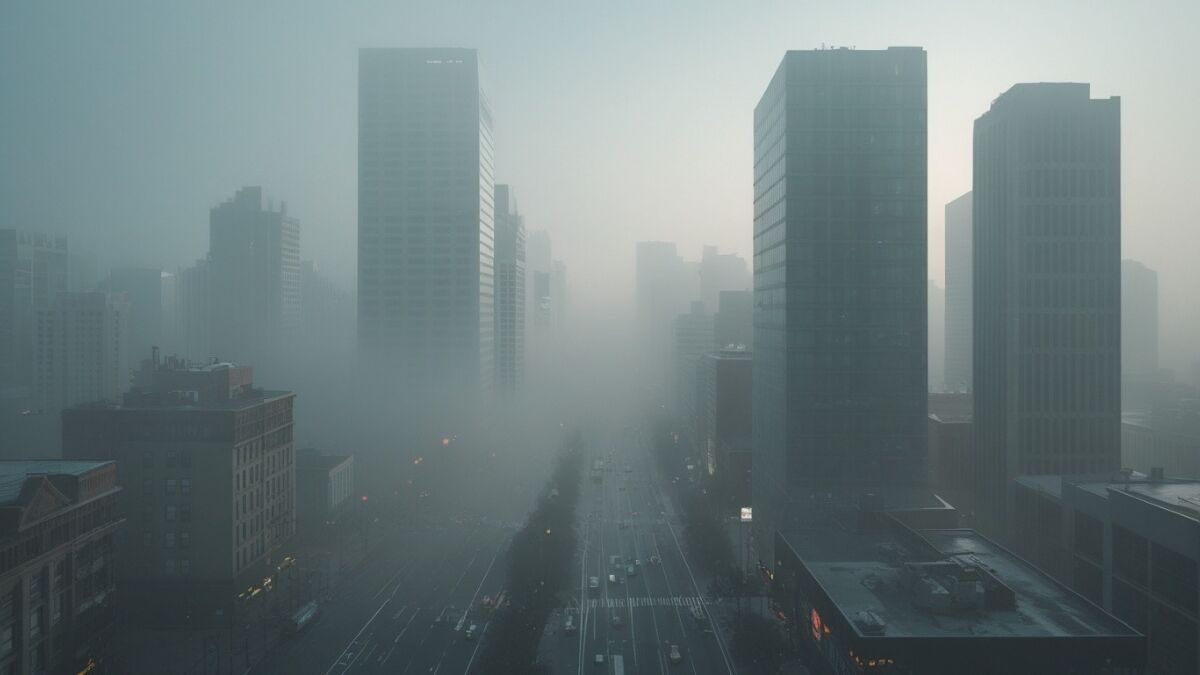
The nation’s capital is experiencing a cold wave as the temperature dropped 4.6 degrees Celsius on Friday, the lowest it has been this winter, making it the coldest January morning in two years.
Delhi Cold Wave and Weather Conditions
Following the coldest morning of the current winter season, the India Meteorological Department (IMD) issued a yellow notice for thick fog on Saturday and forecast mostly clear skies for the capital city.
The meteorological office predicted that the maximum and minimum temperatures over Delhi will likely be between 16 and 18 degrees Celsius and 5 to 7 degrees Celsius, respectively, which is between 1.6 to 3.0 degrees Celsius below average minimum temperatures.
Fog Alert and Temperature Forecast
At roughly 7:00 AM, the Indira Gandhi International (IGI) Airport in Delhi recorded a temperature of 5 degrees Celsius and 200 meters of visibility owing to heavy fog. IMD warned of chilly day weather in neighboring states, such as Himachal Pradesh, Rajasthan, Punjab, and Haryana, and forecast that thick fog conditions will persist throughout northwest India this week.
On December 4 and 5, 2025, the temperature hit 5.6 degrees Celsius, the second-lowest of the season. December 1st was the third coldest day of the winter season, with a temperature of 5.7 degrees Celsius.
Cold Wave Trend Across North India
IMD predicts that cold wave conditions will likely continue across areas of north and northwest India, including Delhi-NCR, in the next days. However, according to the meteorological service, there is now no fear of a major cold wave.
Delhi recorded “extremely bad” air quality on Saturday, with an average 24-hour Air Quality Index (AQI) of 361. At 345 on Friday, the AQI fell back into the “extremely bad” category, and it has been getting worse ever since.
Delhi Air Quality Crisis
With a rating of 426, the Nehru Nagar monitoring station had the worst AQI today, falling into the “severe” classification. Anand Vihar, Vivek Vihar, Dwarka Sector 8, and Sirifort were among the other places that recorded dangerous AQI today. The only station with “bad” air quality today was Pusa Road, which had the best AQI of 298. Thirty-three of the capital city’s 39 air quality monitoring sites have AQIs in the “extremely bad” range.
❄️ Delhi Cold Wave & Dense Fog Update
- Lowest Temperature: 4.6°C (coldest January morning in 2 years)
- IMD Alert: Yellow alert for dense fog
- Visibility: 200 meters at IGI Airport
- Forecast: Cold wave to continue across Delhi-NCR
- Impact: Travel disruption and health concerns
Vehicle emissions accounted for 16.9% of Delhi’s pollution load, according to statistics from Pune’s Indian Institute of Tropical Meteorology (IITM) Decision Support System (DSS). 13.1% of the pollution load came from Delhi and surrounding industry, with residential emissions coming in second at 4.3%. Road dust accounted for 1.1% of Delhi’s pollution load, building activity for 2.1%, and rubbish burning for 1.6%.
⚠️ Delhi Air Pollution Breakdown
- Average AQI: 361 (Extremely Bad)
- Worst Area: Nehru Nagar (AQI 426 – Severe)
- Main Pollutant: Vehicle emissions (16.9%)
- Other Sources: Industry, residential emissions, waste burning
- Risk: Serious respiratory and health hazards
Frequently asked questions
1. What caused Delhi’s January morning to be the coldest in two years?
The temperature in Delhi dropped sharply to 4.6°C, the lowest this winter, as a result of cold wave conditions that were present throughout north and northwest India.
2. Has Delhi received any weather warnings from IMD?
Indeed, the India Meteorological Department (IMD) has warned of persistent cold and issued a yellow signal for heavy fog, particularly in the early morning.
3. How long will Delhi-NCR experience this cold wave?
Although there is not currently a severe cold wave predicted, IMD says that cold wave conditions are likely to continue over the next days.
4. How is Delhi’s air quality right now?
Delhi’s average AQI of 361 indicates that the city’s air quality is still “extremely bad.” A number of places, including Vivek Vihar, Anand Vihar, and Nehru Nagar, recorded high AQI readings.
5. What are the primary causes of pollution in Delhi at the moment?
The largest source is vehicle emissions (16.9%), which are followed by garbage burning, road dust, industrial pollution (13.1%), residential emissions, and building activities.
6. Has the Delhi AQI ever hit 1000?
Indeed, during severe pollution events, especially in November 2024, Delhi’s Air Quality Index (AQI) has reportedly reached and even exceeded 1000 in a number of areas, prompting emergency measures like GRAP-4. However, official government data occasionally showed lower readings due to calibration or capping, while private monitors frequently reported higher, more dangerous levels.
7. Who has 99% air pollution?
The World Health Organization (WHO) reports that 99% of the world’s population breathes contaminated air, meaning that almost everyone on the planet is exposed to air pollution levels that are higher than recommended. Low- and middle-income nations bear the brunt of this burden, which results in millions of premature deaths each year from illnesses like pneumonia, heart disease, and stroke.
Conclusion
Delhi is now dealing with both severe air pollution and very chilly temperatures. Dense fog and declining air quality have increased health and transport worries even as the cold snap has caused temperatures to drop to their lowest points in two years. Since chilly weather is predicted to persist in the next days, authorities encourage locals to exercise caution, restrict their outside activities, and abide by weather and pollution recommendations.
Disclaimer:
This content is for informational purposes only and is based on publicly available weather and air quality reports. Conditions may change, and readers are advised to follow official updates from the IMD and local authorities.
