
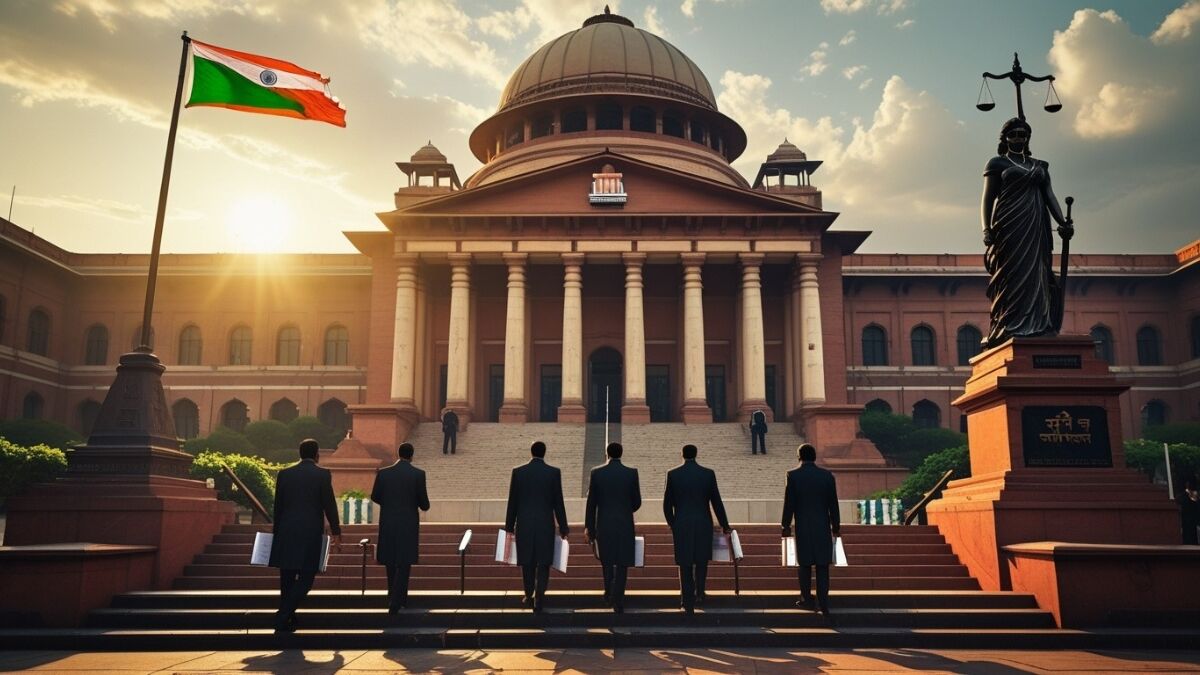
The Delhi High Court heard arguments regarding pollution-related concerns over outdoor sports events scheduled during winter months in the National Capital Territory of Delhi.
Due to excessive pollution, the Delhi administration informed the Delhi High Court on Wednesday that it cannot forbid outdoor athletic events in the winter.
Delhi High Court Reviews Outdoor Sports Ban Plea
Despite the court’s prior request to think about moving the events to “safer months,” this submission was submitted.
Eleven children who live in the nation’s capital have petitioned the Delhi High Court to halt “state-scheduled” sporting events from November to January due to “severe” and “dangerous” air pollution.
⚖️ Court & Government Stand on Outdoor Sports
- Issue: Outdoor sports during winter pollution
- Petitioners: Eleven children from Delhi
- Concern: Severe and dangerous air pollution
- Court View: Government aware of student challenges
- Next Hearing: March 24
CAQM Evaluation and Contempt Petition
In order to move sporting events, competitions, and activities to safer months, the Delhi High Court asked the Commission for Air Quality Management (CAQM) to evaluate this aspect of the case and provide the relevant States with the required instructions on December 19.
The petitioners claimed that they had filed a contempt petition because they had not complied with this ruling.
The state’s Department of Education (DoE) attorney has been asked to respond by the court. The government’s lawyers have stated that they would prefer to postpone events rather than alter the yearly sports schedule.
Court Observations on Sports Scheduling
On Wednesday, nevertheless, the Court said that it is unlikely that they can tell the government when to continue holding athletic events. “State governments are aware of the challenges experienced by all parties involved, as they are coping with thousands of students.” March 24 is the next scheduled hearing date for the case.
The petitioners believe that all outdoor sports in the National Capital Territory of Delhi should have their annual sports calendar (including zonal, inter-zonal, state and national tournaments, trials, and coaching camps) scheduled during safer and less vulnerable months with “verifiably better” ambient air quality. They have asked the Delhi High Court for guidance on this matter.
⚠️ Health Risks of Outdoor Sports in Severe Pollution
- Pollution Level: AQI 301–400 (Very Poor) to AQI >400 (Severe)
- Main Pollutant: PM2.5 fine particles
- Health Impact: Higher lung exposure during exercise
- Expert Warning: No safe threshold for PM2.5 exposure
- Risk Group: Children and young athletes
Allegations Against State Government
The state government’s frequent scheduling of these outdoor sporting events in the months of November through January of each school calendar is allegedly “arbitrary, unreasonable, and negligent,” according to the November petition.
The petitioners contend that children and athletes are particularly susceptible to poor air quality. They frequently breathe through their mouths, avoiding the nasal filtering system, and their air intake is much higher during intense exercise than it is at rest. As a result, contaminants like PM2.5 enter the lungs in considerably greater and deeper doses.
Recurring Winter Pollution Crisis in Delhi
Every year, during the winter months of October through February, the National Capital Territory of Delhi faces a recurrent and predictable air pollution emergency. According to the petition, which cites a Lung Care Foundation report, air quality frequently falls into the “Very Poor” (AQI 301–400) to “Severe” (AQI >400) categories at this time, frequently continuing for several days or weeks in a row.
Among the most harmful air pollutants that are now recognized are these fine particle pollutants, particularly PM2.5. It states that national organizations like the Government of India and international organizations like the WHO have consistently affirmed that there is no safe threshold for PM2.5 exposure, especially for vulnerable populations like children.
Medical Expert Opinion on PM2.5 Exposure
According to the petition, “long-term cohort studies have repeatedly shown that exposure to high PM2.5 in childhood leads to permanent reduction in lung growth and capacity, which persists into adulthood and predisposes to chronic respiratory disease,” according to Dr. Arvind Kumar, Founder Trustee of the Lung Care Foundation. Children must be considered a priority risk category in any choice involving outdoor exposure because of their known vulnerabilities.
To be clear, holding formal competitive sporting events during these times puts children—especially those under the age of 18—in extremely dangerous situations. This puts young athletes and their unfortunate parents in a precarious situation where they must decide between their sports careers and their health because they are participating in an officially sanctioned event that poses a known and serious health risk,” Dr. Kumar explains.
Disclaimer: This article is for informational purposes only and is based on court proceedings and petition submissions. Readers are advised to follow official updates for further developments.
