
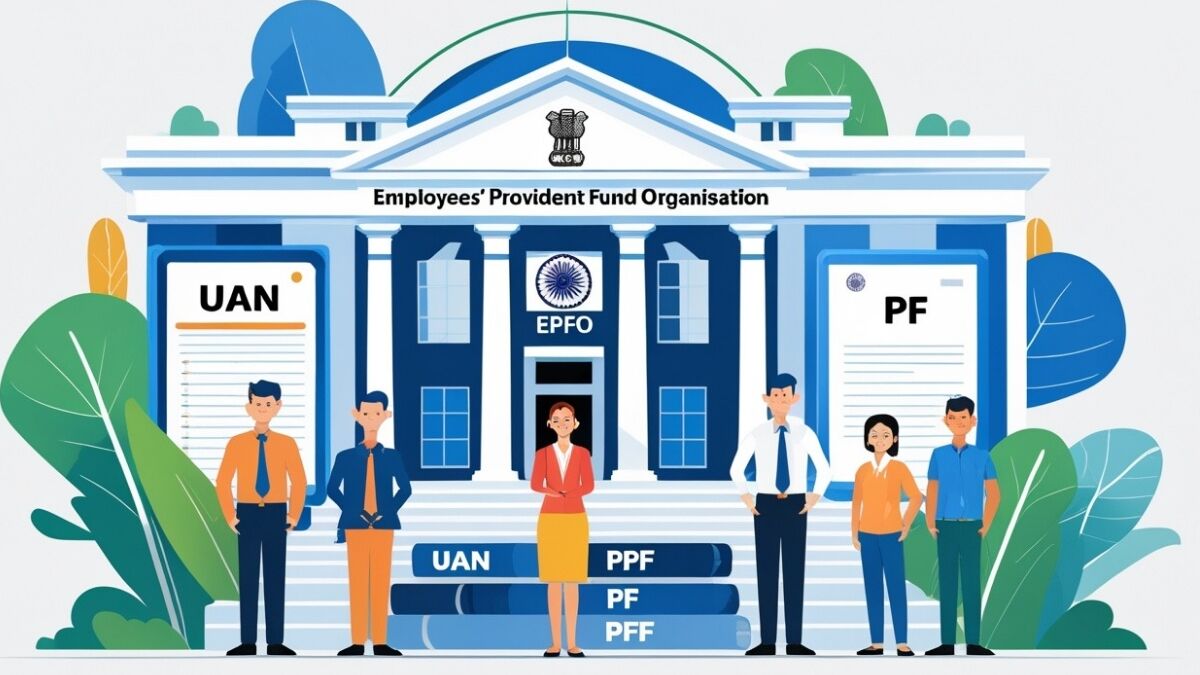
With an emphasis on efficiency, transparency, and quicker service delivery, the Employees’ Provident Fund Organization (EPFO) is stepping up its digital effort under EPFO 3.0.
Annual General Transfer (AGT) 2026 Procedure
An essential part of this reform is the Annual General movement (AGT) 2026 procedure, which regulates the online movement of officers and employees between Group A, B, and C sectors.
AGT is EPFO’s annual exercise to transfer officers and workers among areas to achieve balanced staffing and administrative efficiency. The HRM-I/T-1(1)2026/924 circular states that all AGT applications must be filed electronically using the EPFO HRMS portal in order to avoid manual procedures and the delays they generate.
Under EPFO 3.0, officers must log in to the HR portal to submit their transfer alternatives. Prior to processing general posts, which are based on open positions, employee tenure, and seniority, the system assesses requests for interstate and mutual transfers. AGT deadlines typically occur in February, with transfers taking place prior to April 2026.
Group A Cadres: Rules for Transfers
Group A personnel, such as Regional PF Commissioners (RPs) and Assistant Provident Fund Commissioners (APFCs), are able to electronically submit three to five zone choices. Prioritizing all-India transfers helps to preserve administrative equilibrium. Women officers who need assignments linked to their families get extra attention. Additionally, EPFO 3.0 uses automatic PF and service record integration to guarantee smooth service continuity.
Group B Cadres: Important Points
Officers in Group B, such as Enforcement and Accounts Officers, have the option to seek their transfer using the portal system. All unfilled requests will immediately go to the next AGT cycle, and the mechanism promotes mutual transfers.
📌 EPFO 3.0 AGT 2026 Highlights
- Eligibility: Group A, B & C Cadres
- Application: Online via EPFO HRMS portal
- Priorities: Mutual transfers & women officers’ family-related requests
- Deadline: February 2026
- Implementation: Before April 2026
Group C Cadres: Simple Bulk Transfers
An algorithm-based system is used to manage the transfers of Group C employees, which include clerks, DEOs, and assistants. Employees who have been with the firm for more than three years get preference under the scheme. Online channels are required for the system to submit options.
💡 EPFO 3.0 Service Enhancements
- PF Withdrawals: ATM & UPI-based services by April 2026
- Staff Deployment: Improved through AGT system
- Members Benefited: 30+ crore EPF members
- Efficiency: Faster, transparent transfer process
The full deployment of EPFO 3.0, which will include ATM and UPI-based PF withdrawal services by April 2026, would come before the AGT system overhaul. Together, the two measures improve staff deployment and provide more than 30 crore EPF members better services.
Frequently Asked Questions
1. In EPFO, what is AGT?
In order to maintain balanced personnel and administrative effectiveness, EPFO moves officers and employees across areas on an annual basis via the AGT (Annual General Transfer) procedure.
2. How may workers submit an application for AGT 2026?
The EPFO HRMS site is the only way to submit any applications. We do not accept manual requests.
3. Are transfers within India possible for Group A officers?
Group A officers are able to submit transfer preferences for all of India; however, female officers who want postings related to their families will get particular attention.
4. What happens if the transfer request of a Group B officer is denied?
Group B officers’ unfulfilled transfer requests automatically carry over to the next AGT cycle.
5. How are transfers in Group C handled?
Employees with more than three years of service are given priority in Group C transfers, which are managed by an algorithm-based method.
Conclusion
An important step toward digitalizing HR operations, increasing productivity, and guaranteeing equitable staff deployment is the EPFO 3.0 AGT 2026 procedure. With online submissions, algorithm-driven transfers, and connectivity with PF services, workers across Group A, B, and C will have a more transparent and faster transfer procedure.
By improving service delivery and operational efficiency, these changes eventually benefit EPFO employees as well as its 30+ crore members.
Disclaimer: This article is for informational purposes only. EPFO rules and processes may change, and employees should refer to official EPFO notifications and the HRMS portal for the latest updates.
